100+ Applications, Zero Calls: The State of the Indian Entry-Level Tech Market
For developers with less than two years of experience, the 2026 hiring market has become a gauntlet of rejection. We analyze why the 'hidden fresher' ceiling is forming and whether the shift toward skill-based interviews is a lifeline or a new barrier.

Photo by Rahul Sapra on Pexels
100+ Applications, Zero Calls: The State of the Indian Entry-Level Tech Market
For developers with less than two years of experience, the 2026 hiring market has become a gauntlet of rejection. As the initial optimism of the post-pandemic hiring boom fades, thousands of junior engineers are finding themselves trapped in a paradox: they are too experienced to be considered 'freshers' for entry-level roles, yet they lack the tenure to satisfy the mid-level requirements of a risk-averse industry. We analyze why the 'hidden fresher' ceiling is hardening and whether the new wave of AI-native assessment tests is a genuine lifeline or a precarious barrier.
The Rise of the 'Hidden Fresher' Ceiling
In 2026, the definition of a 'fresher' has quietly expanded. Hiring managers, facing budget scrutiny and a need for immediate, low-risk impact, have begun re-classifying candidates with up to two years of experience into the entry-level bracket. This structural shift allows companies to bypass higher salary bands while expecting 'plug-and-play' productivity.
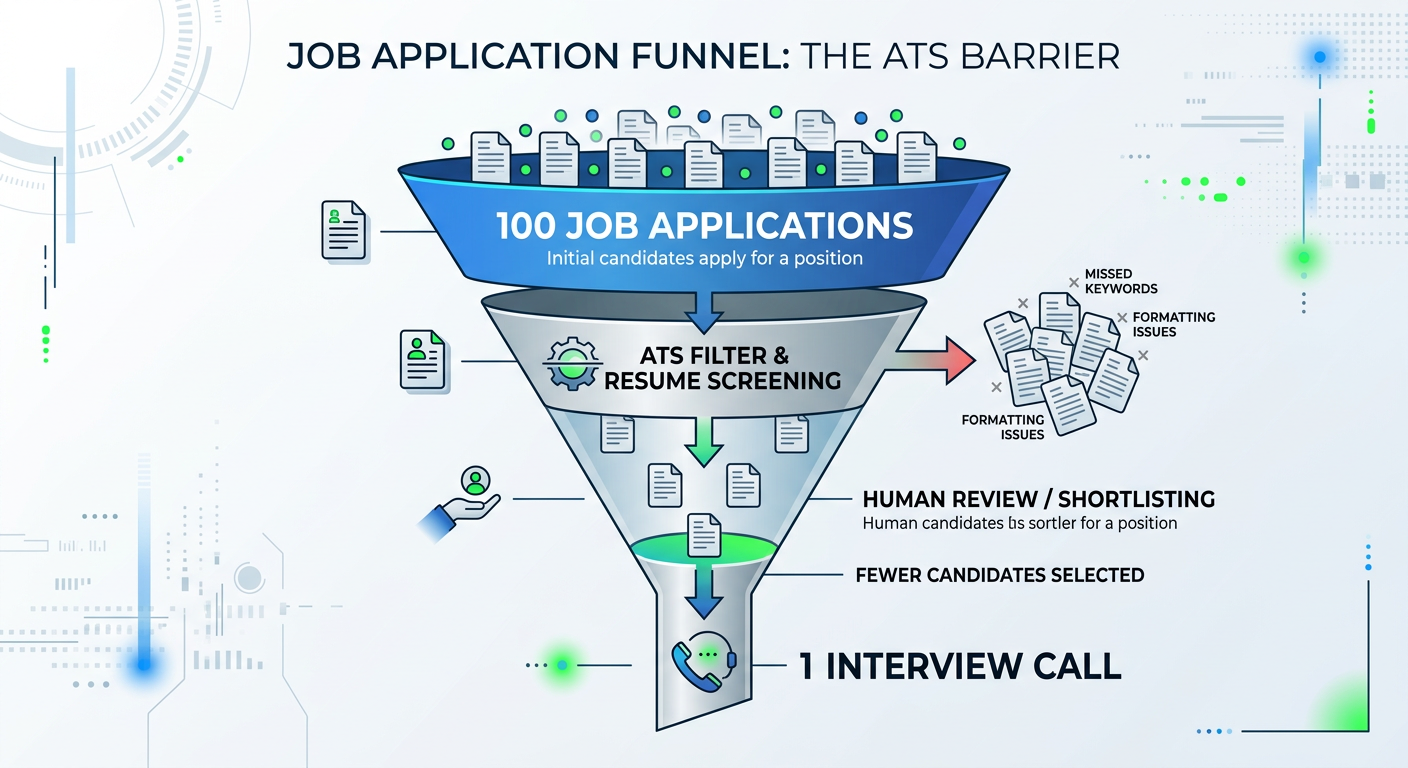
Simultaneously, the reliance on Applicant Tracking Systems (ATS) has turned the job hunt into a game of keyword bingo. Internal referral systems have become the primary gatekeeper, effectively locking out qualified candidates who lack a direct line to a hiring manager. This has led to a landscape where cold applications are falling into a void, with many developers reporting 100+ applications without a single callback.
"I have 1yr and 10 months of workex at a series B startup... I've applied to 100+ places on LinkedIn, Naukri and the likes. No callback at all. Nill. This has shook me more than I'd like to accept."
— u/throwaway_dev, r/developersIndia
Beyond the Algorithm: Are AI-Native Roles Changing the Rules?
As the industry moves away from rote Data Structures and Algorithms (DSA) testing, a new, more intense evaluation method is emerging: the 'live-build' assessment. Companies like SarvamAI are prioritizing architectural intuition over memorized coding patterns, testing candidates on their ability to build functional systems—such as a Voice Activity Detector (VAD)—from scratch under a 2.5-hour time limit.
This shift suggests that for elite roles, the market is moving toward a 'proof-of-work' model. While this creates a more meritocratic playing field, it also raises the bar for what constitutes 'employability.' Communication skills and the ability to navigate ambiguous system design problems are now as critical as the code itself. However, critics argue that these high-pressure, proctored environments are essentially high-stakes endurance tests that favor those with the luxury of time to prepare.
"To get an interview call, we had to build a VAD (Voice Activity Detector) from scratch in 2.5 hours on-site (with proctorship)... CTC: 84 LPA (including esops). Disclaimer: No DSA was asked."
— u/anonymous_candidate, r/developersIndia
Navigating the Stigma: The Salary Cut Dilemma
For those facing layoffs or burnout, the temptation to take a salary cut to stay in the market is palpable. We are seeing a trend where developers earning 16 LPA are settling for 9 LPA just to secure a foothold. The debate remains polarized: is this a 'career-limiting' move or a pragmatic survival strategy in a stagnant market?
While the narrative of a 'job crisis' dominates social media, the ground reality is more nuanced. Global Capability Centers (GCCs) in India are rapidly scaling, signaling a shift in where talent is being absorbed. India continues to show a 48% positive outlook in long-term hiring projections, suggesting that the current bottleneck is a transition period rather than a permanent collapse.
Survival Strategies in a Quantity-Over-Quality Market
If the 'spray and pray' approach of 100+ applications is failing, what works? The consensus among mentors is shifting back to targeted, high-quality networking and skill-based portfolios. Walk-in drives, often criticized as 'humiliation rituals' due to the sheer volume of candidates and lack of feedback, are increasingly seen as a last resort that rarely yields high-value roles.
Engagement Snapshot
- Verified Trend: High-effort, low-reward application cycles (100+ applications/0 calls).
- Market Sentiment: High anxiety among the 21-26 age bracket.
- Top Query: 'Which resume template yields the most callbacks?'
The Bottom Line
The 2026 job market is not simply 'closed'; it has become highly selective. For the junior developer, the era of relying on mass applications is over. Success now requires a pivot: from chasing volume to demonstrating specific, architectural competence. Whether this shift represents a failure of the recruitment pipeline or a necessary evolution of the Indian tech talent pool, one thing is clear: the path to the next role is now paved with verifiable skills, not just a polished resume.