2026 El Niño May Affect Agriculture, Inflation, and Economic Growth
The market is bracing for a 'Super El Niño.' We analyze whether high-valuation Nifty staples can survive this macro squeeze or if it's time for a sector rotation.

Photo by Sharath G. on Pexels
Beyond the Monsoon: Why the 2026 El Niño Is a Structural Risk
The Indian equity market finds itself at a precarious crossroads. While headline indices continue to test record highs, a 'Super El Niño' is brewing, threatening to disrupt the agricultural backbone of the economy. With the monsoon forecast currently standing at 90% of the Long Period Average (LPA), investors must decide whether this is a temporary weather fluctuation or a structural shift that demands a fundamental portfolio pivot.
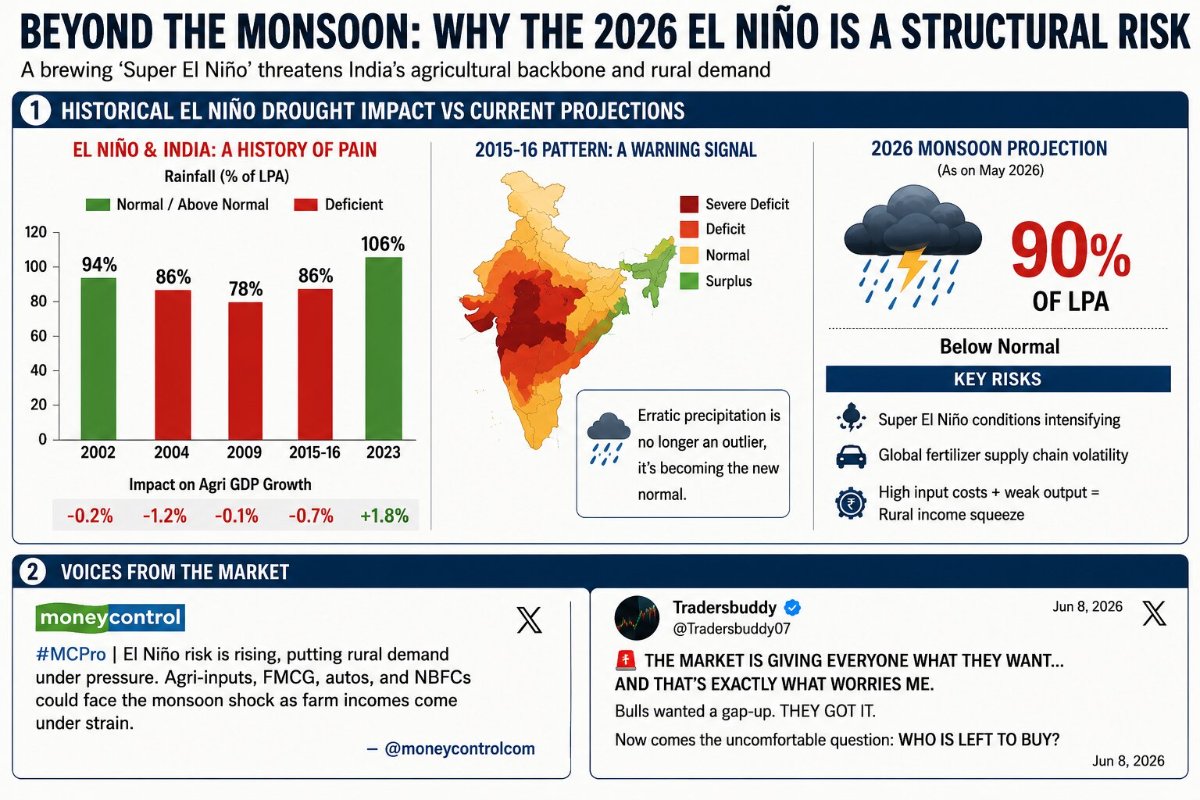
The 2026 Macro Squeeze: Why This Is Not 2023
Unlike the 2023 cycle, the 2026 climate pattern carries the compounding burden of extreme volatility in global fertilizer supply chains. When we overlay current climatic data against the 2015-16 patterns, the warning signs are unmistakable: erratic precipitation is no longer an outlier but a recurring feature of the agricultural calendar.
While some analysts argue that India’s transition toward service-led growth has structurally decoupled the economy from the monsoon, this narrative overlooks the raw reality of rural disposable income. Irrigation-dependent regions may show resilience, but the rain-fed belts—still home to millions of consumers—remain highly vulnerable to output shocks.
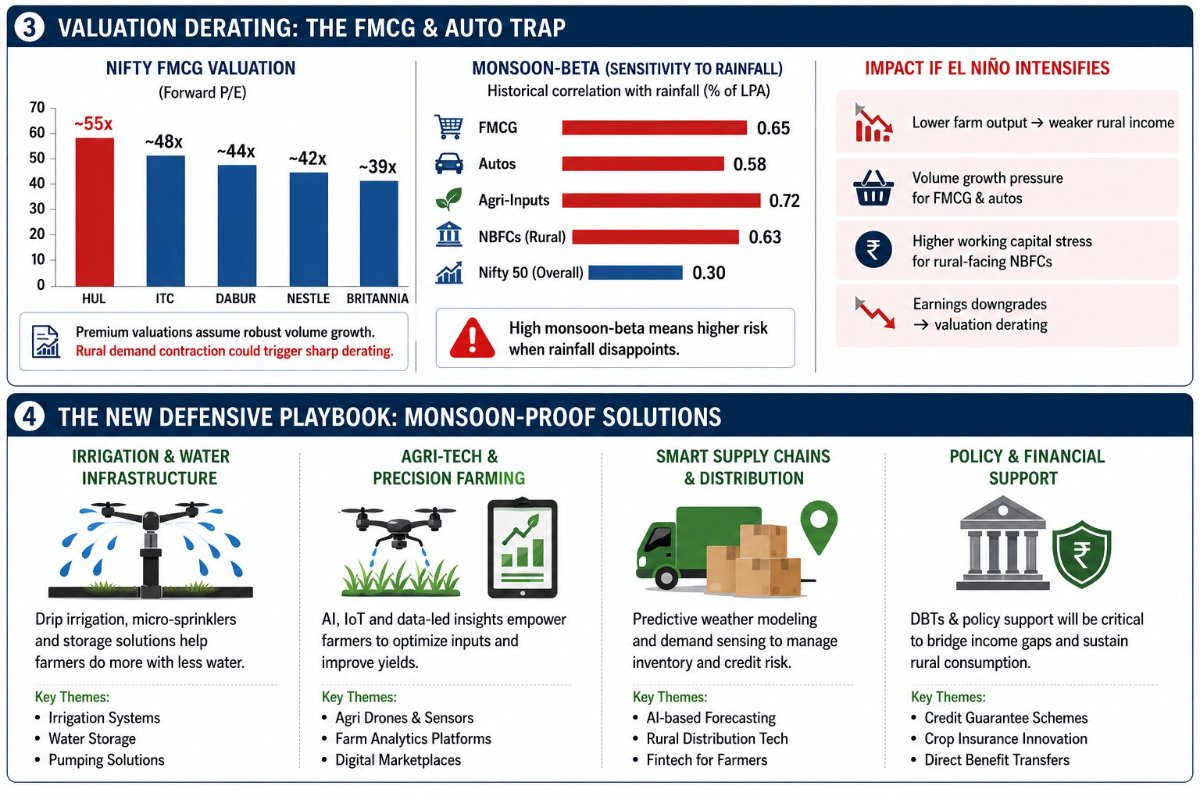
Valuation Derating: The FMCG and Auto Trap
Market participants are currently grappling with a valuation paradox. Nifty FMCG heavyweights, such as HUL, are trading at ~55x P/E, a premium that assumes robust volume growth. However, if the 'Super El Niño' leads to a contraction in rural spend, these valuations may face a sharp derating. The 'Monsoon-Beta' of these stocks—their sensitivity to rainfall—remains historically high.
""#MCPro | El Niño risk is rising, putting rural demand under pressure. Agri-inputs, FMCG, autos, and NBFCs could face the monsoon shock as farm incomes come under strain." — @moneycontrolcom
There is a growing debate on whether current market momentum is a reflection of economic strength or simply a liquidity-fueled trap. As one market observer noted on social media:
""🚨 THE MARKET IS GIVING EVERYONE WHAT THEY WANT... AND THAT'S EXACTLY WHAT WORRIES ME. Bulls wanted a gap-up. THEY GOT IT. Now comes the uncomfortable question: WHO IS LEFT TO BUY?" — @Tradersbuddy07
The New Defensive Playbook: Agri-Tech and Irrigation
Smart money is increasingly moving away from traditional rural-staple plays, pivoting instead toward companies that provide 'monsoon-proof' solutions. This includes specialized irrigation infrastructure and precision agri-tech providers that empower farmers to optimize water usage amidst dwindling rainfall.
Rural distributors are no longer relying on historical intuition; they are integrating predictive AI-weather modeling to manage inventory risk. This structural shift in supply chain management is designed to soften the blow of weather-induced consumption shocks, even if direct benefit transfers from the government are required to bridge the income gap.
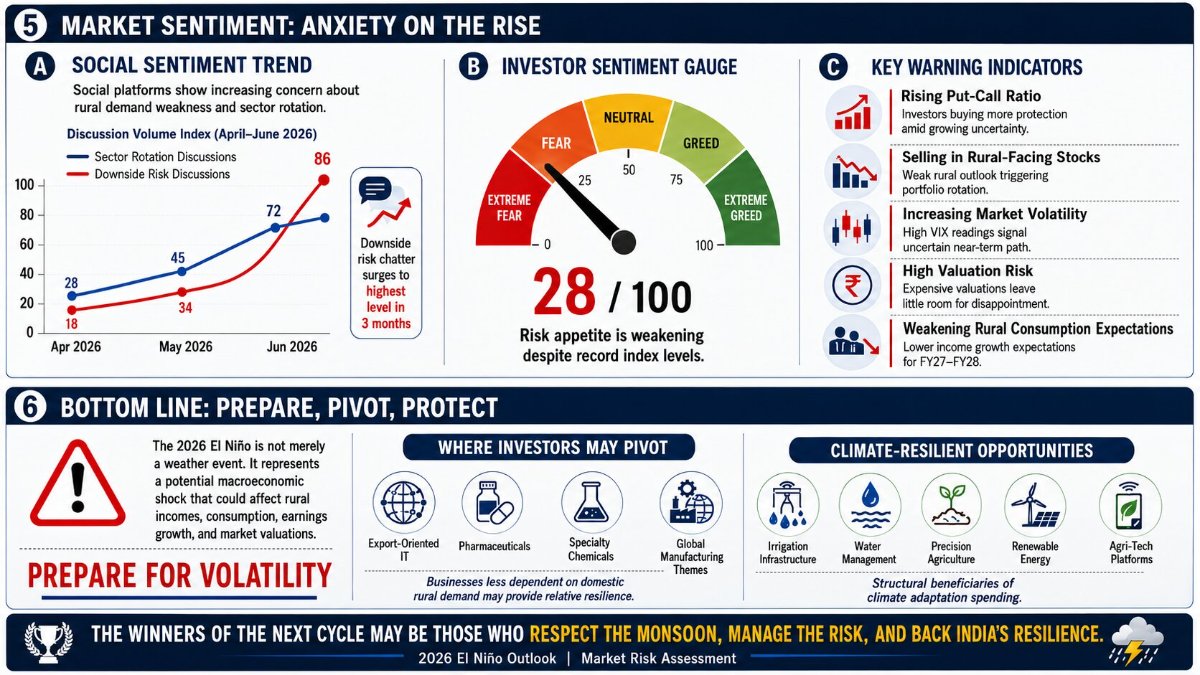
Market sentiment
Market sentiment currently reflects high anxiety among retail and institutional participants. Data analytics from social platforms indicate a spike in discussions around 'sector rotation' and 'downside risk' as investors look to hedge against a potentially weak Kharif season. With the current market skewness and high valuations, the appetite for risk is thinning.
The 2026 El Niño is not merely a weather forecast; it is a macro-economic warning. Investors holding rural-dependent stocks at elevated valuations should prepare for potential volatility. Shifting exposure toward export-oriented sectors like IT and Pharma, or toward climate-resilient infrastructure plays, may provide the necessary buffer against a monsoon-induced squeeze.