Beyond the Lab: Why Japan’s Hybrid Quantum-Classical Strategy Sets a Global Template
As Japan unveils its first domestically produced quantum computer, the nation is pivoting away from the binary choice of national sovereignty versus foreign dependency. By integrating homegrown hardware with elite international platforms, RIKEN is pioneering a unified hybrid ecosystem designed to reshape the global quantum landscape.

Photo by Markus Winkler on Pexels
Securing the Future: Japan's High-Stakes Gambit to Lead the Global Quantum Race
As RIKEN officially flips the switch on its first domestically produced quantum computer, Japan is performing a masterclass in technological pragmatism. Rather than forcing a binary choice between sovereign independence and global integration, Tokyo is building a hybrid ecosystem that bridges the two—a move that offers a potential roadmap for emerging quantum powers, including India.
The Dawn of Sovereign Quantum Capability
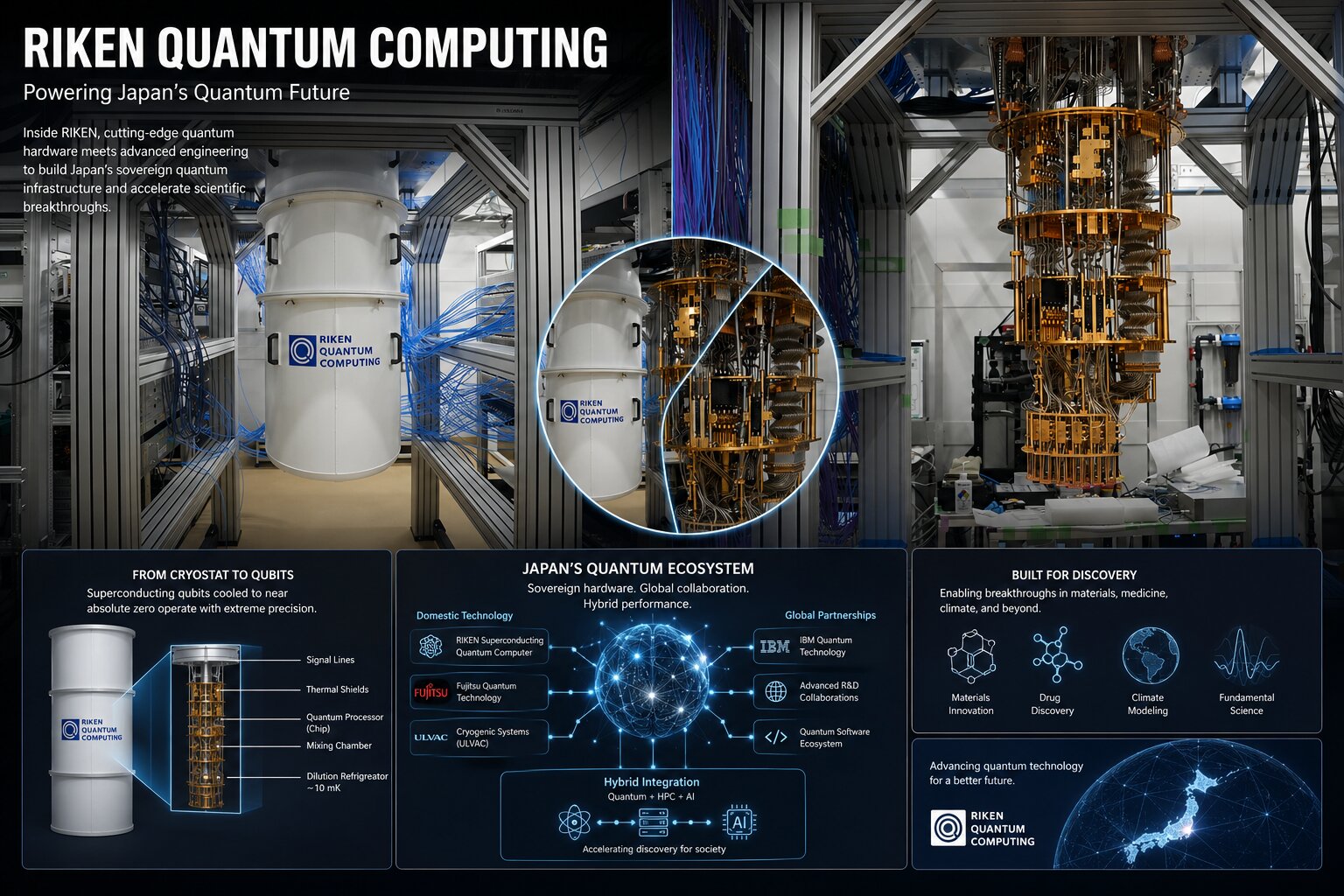
For years, the narrative surrounding quantum computing has been dominated by the "cloud-first" hegemony of US-based tech giants. RIKEN’s latest milestone shifts that paradigm. The institution has successfully launched a 64-qubit fully domestic system, marking a definitive step toward technological self-reliance. Unlike many global labs that rely on imported modular components, this system represents an end-to-end victory for Japanese engineering: from the quantum chip itself to the intricate control electronics and the sophisticated cryogenic infrastructure.
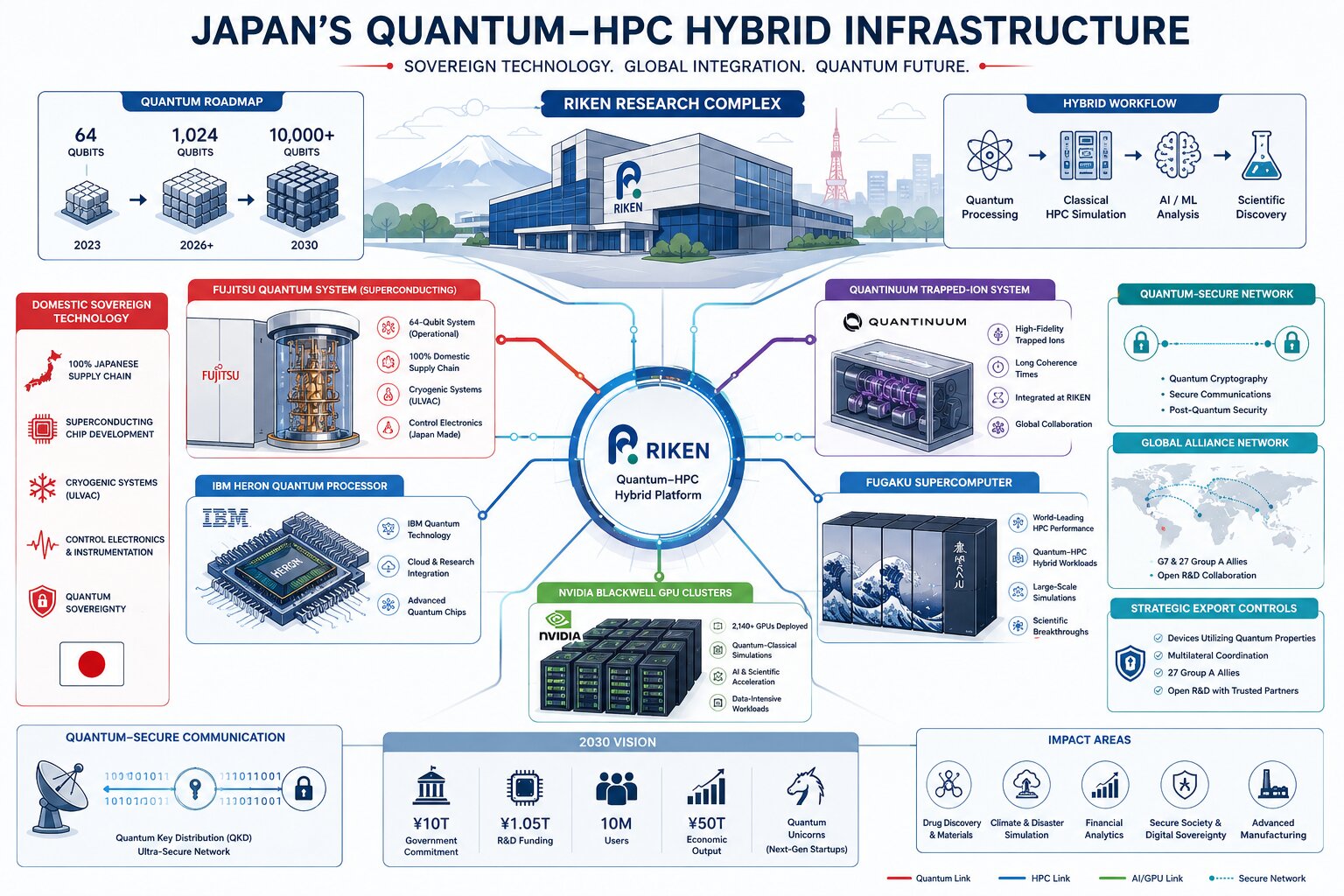
This is not merely a prototype; it is the foundation for an aggressive scale-up roadmap. With Fujitsu at the helm, the objective is to move from these initial 64-qubit benchmarks to 1,024 qubits in the coming years, culminating in a 10,000-qubit architecture by 2030. For a nation that has historically grappled with the vulnerabilities of complex global supply chains, this domestic control is a strategic imperative.
"It’s fascinating to see Japan move past the 'buy vs build' debate. By treating their own hardware as the baseline and integrating IBM and Quantinuum for specific use cases, they aren't just building a computer—they're building a marketplace." — u/QuantumEnthusiast, r/InterestingEngineering
Orchestrating the Hybrid Ecosystem: Beyond Vendor Lock-in
Japan’s most critical innovation is not the chip, but the orchestration layer. By integrating IBM’s Heron processors and Quantinuum’s ion-trap systems directly into the same operational environment as their domestic superconducting chips, Japan is effectively bypassing vendor lock-in.
This is achieved through the Supercomputer-Quantum (SQC) Interface, which leverages the raw power of the Fugaku supercomputer—long a crown jewel of Japanese HPC—as a universal software bridge. Instead of developers having to rewrite code for different quantum architectures, they interact with a unified interface that calls upon whichever hardware is most efficient for the specific task at hand. This heterogenous strategy ensures that as hardware evolves, Japan’s national software stack remains platform-agnostic.
The ¥10 Trillion Gamble: Economic and Strategic Goals
Japan is putting its money where its research is. The government has committed a staggering ¥10 trillion (~$65 billion USD) to AI and quantum development through 2030. This isn't just about laboratory prestige; it is an industrial roadmap intended to generate ¥50 trillion in quantum-related production output.
Perhaps most ambitious is the human capital target: the goal to cultivate 10 million domestic users for quantum-integrated workflows. By integrating these systems into industrial workflows—from pharmaceutical modeling to complex logistics optimization—Japan aims to turn quantum computing from a scientific curiosity into a daily utility.
"Japan's strategy to bridge Fugaku with quantum accelerators is the only way this actually makes it to the enterprise level. Everyone else is just running experiments; Japan is building an infrastructure." — u/HPC_Dev, r/SDxCentral
Future Outlook: The Geopolitical Pivot
As quantum capabilities advance, so does the threat to current cryptographic standards. Japan is acutely aware that a functional quantum computer could, in theory, dismantle existing security protocols. Consequently, the national strategy now pivots toward 'Quantum-Secure' communications, ensuring that the next generation of infrastructure is hardened against the very technology that Japan is helping to pioneer.
For observers in India, where quantum initiatives like the National Quantum Mission are gaining momentum, Japan’s model offers a compelling case study. It proves that one does not need to abandon international collaboration to achieve sovereignty. By carefully managing export controls alongside G7 research partners, Japan maintains an open-innovation pipeline while keeping its most sensitive quantum IP strictly internal.
The Bottom Line
Japan’s strategy is a clear signal that the quantum race is entering its "infrastructure era." While competitors focus solely on qubit counts, Japan is focused on connectivity and integration. By creating a hybrid ecosystem that treats foreign hardware as a partner rather than a replacement, Japan is positioning itself as the central node in the global quantum economy, turning a potential geopolitical liability into a strategic asset.