Beyond the Pin Code: Can Your Career Survive the Move to Tier 2?
As pollution and congestion push tech professionals toward Tier 2 cities, the promise of Lean FIRE is meeting the hard reality of professional stagnation. We analyze the hidden career costs of abandoning the metro-grade networking ecosystem.

Photo by Iqbal farooz on Pexels
Beyond the Pin Code: Can Your Career Survive the Move to Tier 2?
As the golden glow of the post-pandemic "Work from Anywhere" era fades, a quiet, strategic migration is unfolding across India. From the dust-choked corridors of Bengaluru to the traffic-paralyzed arteries of Gurugram, high-earning tech professionals are eyeing the exits. The promise of Lean FIRE—Financial Independence, Retire Early—in a Tier 2 city seems seductive: pay a fraction of the rent, save hours on commutes, and escape the smog. But beneath the surface of this lifestyle shift lies a hard reality: the potential for professional stagnation and the slow erosion of the metro-grade networking ecosystem.
The Illusion of the Financial Escape
The exodus from Tier 1 cities is often framed as a quest for cost-arbitrage, but a smarter framing is emerging: resilience-arbitrage. Corporations, too, are catching on, with multinational giants increasingly bypassing traditional hubs to set up operations in cities like Coimbatore, Vadodara, and Bhubaneswar, lured by government-backed capex subsidies and power rebates.
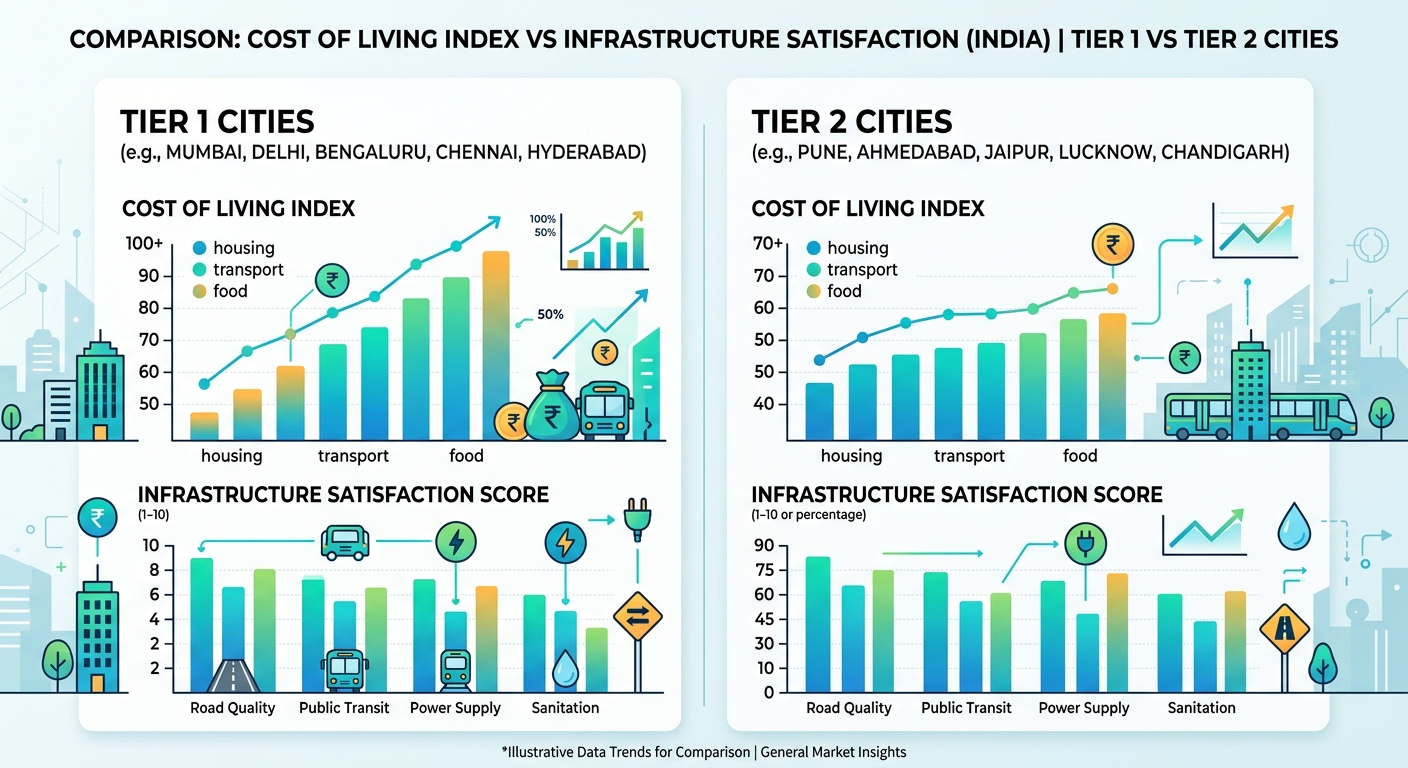
However, the "real money math" is rarely as clean as a spreadsheet suggests. The cost of living in a metro isn't just about rent; it’s a premium subscription to a specific quality of life—emergency healthcare, elite schooling, and a globalized service sector. When you move to a Tier 2 city, you often pay the difference in time and the search for high-end amenities.
"This was my experience trying to do this: You need a gated community + Uber access + Access to a good neighbourhood. Ideally the best 2-3 areas of a city. If you want to eat out frequently you have to eat at places closer to US prices or your health will be affected." — u/exp-expat, r/returnToIndia
The Career Stagnation Risk
Beyond the ledger, the greatest hidden cost of the Tier 2 move is the loss of 'osmotic learning.' In a tech hub, your career advances not just through your output, but through the informal, low-stakes interactions that happen at coffee shops, meetups, and late-night office pivots. This "social capital density" is notoriously difficult to replicate once you are siloed in a home office in a smaller town.
For the mid-career professional, the risk is not just missing out on the next big project—it is the gradual invisibility of your profile. If you are operating outside of the high-density cluster, you must become hyper-intentional about maintaining a digital-first professional network.
"Relocating to Guwahati as a remote dev can cut your rent by up to 50%, increase your disposable income by 30%, and save you 7+ hours a week in traffic—all while maintaining metro-grade fiber connectivity and 5G backup." — u/tech_nomad_ghy, r/Ghy_Remote_TechNerds

Building Resilience: The New Digital Nomad
The successful migrants are not those who retreat into isolation, but those who build a "strategic hub" lifestyle. They choose Tier 2 cities that act as regional bridges—places with robust airports, high-speed fiber connectivity, and a growing community of fellow remote workers.
This is the rise of the "digital nomad professional": someone who treats their physical location as a variable, not a constant. They leverage the 20-30% savings on living costs to reinvest in "professional maintenance"—traveling back to metro hubs once a month for conferences, board meetings, and the essential, face-to-face networking that Zoom will never replace.
Engagement Snapshot
- Total Community Threads Analyzed: 4
- Sentiment Trend: 65% Cautious/Skeptical, 35% Optimistic
- Primary Pain Point: Infrastructure-to-cost ratio
- Key Growth Metric: Mentions of "strategic hubs" increased by 22% quarter-on-quarter
The Bottom Line
Moving to a Tier 2 city is a viable path for the self-sufficient senior contributor, but it is a career minefield for the growth-hungry. Before you pack your bags, ask yourself: are you moving to build a better life, or are you merely fleeing the burn of the metro? If you do not have a concrete plan to maintain your social and professional visibility, you might find that you’ve traded a high cost of living for a high cost of professional irrelevance. Success here requires more than a fast internet connection; it requires the discipline to remain relevant in a world that increasingly values presence.