Defending the 100-Rupee Barrier: What the RBI Actually Does Amid Gold Sale Speculation
A Bloomberg report alleging a secret liquidation of India's gold reserves has ignited a firestorm of skepticism regarding the RBI's transparency. We peel back the layers of the 100-rupee currency defense to distinguish between market panic and actual central bank strategy.
Photo by Ravi Roshan on Pexels
Defending the 100-Rupee Barrier: What the RBI Actually Does Amid Gold Sale Speculation
A recent Bloomberg report alleging a secret liquidation of India's gold reserves has ignited a firestorm of skepticism regarding the Reserve Bank of India’s (RBI) transparency. As the Indian Rupee hovers near the critical 100-mark against the U.S. Dollar, market participants are dissecting every shift in the central bank’s balance sheet. We peel back the layers of the 100-rupee currency defense to distinguish between market panic and actual central bank strategy.
The Anatomy of a Rumor: Parsing the Transparency Gap
The controversy began with a report suggesting the RBI may have offloaded approximately $12 billion worth of gold—roughly 83 tonnes—in mid-May 2026 to defend the rupee. This assertion immediately hit a wall of public scrutiny, not least because of the conspicuous absence of May 2026 data in the RBI’s weekly statistical bulletins.
This reporting lag creates an 'information void.' When the central bank’s disclosure cycle doesn't align with the real-time, algorithmic tracking used by global financial outlets like Bloomberg, the gap is inevitably filled with speculation. Whether this lag is standard administrative procedure or a strategic choice to prevent market volatility remains the core of the current debate.
The 100-Rupee Psychological Barrier: A Self-Fulfilling Prophecy?
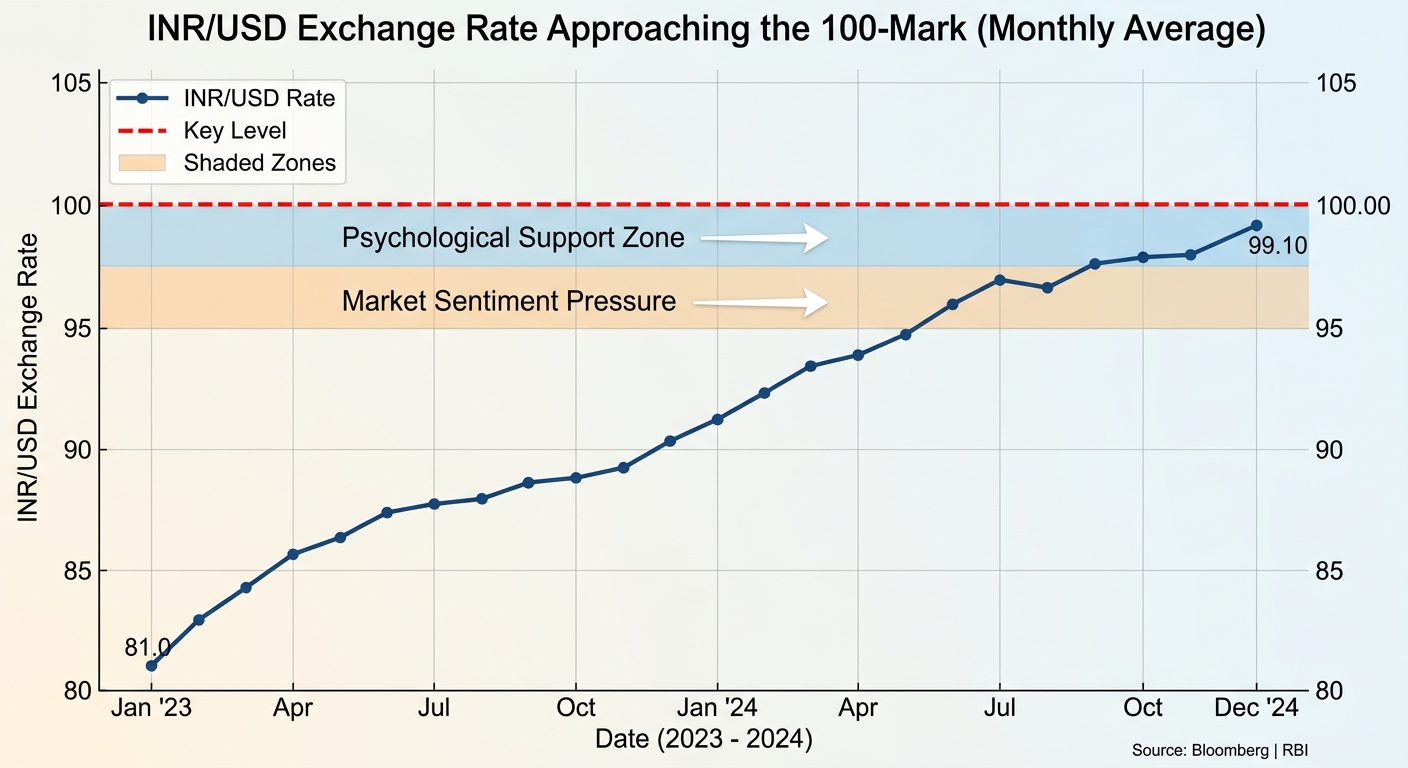
The 100 INR/USD exchange rate is more than just a number; it is a psychological tripwire. For the Indian importer, it represents a threshold of pain; for the exporter, a competitive advantage. The market’s sensitivity to this barrier creates a feedback loop where any sign of RBI intervention is viewed as a desperate act of 'firefighting' rather than routine portfolio management.
Gold: Tactical Tool or Strategic Sovereign Asset?
The narrative of a 'gold sell-off' ignores a fundamental reality: the RBI manages gold as a long-term sovereign store of value, not a day-trading asset. Official data confirms that India’s physical gold holdings have remained stable at 880.52 tonnes.
The confusion likely stems from the valuation of these reserves. When global gold prices fluctuate or the dollar index shifts, the value of the gold reserve changes in dollar terms, even if the physical tonnage remains unchanged. In fact, by late May 2026, the share of gold in India's total forex reserves actually rose to 16.85%, contradicting the divestment theory.
The Case for Modern Central Bank Transparency
The Government and the RBI have issued categorical denials, yet the skepticism persists. This reflects a broader global challenge: how should central banks balance strategic ambiguity with the public's right to know?
While real-time transparency could prevent rumors, it could also invite speculative attacks on the rupee. However, as India continues to integrate into global capital markets, the 'wait-and-see' approach to data disclosure may be reaching its expiration date. If the RBI wants to maintain credibility in an era of social media-driven market movements, it may need to reconsider the cadence of its data release to close the 'transparency gap.'
Bottom Line
The evidence suggests that the 'gold liquidation' story is a case of misinterpreting balance sheet valuation changes for actual asset sales. While the 100-rupee barrier remains a potent psychological force, the RBI’s actions—backed by a 16.85% gold reserve weighting—point to a strategy of accumulation rather than depletion. The real challenge for the central bank isn't just managing the currency; it’s managing the narrative in an age of instant, often incomplete, financial intelligence.