Delhi-NCR CNG Price Hike: Price Jumps ₹6 in 11 Days
With CNG prices witnessing four hikes in just 11 days, the economic bridge for urban commuters and commercial drivers is rapidly collapsing. As costs soar, we analyze whether the CNG dream is turning into an inflationary nightmare.
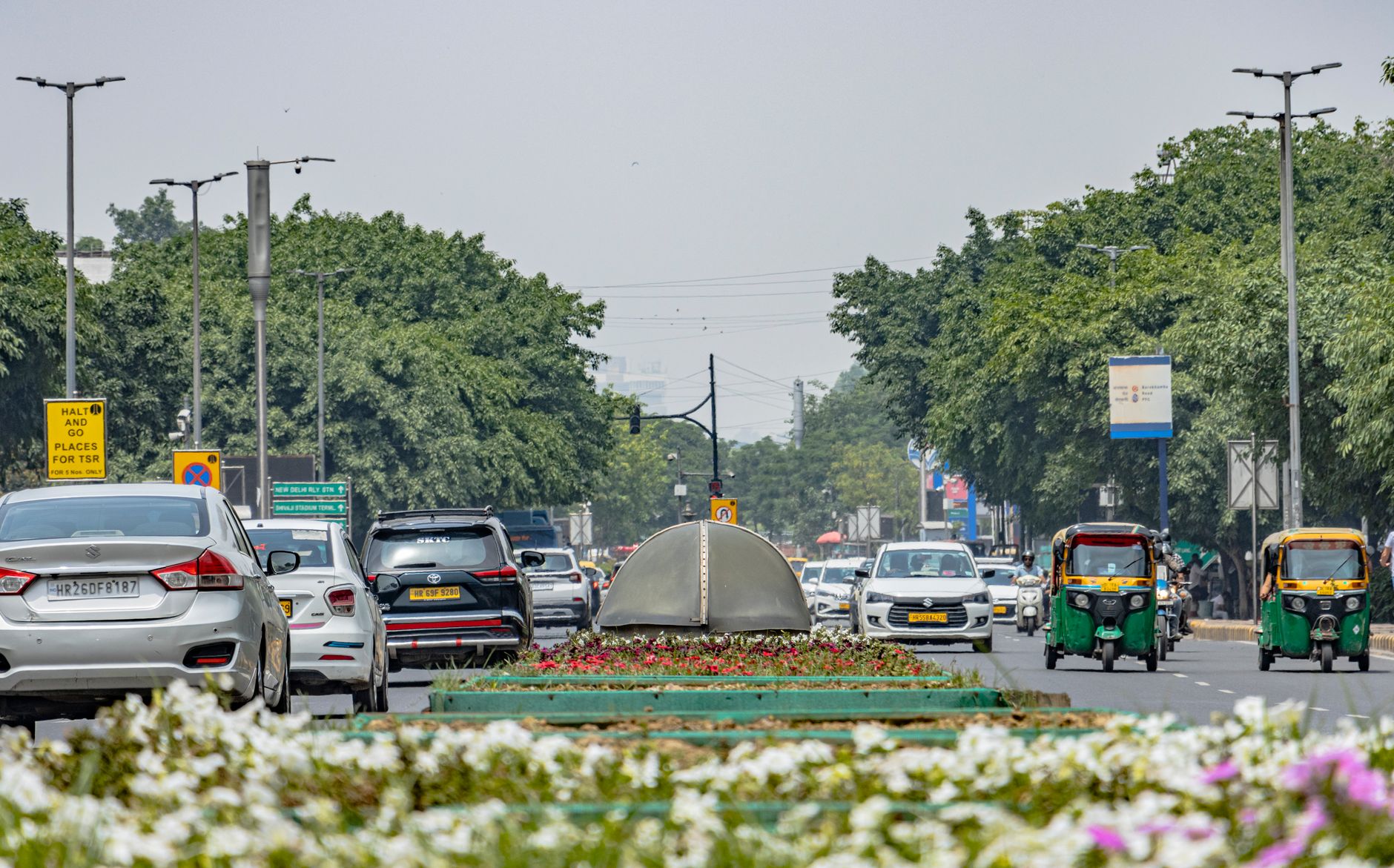
Photo by Ekaterina Belinskaya on Pexels
Delhi-NCR CNG Price Hike: IGL Raises Rates by ₹2/kg Again; Delhi Price Jumps ₹6 in 11 Days
Fresh increase pushes CNG prices higher across Delhi-NCR as commuters, cab drivers and households brace for rising transport and grocery costs
Delhi-NCR commuters woke up to another fuel price increase on Tuesday as Indraprastha Gas Limited (IGL) raised the retail price of compressed natural gas (CNG) by ₹2 per kilogram, effective 6:00 AM on May 26, 2026.
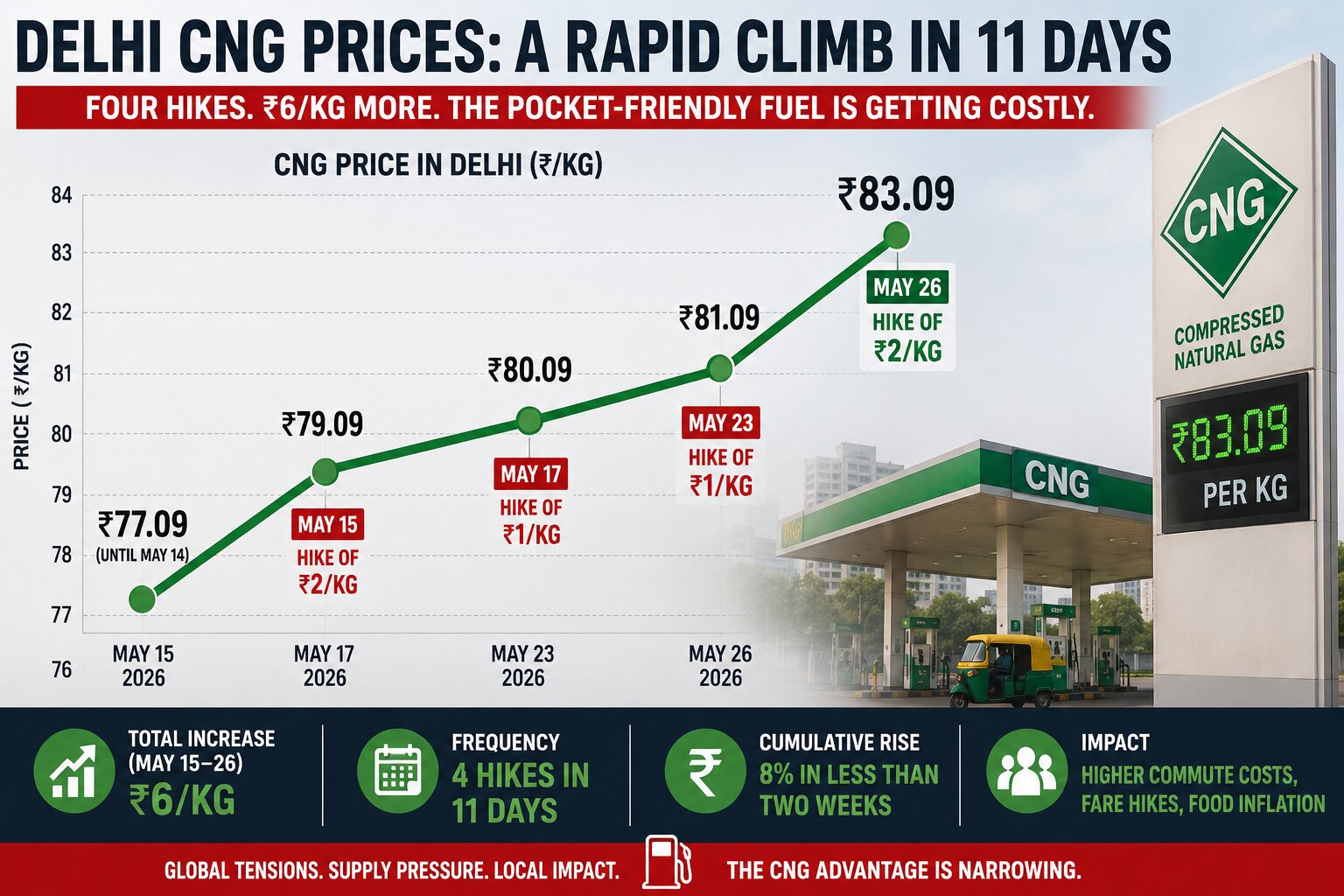
The latest revision marks the fourth CNG hike in just 11 days, pushing Delhi’s CNG rate up by a cumulative ₹6/kg since mid-May and intensifying cost pressures on daily commuters, commercial transport operators and households across the National Capital Region.
For years, CNG was widely seen as Delhi’s most affordable fuel option—a practical alternative for middle-class families trying to manage rising petrol and diesel expenses. But with repeated hikes in quick succession, that price advantage is beginning to narrow, raising concerns over inflation and transport affordability.
New CNG prices effective May 26
IGL’s revised rates are now in force across Delhi and adjoining NCR cities:
| City / Region | New Price (₹/kg) | Previous Price (₹/kg) |
|---|---|---|
| Delhi (NCT) | ₹83.09 | ₹81.09 |
| Noida / Ghaziabad / Greater Noida | ₹91.70 | ₹89.70 |
| Gurugram | ₹88.12 | ₹86.12 |
| Ajmer / Pali / Rajsamand | ₹92.44 | ₹90.44 |
Domestic Piped Natural Gas (PNG) prices remain unchanged for now.
Four hikes in 11 days: Delhi price rises 8%
The latest increase continues a sharp upward trend that began earlier this month after a prolonged period of stability.
Until mid-May, CNG in Delhi was priced at ₹77.09/kg. Since then, the capital has seen four back-to-back revisions:
- May 15: ₹2/kg increase — ₹79.09/kg
- May 17: ₹1/kg increase — ₹80.09/kg
- May 23: ₹1/kg increase — ₹81.09/kg
- May 26: ₹2/kg increase — ₹83.09/kg
That translates to nearly an 8% increase in less than two weeks, sharply reducing the savings many vehicle owners depended on when choosing CNG over conventional fuels.
CNG still cheaper—but the affordability gap is narrowing
For many Delhi residents, CNG had long been viewed as the “pocket-friendly” option against rising petrol and diesel prices.
That equation is now changing.
The cumulative rise in fuel costs over less than two weeks is directly impacting the disposable income of households that rely on CNG vehicles for daily commuting. For drivers who invested in CNG kits specifically for long-term savings, the economics are beginning to look less predictable.
Commercial drivers are among the hardest hit.
Cab operators, auto-rickshaw drivers and small fleet owners depend on CNG to manage operating costs. With repeated hikes arriving within days of each other, many now say the savings margin that once justified the transition to CNG is shrinking faster than expected.
Why are prices increasing?
The repeated hikes come amid continued volatility in international energy markets.
Industry watchers point to geopolitical tensions in West Asia, particularly around Iran and the strategically significant Strait of Hormuz, one of the world’s most critical energy shipping routes.
India imports a substantial share of its crude and LNG requirements, leaving domestic prices vulnerable to supply disruptions, higher freight costs and currency fluctuations.
While distributors cite global pressures as the primary reason, the pace of domestic price increases has drawn criticism from consumers, especially when international price declines often take longer to reflect at retail stations.
Ripple effect: transport, food and daily essentials
The impact of higher CNG prices extends well beyond filling stations.
Across Delhi-NCR, CNG powers a large share of last-mile delivery vehicles and small commercial transport. Any increase in fuel costs raises logistics expenses, which can eventually reflect in the retail prices of vegetables, milk and everyday essentials sold in local markets.
Ride-hailing services may also feel the pressure.
Higher fuel costs can reduce driver margins, increase trip cancellations and lead to higher surge pricing—particularly during peak hours.
For households already managing elevated living expenses, that creates a broader inflationary chain: transportation costs rise first, followed by gradual increases in essential goods.
Public sentiment turns sharply negative
The pace of revisions has triggered visible frustration among commuters and drivers.
The biggest concerns remain:
- A cumulative ₹6/kg increase in less than two weeks
- Four revisions in 11 days, creating uncertainty around future fuel expenses
- Concerns that global price drops are slower to benefit consumers than global price spikes
- Rising fear of secondary inflation in food and transportation
The sentiment on the ground is increasingly clear: while CNG remains cheaper than petrol on paper, the financial comfort it once offered is beginning to fade.
The bottom line
Delhi’s CNG market is entering a more uncertain phase.
Even after the latest hike, CNG continues to offer savings over petrol and diesel—but the gap is narrowing fast enough to change household calculations and commercial transport economics.
Unless global supply routes stabilize and pricing pressure eases, Delhi-NCR commuters may continue facing volatility at CNG pumps—and the broader impact could soon be felt in everything from cab fares to vegetable prices.
For consumers who once saw CNG as the city’s most reliable low-cost fuel, the latest hike is a reminder that affordability itself is becoming harder to predict.