Desi Core: How Gen Z Is Rewriting the Rules of Indian Fusion Fashion
Gen Z is dismantling the exclusivity of high fashion by turning street markets and heirloom closets into their own personal runways. This 'Desi-core' movement is more than a trend—it's a reclamation of heritage that challenges both the luxury industry and the ethics of fast-fashion.
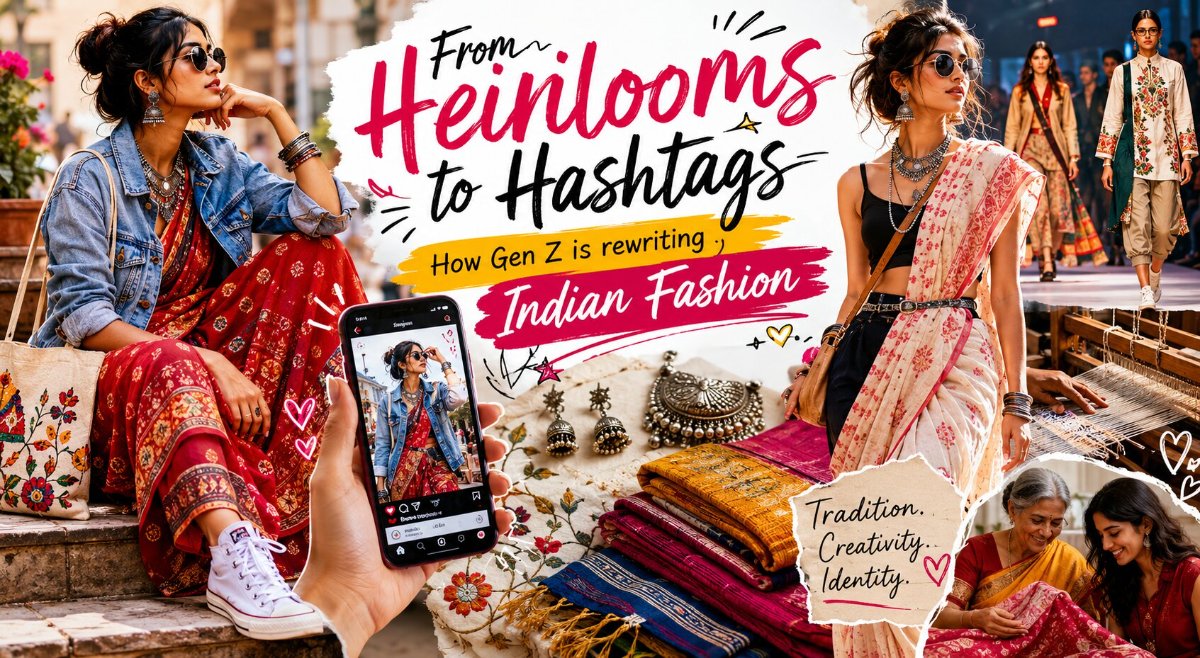
Photo by Anil Sharma on Pexels
From Heirlooms to Hashtags: How Gen Z Is Rewriting the Rules of Indian Fashion
The End of Fashion's Old Rulebook
For decades, Indian fashion followed a predictable script. Luxury brands introduced trends, designers showcased them on runways, celebrities amplified them, and consumers followed. Fashion flowed in one direction—from the top down.
That hierarchy is breaking apart.
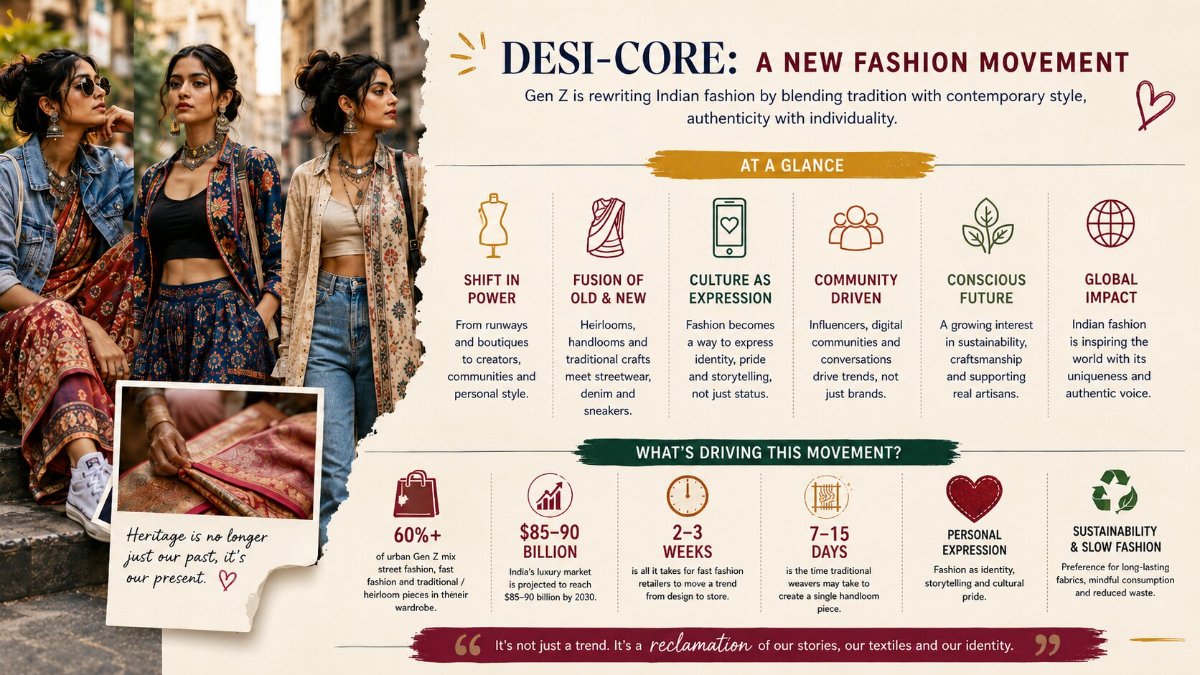
A generation raised on social media, global fashion feeds, and unrestricted access to style inspiration no longer waits for designers or magazines to decide what looks aspirational. Instead, Gen Z has become both the consumer and the curator. A grandmother's saree, a pair of sneakers, an oversized denim jacket, and a set of oxidized silver earrings can now generate more attention online than a carefully orchestrated luxury campaign.
The shift marks one of the most significant changes in Indian fashion over the past decade. Style is becoming less about ownership and more about interpretation. The value of an outfit increasingly lies not in its price tag but in the story it tells.
Fashion's New Currency: Cultural Fluency

The defining characteristic of Gen Z fashion is not minimalism or maximalism. It is cultural fluency.
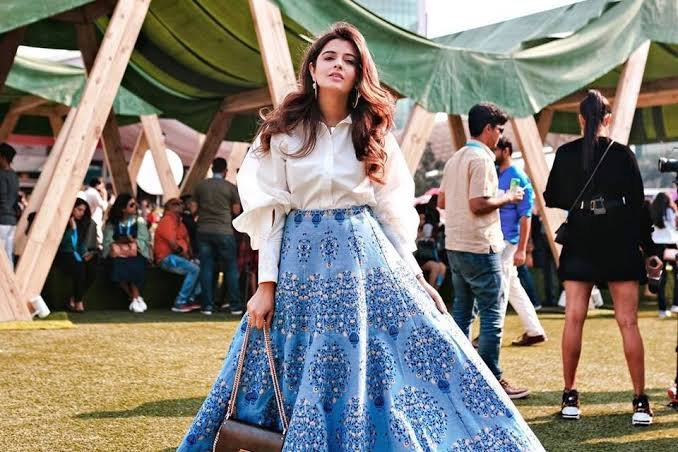
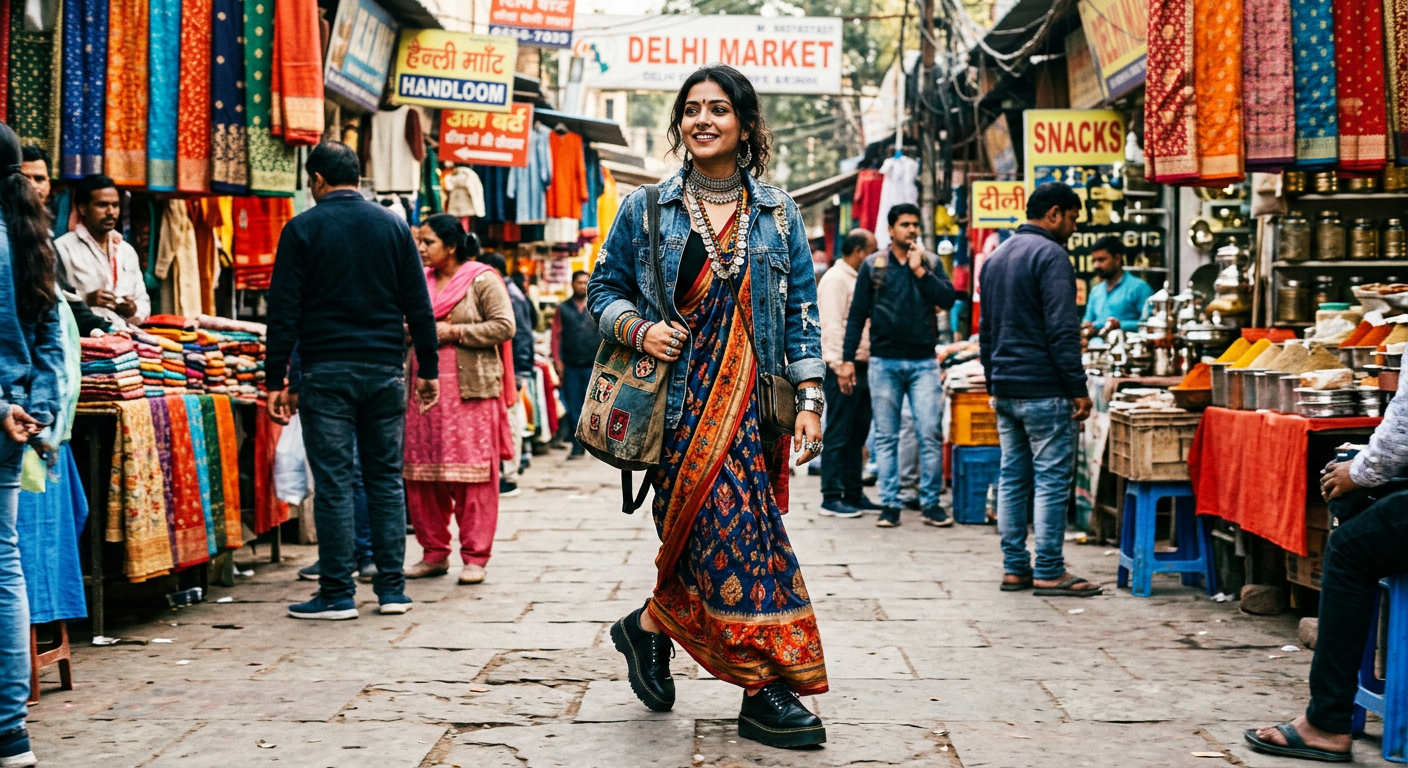
Young Indians increasingly mix traditional garments with contemporary silhouettes to create looks that feel personal rather than prescribed. Sarees appear with sneakers. Handloom dupattas become statement accessories. Jhumkas pair with oversized shirts and cargo pants. Traditional clothing no longer sits in a separate category reserved for weddings and festivals.
Instead, heritage has entered everyday fashion.
Unlike previous generations that often viewed traditional clothing as formal or restrictive, Gen Z treats these garments as flexible building blocks. A cotton saree can function as daily wear. A family heirloom can become a fashion statement. A regional textile can carry as much cultural cachet as an international luxury logo.
The result is a distinctly Indian aesthetic that feels contemporary without abandoning its roots.
Why Luxury Brands Are Paying Attention
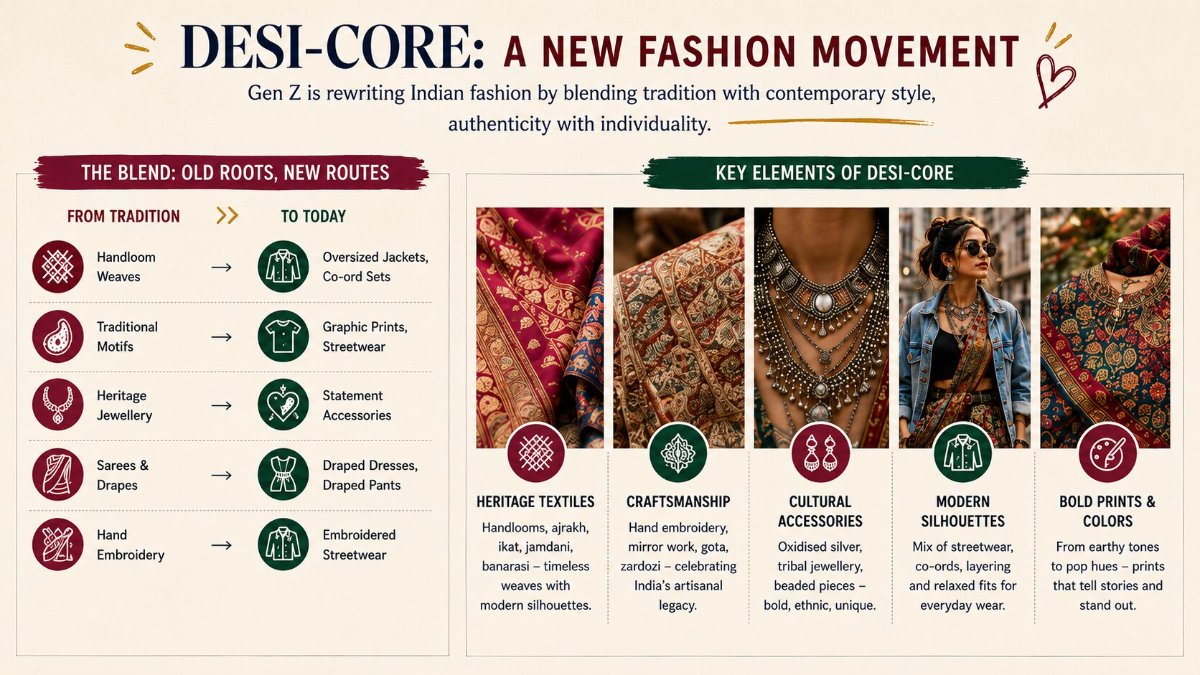
This cultural shift arrives at a crucial moment for India's fashion industry.
India's luxury market is expected to expand dramatically over the coming decade, yet many established brands face a growing challenge. The traditional markers of exclusivity no longer guarantee influence among younger consumers.
Gen Z values originality, authenticity, and cultural relevance. A logo alone carries less weight than it once did.
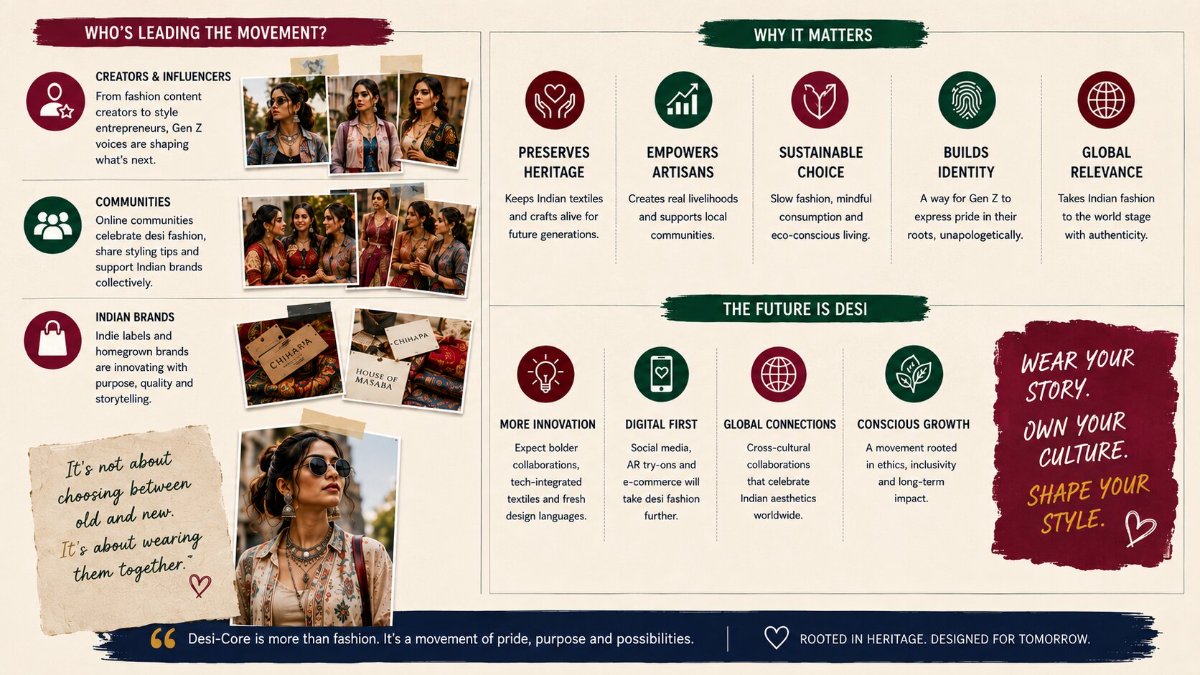
This change has forced luxury brands and designers to reconsider their relationship with Indian identity. Collections increasingly incorporate handwoven fabrics, regional craft traditions, artisanal embroidery, and heritage-inspired silhouettes. Designers who once set the agenda now spend more time observing digital communities, creators, and youth culture to understand where fashion is heading.
Influence has become decentralized.
The runway still matters, but social media creators often identify emerging trends long before luxury houses can commercialize them.
The Rise of Heritage as Everyday Style
One of the most fascinating developments within this movement is the revival of traditional Indian textiles.
Across urban India, younger consumers are rediscovering cotton handlooms, khadi, linen, and naturally woven fabrics. The appeal goes beyond aesthetics. These textiles offer texture, comfort, durability, and a tangible connection to craftsmanship.
In an era dominated by digital experiences, physical authenticity has become increasingly valuable.
Many young consumers now view inherited clothing through a different lens. Garments once preserved for special occasions are being reintroduced into everyday wardrobes. A twenty-year-old saree is no longer seen as outdated. It is viewed as unique. A handcrafted textile no longer represents tradition alone. It represents individuality.
This phenomenon creates what some observers describe as the "heirloom advantage." In a world saturated with mass production, scarcity often exists inside family wardrobes rather than luxury boutiques.
The Fast-Fashion Contradiction
Yet the same movement that celebrates heritage also exposes a growing contradiction.
As demand for ethnic-inspired fashion grows, retailers have moved quickly to capitalize on the trend. Traditional motifs, embroidery styles, and regional aesthetics increasingly appear in mass-produced collections designed for rapid consumption.
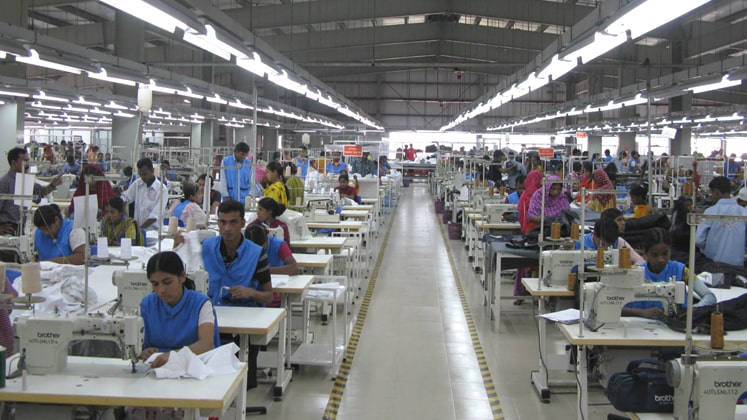
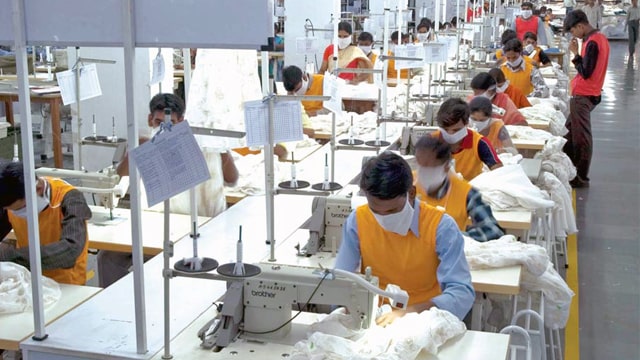
Digital trend tracking allows manufacturers to identify a popular aesthetic, replicate it, and distribute thousands of versions within weeks.
The economics heavily favor scale.
A skilled artisan may spend days creating a single handcrafted piece. A factory can imitate the visual language of that craft at a fraction of the cost and time. To many consumers, the products may appear similar. The production realities could not be more different.
This tension raises an uncomfortable question. Is Gen Z driving a revival of Indian craftsmanship, or merely creating demand for a new category of ethnic fast fashion?
The answer remains uncertain.
The Battle Over Cultural Ownership
The conversation becomes even more complex as Indian aesthetics gain international visibility.
Fashion has always borrowed across cultures, but the speed of digital trend cycles has accelerated the process dramatically. Elements rooted in specific regions, communities, and traditions increasingly reappear in global fashion ecosystems under broader labels such as "bohemian," "artisan-inspired," or "eclectic."
When that happens, the aesthetic often survives while the context disappears.
The craft becomes a trend. The story becomes a marketing tool. The artisan frequently becomes invisible.
For many young Indians, this reality has strengthened the desire to engage more deeply with the origins of the garments they wear. Fashion is no longer just a visual expression. It is becoming a conversation about heritage, identity, and cultural ownership.
A New Definition of Luxury
The most important consequence of this shift may be the emergence of a new definition of luxury itself.
For previous generations, luxury often meant exclusivity, designer labels, and high prices. For Gen Z, luxury increasingly means authenticity, craftsmanship, individuality, and cultural connection.
A handwoven textile that took weeks to create can carry more meaning than a mass-produced luxury accessory. An inherited saree can possess more personal value than a newly purchased designer outfit. A garment's history can matter as much as its appearance.
That change does not signal the end of luxury fashion. It signals the beginning of a different kind of luxury—one rooted less in status and more in storytelling.
For the first time in decades, India's fashion future is not being written exclusively in design studios or corporate boardrooms. It is being shaped in homes, on social media feeds, through family wardrobes, and within communities rediscovering the value of their own traditions.
The next major fashion movement may not emerge from a runway.
It may emerge from someone opening an old wardrobe and seeing heritage not as the past, but as the future.