Google I/O 2026 Recap: 5 Massive Upgrades Coming to Your Devices
Google I/O 2026 has fundamentally dismantled the 25-year-old '10 blue links' model, replacing it with proactive, agentic AI. As SEO professionals and publishers grapple with a zero-click future, we analyze what this shift to 'asking and acting' means for the open web.
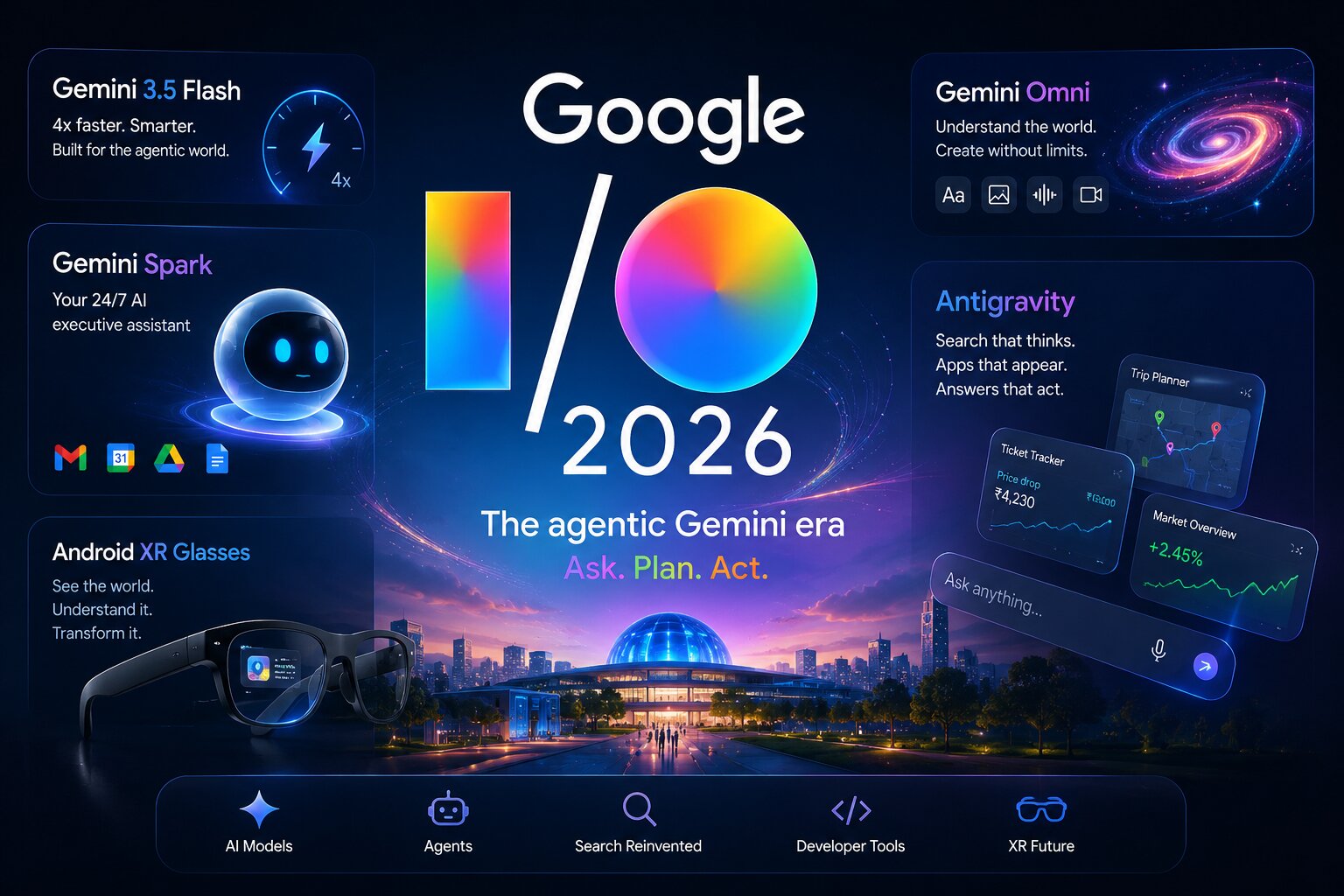
Photo by Brett Jordan on Pexels
Search Is Dead, Long Live the Agent: Inside Google’s New AI-First Internet
At Google I/O 2026, CEO Sundar Pichai did not just unveil another AI upgrade. He effectively announced the beginning of a completely different internet experience — one where users no longer “search” for information but delegate tasks to autonomous AI agents that think, plan, and act on their behalf.
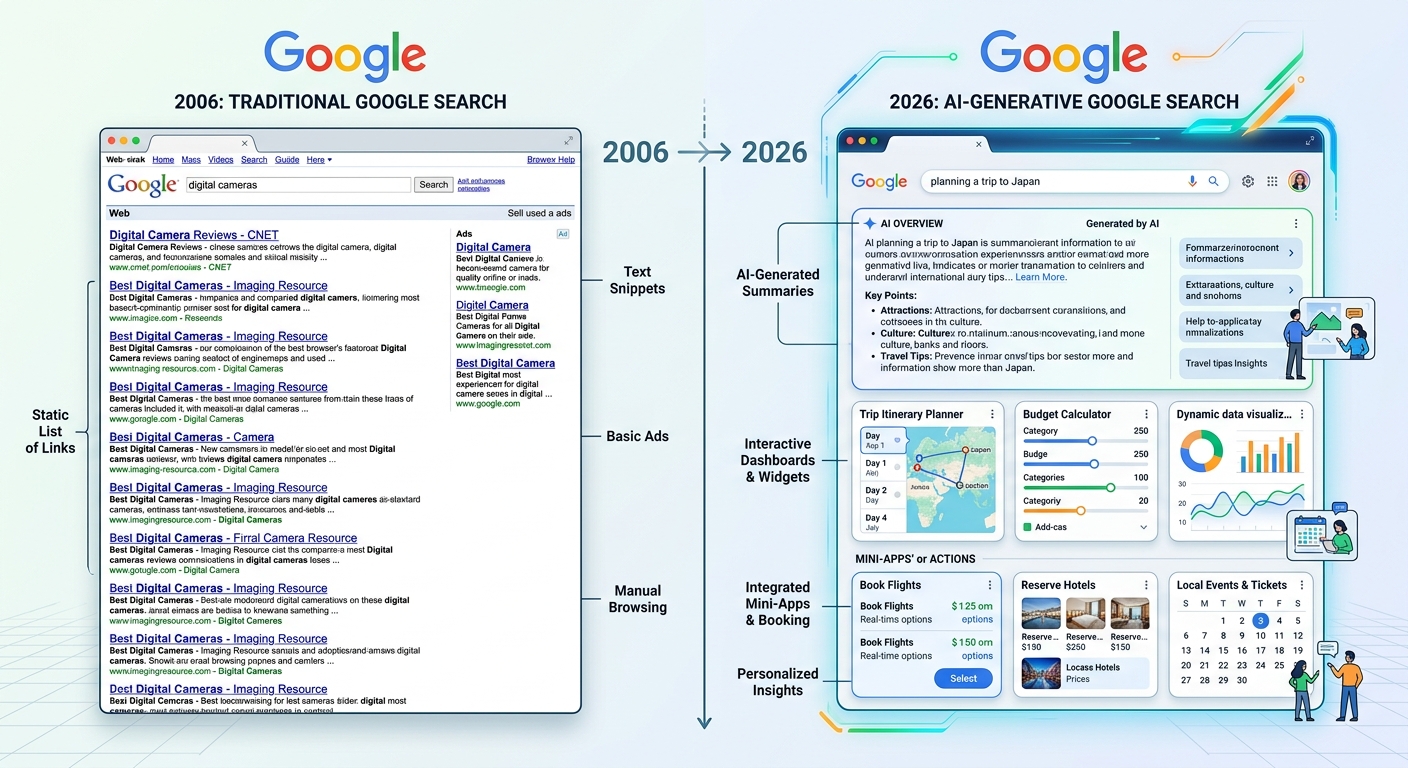
The shift marks the official arrival of what Google calls the “agentic Gemini era.” For more than 25 years, the web revolved around the iconic “10 blue links” model: users typed keywords, websites competed for rankings, and traffic powered the open internet economy.
That model is now being dismantled in real time.
Instead of directing users outward toward websites, Google is rebuilding Search into a self-contained AI operating layer powered by Gemini 3.5 Flash, Gemini Omni, and a new framework called Antigravity. The result is a future where answers, workflows, apps, recommendations, and even decisions happen directly inside Google’s ecosystem.
For publishers, creators, SEO professionals, and businesses, this is not a feature update. It is an existential platform reset.
The End of the ‘Blue Link’ Era
The clearest message from Google I/O 2026 was simple: traditional search is no longer the center of the web.
The old search box has evolved into an “Intelligent Search Box” capable of understanding text, images, PDFs, videos, Chrome tabs, and even live context simultaneously. Rather than presenting a list of websites, Gemini synthesizes information into interactive answers, mini-apps, simulations, dashboards, and actionable workflows.
Google calls the backend powering this experience Antigravity.
Instead of clicking through five websites to compare flight prices, analyze stock performance, or research a medical topic, users increasingly remain inside Google’s AI-generated environment.
For users, the convenience is undeniable. For publishers, the implications are severe.
The traditional web economy depended on traffic. Websites created content, Google indexed it, and users visited those sites. Under the new AI-search paradigm, Google increasingly consumes website content to generate synthesized responses without requiring users to leave the platform.
That creates a dangerous imbalance:
- Websites publish original information.
- AI models absorb and summarize that information.
- Users get answers directly inside Google.
- Publishers lose clicks, ad revenue, and subscribers.
- Independent websites weaken or disappear.
- Platforms retain control over information access.
The fear across the publishing industry is that the open web slowly transforms into a training-data supply chain for AI systems.
Gemini 3.5 Flash: The Engine Behind the Shift
At the core of Google’s new ecosystem is Gemini 3.5 Flash, now positioned as the default intelligence layer across Search, Workspace, Android, and the Gemini app.
Google claims the model is roughly four times faster than competing frontier systems while significantly improving:
- Multi-step reasoning
- Coding accuracy
- Tool orchestration
- Visual understanding
- Real-time contextual awareness
Unlike earlier chatbots that simply responded to prompts, Gemini 3.5 Flash is optimized for continuous workflows and autonomous task execution.
This speed matters because Google’s vision depends on AI operating invisibly in the background. The company wants interactions with AI to feel ambient rather than intentional — more like electricity than software.
That philosophy powers nearly every announcement from I/O 2026.
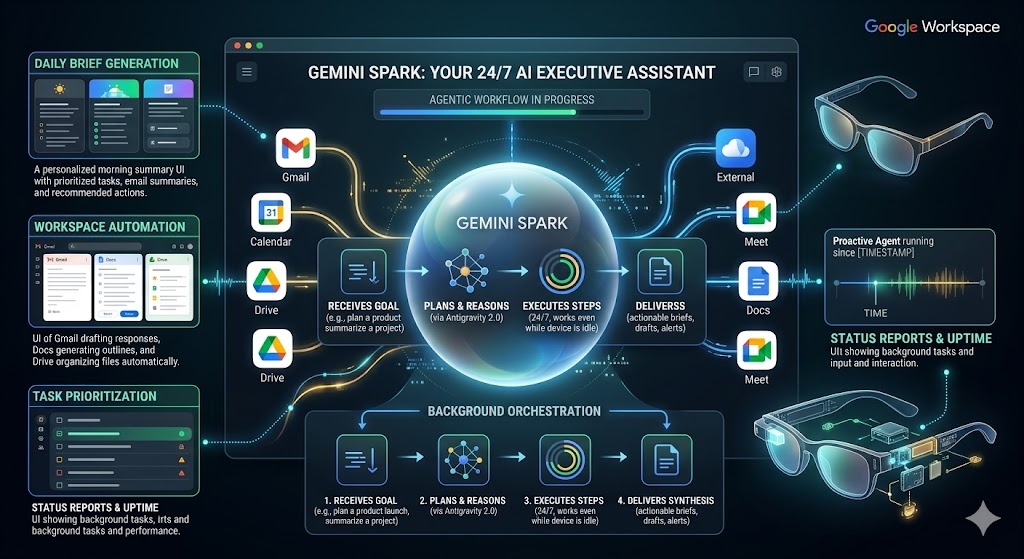
Gemini Spark: Your 24/7 AI Executive Assistant
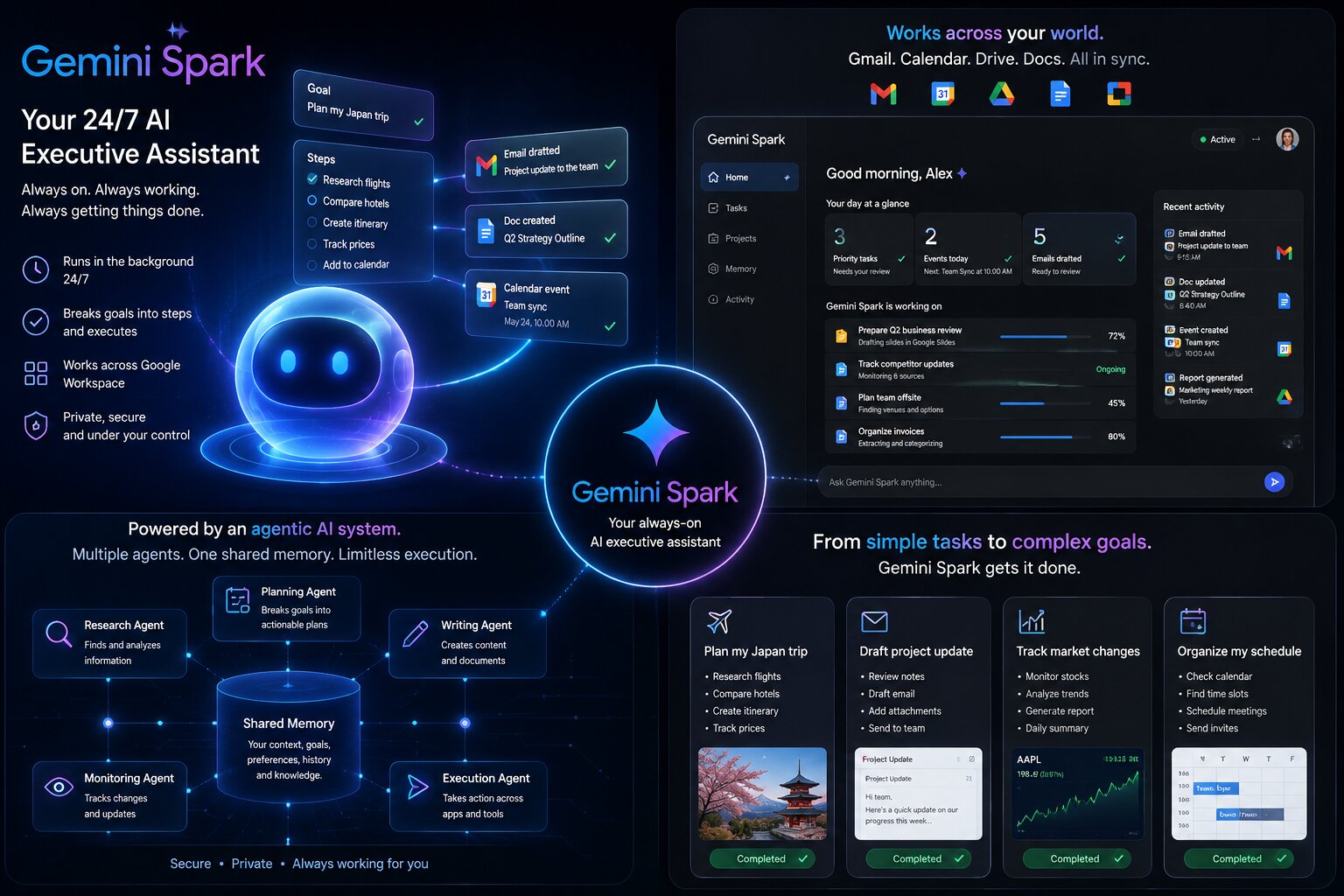
Perhaps the most disruptive announcement was Gemini Spark, Google’s always-on AI agent integrated directly into Workspace apps like Gmail, Docs, Sheets, and Calendar.
Spark is designed to behave less like a chatbot and more like an autonomous digital chief of staff.
Users can assign broad goals such as:
- “Prepare my quarterly business review.”
- “Plan my Japan trip.”
- “Organize my university applications.”
- “Track invoice payments.”
The agent then breaks those goals into smaller tasks, monitors progress, drafts documents, tracks deadlines, and works continuously in the background — even while the user is offline.
This represents a major conceptual shift in computing.
Previously:
"Humans operated software manually.
Now:
"AI agents operate software for humans.
The implication is profound: interfaces themselves may become less important as AI increasingly acts as the intermediary between users and applications.
Google Search Is Becoming an Operating System
The launch of Search Agents and Antigravity signals that Google no longer sees Search as merely an information retrieval engine.
It is becoming a real-time AI operating system.
Users can now ask Google to continuously monitor the web for:
- Flight price drops
- Product restocks
- Ticket availability
- Financial filings
- News developments
- Competitive intelligence
Instead of searching repeatedly, agents work persistently in the background and deliver synthesized updates automatically.
At the same time, Antigravity dynamically generates:
- Interactive trackers
- Simulations
- Financial dashboards
- Visual explainers
- Lightweight applications
directly inside search results.

This dramatically reduces the need for third-party websites.
Google is effectively compressing discovery, analysis, and execution into one vertically integrated AI environment.
Android XR Smart Glasses Push Gemini Into the Real World
Google also revealed its most ambitious hardware strategy since Android itself: Android XR Smart Glasses.
Developed alongside Samsung, Qualcomm, Warby Parker, and Gentle Monster, the glasses integrate Gemini directly into real-world experiences.
Features include:
- Real-time multilingual translation
- Context-aware visual recognition
- Voice-driven Gemini interactions
- On-device AI image transformations via Nano Banana
- Environmental memory and summarization
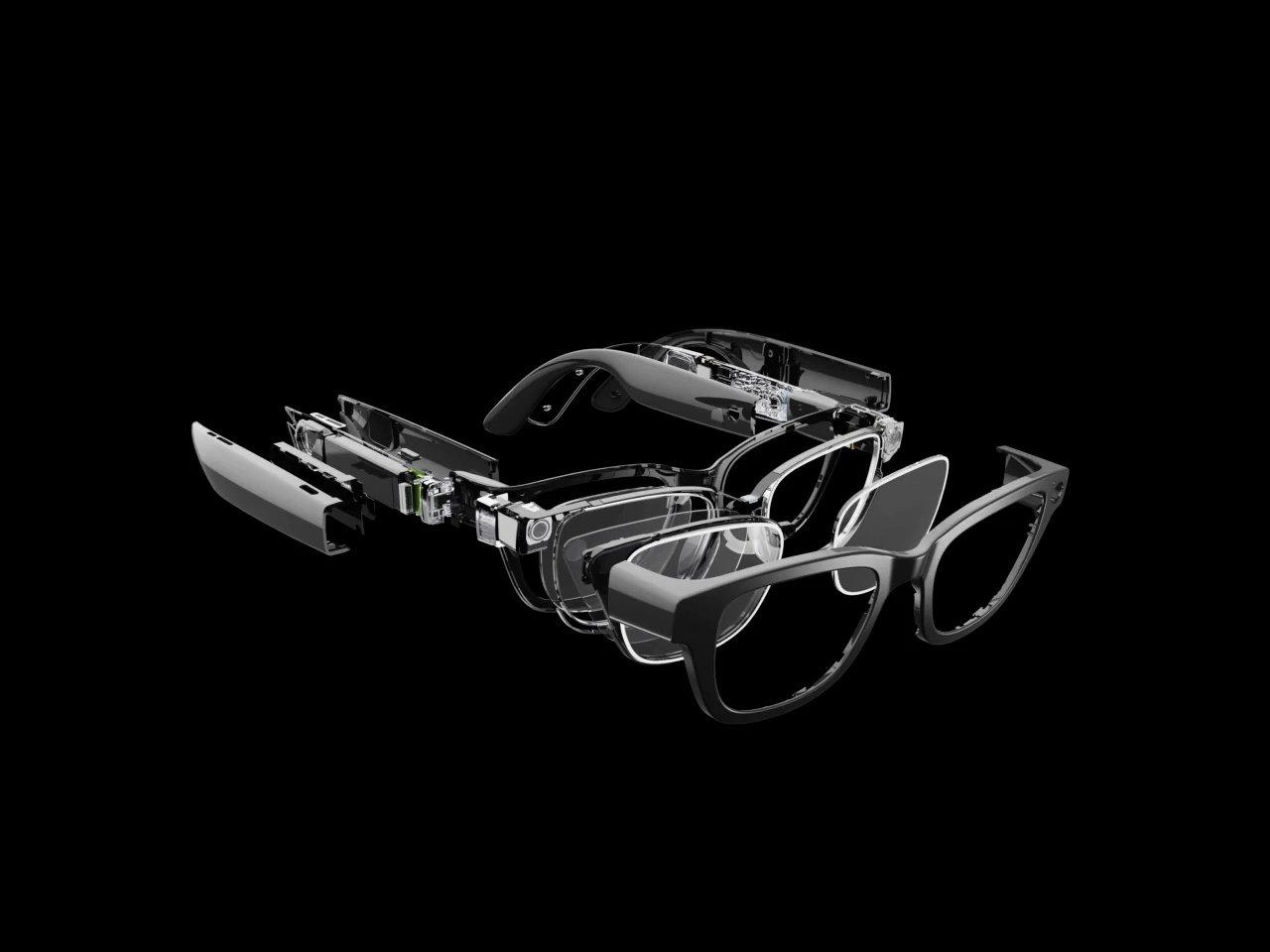
Unlike earlier smart glasses attempts, Google is positioning XR as an AI-native interface rather than a notification accessory.
The long-term vision is clear: Gemini evolves from an app into an ambient intelligence layer embedded across phones, glasses, browsers, cars, and homes.
The Publisher Panic Is Real
Across media, publishing, and SEO communities, the reaction has been immediate anxiety.
The fundamental concern is that AI-generated answers weaken the economic incentives that sustain the open web.
If users never visit websites:
- Advertising revenue declines
- Subscription funnels collapse
- Independent journalism weakens
- Smaller publishers disappear
At the same time, hallucinations remain unresolved.
Even highly advanced AI systems still:
- Misattribute sources
- Invent facts
- Oversimplify nuance
- Strip context from reporting
When inaccurate summaries spread, publishers often absorb the reputational damage despite not controlling the AI output itself.
The broader fear is not merely lost traffic — it is loss of informational ownership.
The Five Biggest Features That Define Google’s AI Future
1. Gemini 3.5 Flash
Google’s fastest AI model yet, powering Search, Workspace, and Android with advanced reasoning and real-time responsiveness.
2. Gemini Spark
A fully autonomous AI assistant capable of handling multi-step tasks continuously in the background.
3. Antigravity Search
Transforms Google Search into an interactive AI platform capable of generating apps, dashboards, and simulations instantly.
4. Search Agents
Persistent AI agents that monitor the web 24/7 and proactively deliver updates without requiring repeated searches.
5. Android XR Glasses
Google’s push toward ambient AI computing through wearable, context-aware smart glasses.
Survival Strategies for Publishers and Brands
The SEO playbook that dominated the 2010s is rapidly becoming obsolete.
The future now revolves around:
- Brand authority
- Community trust
- Proprietary audiences
- Direct engagement ecosystems
The smartest publishers are already shifting toward:
- Email newsletters
- Membership communities
- Podcasts and video
- Creator-led brands
- Proprietary research
- Human expertise that AI struggles to replicate
This evolution is giving rise to what many marketers now call Hybrid Engine Optimization (HEO) — optimizing not just for search rankings, but for AI citations, sentiment analysis, entity recognition, and conversational relevance.
The web is transitioning from:
“How do I rank higher?”
to:
"“How do I become impossible for AI to ignore?”
Bottom Line: The Internet Just Entered Its Agentic Phase
Google I/O 2026 may ultimately be remembered as the moment the internet changed direction.
The company is betting that users prefer convenience, automation, and synthesized intelligence over manual exploration of the open web. The result is a future where AI agents become the primary interface between humans and information.
Whether that future creates unprecedented productivity — or slowly centralizes the web into a handful of AI platforms — remains uncertain.
What is clear, however, is that the “Blue Link” era is ending.
The age of the Agent has begun.