Graduation Day Revolt: Why Students are Turning Their Backs on AI-Fueled Commencement Speeches
As commencement season turns into a stage for public defiance, tech titans are learning that preaching AI-driven utopia to a job-insecure generation is falling on deaf ears. We examine why the Class of 2026 is moving past mere 'AI anxiety' to demand accountability for a collapsing entry-level labor market.

Photo by Toàn Văn on Pexels
Graduation Day Revolt: Why Students are Turning Their Backs on AI-Fueled Commencement Speeches
Commencement season used to be a choreographed spectacle of hope, capped by sage advice from captains of industry. But for the Class of 2026, the tradition has curdled. As university stages transform into platforms for Silicon Valley’s relentless AI evangelism, the audience isn’t cheering—they’re pushing back. From ivy-league lawns to graduation ceremonies across India’s premier IITs, a rising tide of graduates is treating these AI-heavy speeches not as inspiration, but as an affront to their precarious economic future.
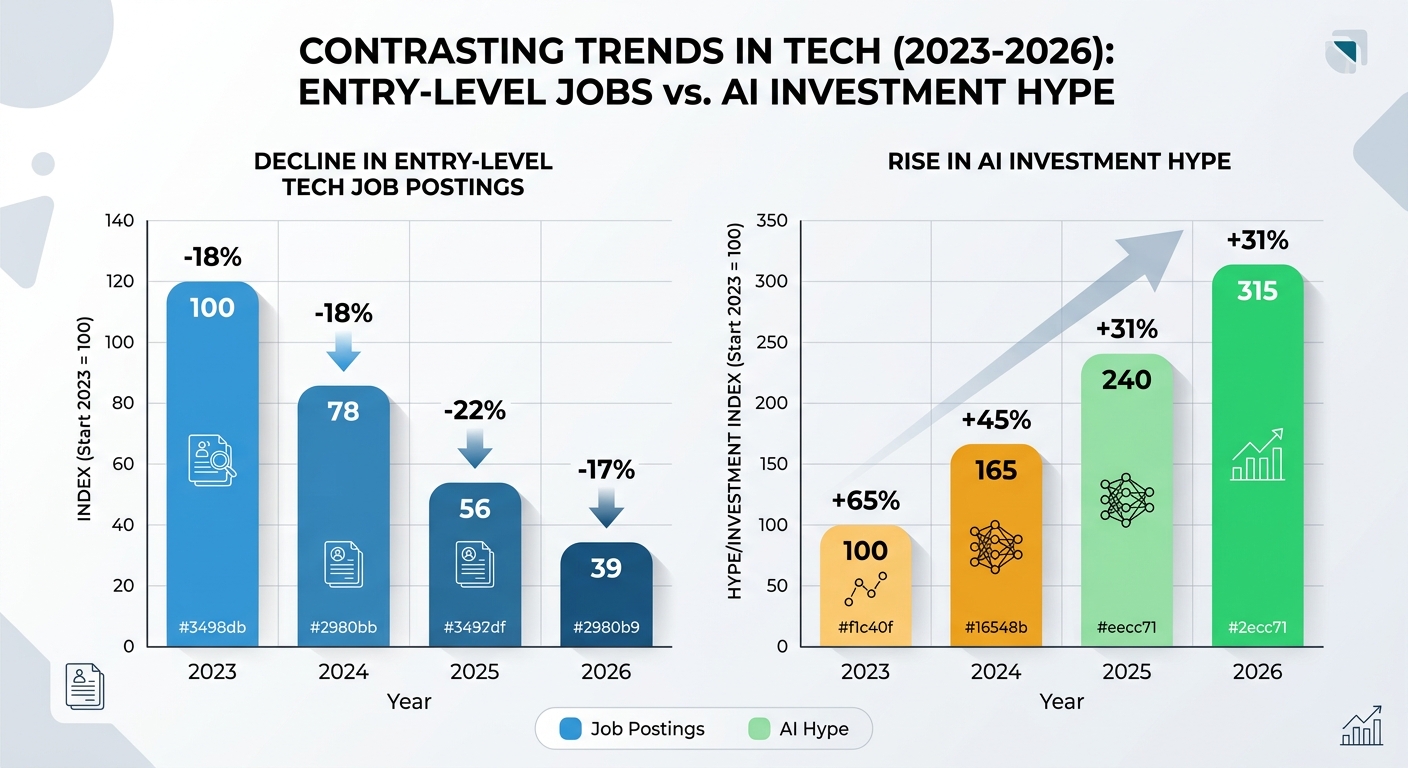
The Silicon Valley disconnect
For years, tech founders have used graduation speeches to paint a portrait of a world where AI is a productivity miracle. Yet, this narrative is colliding with a harsh reality: a shrinking entry-level job market. When Eric Schmidt, former Google CEO, took to the podium at a recent high-profile event, his attempt to frame AI as the ultimate career accelerant was met with audible groaning and booing. Students, many of whom have spent the last six months watching their internship prospects vanish into automated black holes, weren’t buying the utopian vision.
This isn't just about 'AI anxiety'; it is about institutional accountability. Industry leaders talk about a 40% increase in productivity for developers, yet they fail to mention that this often correlates with a 30% reduction in junior-level hiring. For the Indian engineering student, who often faces the added pressure of high education debt and intense competition, the AI-first message feels like a severance package disguised as a commencement address.
The Reddit backlash
Discourse on social media has become the primary site of this resistance, where students dissect the hypocrisy of wealthy executives preaching adaptability while simultaneously automating away their livelihoods.
"It’s incredibly patronizing to stand on a stage and tell us that 'AI is a tool, not a replacement' while your own company is announcing layoffs specifically to shift capital toward building more 'tools' that make us redundant. We aren't luddites; we are reading the balance sheets." — u/TechGrad_2026, r/technology
"The irony of a billionaire telling me to 'embrace the disruption' while I’ve sent 200 applications and received zero interviews because of resume-filtering algorithms is not lost on anyone in my department. The graduation speech is just another marketing event now." — u/FutureDev_India, r/developersIndia
The growing rift in the Indian tech ecosystem
In India, the situation is particularly acute. The IT services sector, which has historically been the primary employer for millions of engineering graduates, is undergoing a massive transformation. Companies are increasingly prioritizing 'AI-ready' talent over fresh graduates who require training. As a result, the unemployment rate among graduates remains a point of intense concern, hovering around 15% to 20% in several tech-heavy urban hubs. When leadership from these firms visits campuses, students are no longer willing to applaud the 'AI revolution' without seeing a concrete plan for workforce sustainability.
The Bottom Line
The era of the 'blindly optimistic' tech founder commencement speech is effectively dead. For the Class of 2026, tech titans aren't just speakers; they are the architects of a labor market that feels increasingly hostile to human participation. Unless these leaders begin to address the 'missing middle' of the job market and the erosion of entry-level growth paths, they should expect to be met with cold silence—or worse—the next time they step onto a university stage.