Institutional Apathy: Why the BCCI and Franchises Avoid Addressing Toxic Fandom
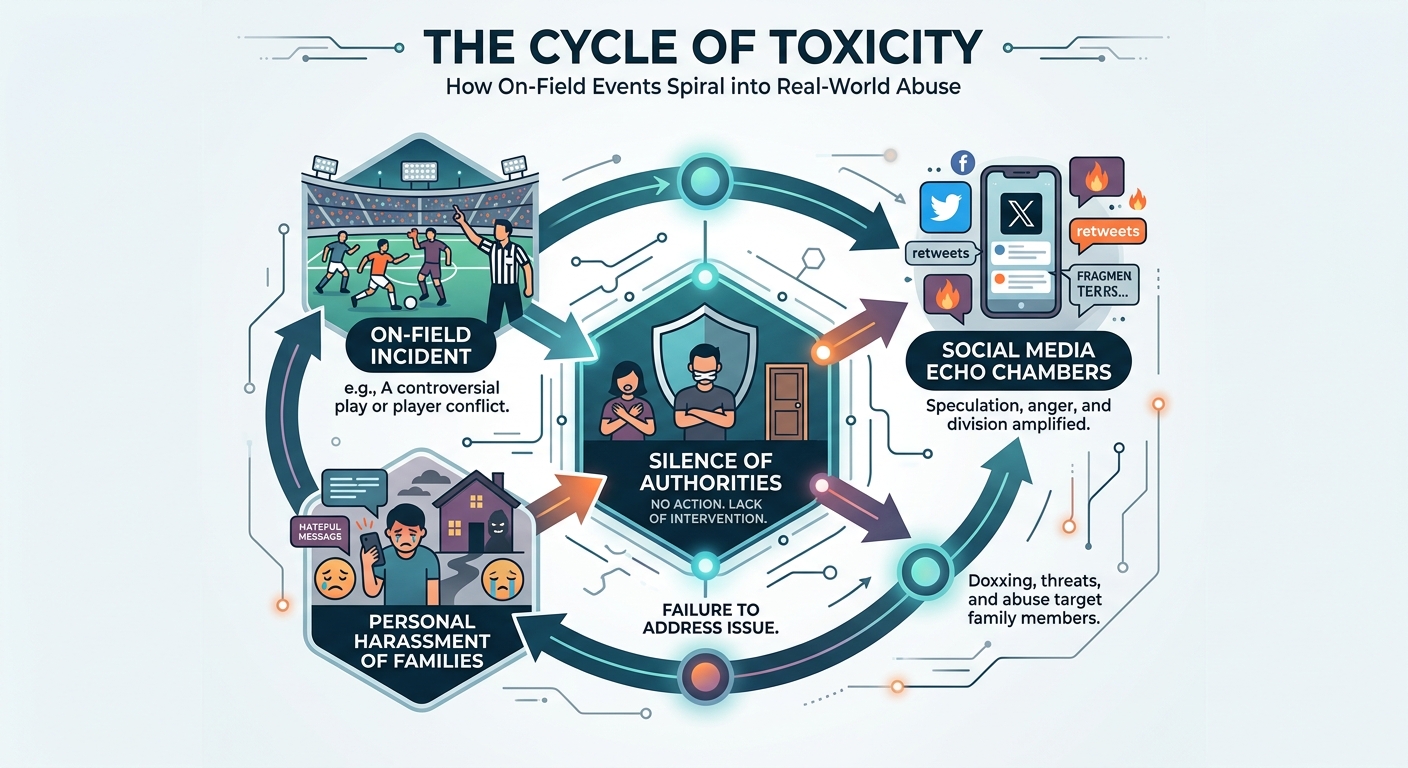
The recent wave of sexualized abuse directed at cricketers' families has exposed a dark side of Indian sports culture. While fans turn on each other, the silence from governing bodies suggests a calculated trade-off between commercial growth and ethical responsibility.

Photo by Maurício Mascaro on Pexels
The Weaponization of Standom: Why the BCCI and Franchises Avoid Addressing Toxic Fandom
The recent wave of sexualized abuse directed at cricketers' families has exposed a dark side of Indian sports culture. While fans turn on each other, the silence from governing bodies suggests a calculated trade-off between commercial growth and ethical responsibility. What began as a trivial on-field disagreement has metastasized into a digital gladiator arena where spouses are treated as collateral damage.
The Anatomy of a Digital Mob
The spark was a perceived on-field gesture by Virat Kohli, which, within hours, catalyzed a massive, coordinated wave of harassment. Rather than debating the merits of the sportsmanlike conduct, the discourse shifted rapidly toward the targeted abuse of Anushka Sharma and the family of Travis Head. It is a bleak evolution: game analysis has been replaced by the dehumanization of individuals who have no role in the match’s outcome.
Fans across platforms are sounding the alarm, noting that the intensity of this abuse is unprecedented. The sentiment on Reddit has shifted from sports commentary to profound collective shame.
The Silence of the Governing Body
The Board of Control for Cricket in India (BCCI) and various franchise stakeholders have maintained a resolute silence. This is not a policy of neutrality; it is a business strategy. The Indian Premier League (IPL) is built upon the back of hyper-engaged, 'war-like' fandom, which drives record-breaking viewership numbers and massive advertising revenue. Policing this behavior risks alienating the very demographic that ensures the league’s billion-dollar valuation.
Contrast this with the Premier League or the NBA. Both organizations have established, strictly enforced stances on player-fan boundaries, often issuing official condemnations of abusive behavior to protect the integrity of the sport. By refusing to do the same, the BCCI leaves its players—and their families—vulnerable to a digital mob that views harassment as a form of 'fan loyalty.'
The Myth of Celebrity Immunity
There is a growing expectation that star athletes must break their silence. Many fans now argue that by failing to explicitly condemn the toxic behavior of their own 'stans,' cricketers are implicitly validating it. However, the culture of 'moral equivalence' persists; followers of one camp frequently excuse their own harassment by pointing to the historical toxicity of a rival fanbase. This tribalism has turned cricket from a professional sport into a theater of performative cruelty.
Roadmap to Accountability
To move beyond this cycle, the governing bodies must treat online abuse as a threat to the brand equity of the sport.
- Standardized Conduct Codes: Franchises should implement explicit clauses in player-fan engagement guidelines that empower the organization to disavow toxic fan behavior publicly.
- Institutional Condemnation: A clear, unified statement from the BCCI against gendered and sexualized abuse is the bare minimum requirement to curb the normalization of such hate.
- Digital Hygiene: Establishing professional liaison teams to report and document coordinated harassment campaigns rather than leaving players to navigate the abuse alone.
Bottom Line
As Indian cricket expands its global footprint, it cannot afford to be associated with the toxicity of its most aggressive digital fringes. Ignoring this behavior may protect short-term engagement metrics, but it is effectively eroding the sport's moral authority. The silence from the top is no longer just 'hands-off' management; it is a failure of leadership.