Massive fire breaks out in Rajdhani Express in MP
While the rapid evacuation of 68 passengers from the Ratlam-bound Rajdhani Express averted a catastrophe, the recurring nature of coach fires raises urgent questions. It is time to look past operational heroism and address the systemic infrastructure vulnerabilities plaguing India's premium fleet.
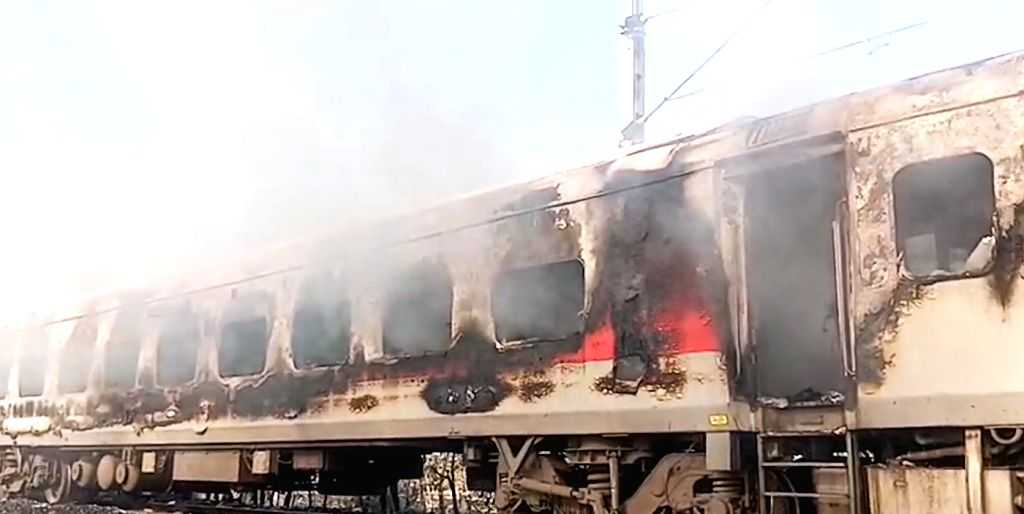
Photo by Bijen Amatya on Pexels
Beyond the 15-Minute Rescue: Why 'Safety Audits' Must Address Aging Coach Infrastructure
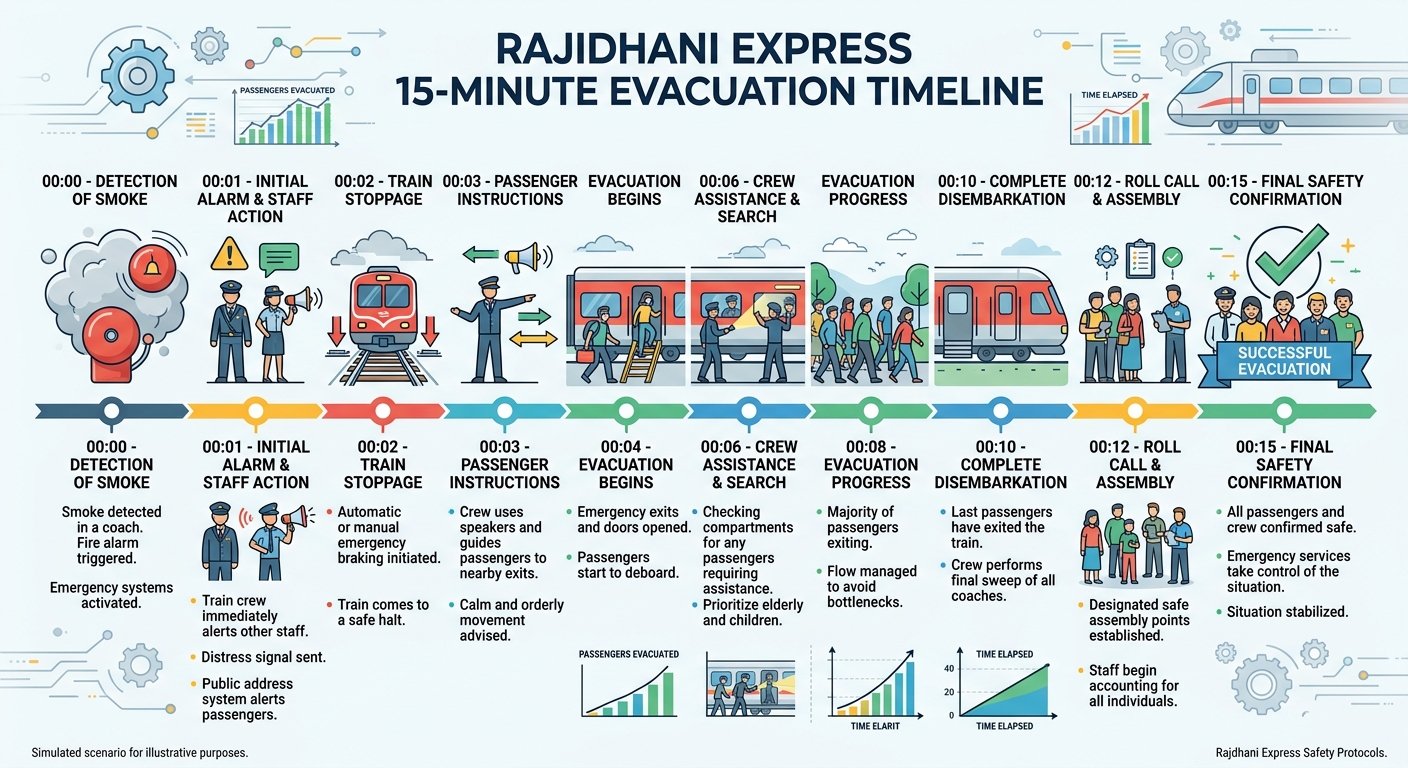
While the rapid evacuation of 68 passengers from the Delhi-bound Thiruvananthapuram-Hazrat Nizamuddin Rajdhani Express averted a catastrophe on May 17, 2026, the recurring nature of coach fires raises urgent questions. It is time to look past operational heroism and address the systemic infrastructure vulnerabilities plaguing India's premium fleet. When smoke filled the B-1 AC coach near Ratlam at 5:15 AM, it wasn't just the alertness of the staff that saved lives; it was a narrow escape that highlights the thin line between a 'successful evacuation' and a national tragedy.
The Anatomy of a Narrow Escape
The incident, occurring between Vikramgarh Alot and Lunirichha, tested the mechanical and human readiness of the West Central Railway. Within 15 minutes, the Railway Protection Force (RPF) and onboard staff successfully cleared the coach, preventing any casualties. By immediately disconnecting the overhead electric (OHE) power supply and detaching the burning coach, the crew prevented the fire from consuming the entire rake. However, the reliance on manual intervention to halt the train and decouple the carriage underscores the absence of automated, fail-safe mitigation systems that should, theoretically, exist in premium class travel.
"The swiftness of the evacuation is a testament to the RPF, but we cannot rely on the 'heroism' of staff as a substitute for fire-resistant rolling stock. Why are we still seeing these incidents in our premium trains?" — u/RailWatcher, r/indianrailways
Systemic Vulnerabilities: Beyond Short Circuits
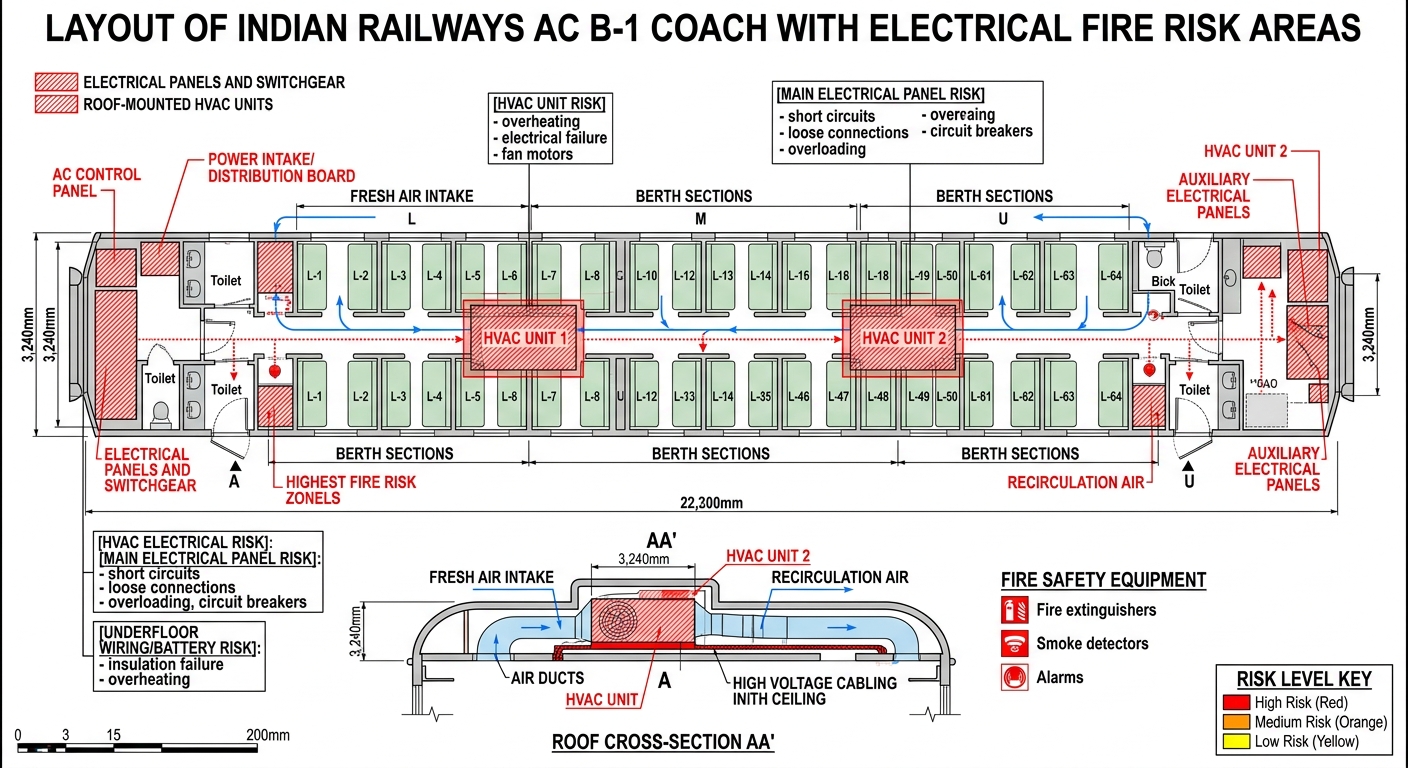
The official inquiry will likely point toward a localized electrical fault, yet the broader concern remains the aging electrical architecture of LHB coaches. As these carriages are retrofitted with increasingly higher power loads—supporting modern amenities, improved lighting, and high-capacity HVAC systems—the existing electrical infrastructure faces unprecedented strain. Critics argue that current smoke detection systems are frequently triggered too late, or worse, are prone to false positives that lead to complacency among the crew. A 'nationwide audit' is the standard administrative response to such fires, but if these audits merely check the existence of fire extinguishers rather than the integrity of internal wiring conduits, the risk remains static.
The Accountability Gap in Rail Safety
Perhaps the most sobering aspect of the Ratlam incident was the secondary tragedy: a relief van, racing to assist the primary fire site, overturned, leaving five railway staff members injured and one in critical condition. This highlights the fragility of our emergency response framework. We have built a system that is incredibly efficient at reacting to fires but lacks the depth to prevent them. If the onboard crew is trained to evacuate but not adequately equipped or empowered to manage high-tech fire suppression within the walls of a moving train, the safety protocols are effectively incomplete.
"It’s a pattern at this point. An incident happens, a committee is formed, a report is filed, and then we wait for the next fire. The safety audit needs to be transparent and technical, not just a tick-box exercise." — u/TechAndTransit, r/india
Moving Toward a Proactive Safety Framework
To move beyond 'safe enough,' Indian Railways must pivot toward real-time monitoring. Integrating IoT sensors into the electrical circuits of AC coaches could provide early alerts on thermal anomalies before they manifest as open flames. Furthermore, the findings of these 'high-level inquiries' should be made public. Transparency in identifying root causes—whether it be design flaws, component aging, or maintenance lapses—is the only way to hold suppliers and maintenance teams accountable. Modernization is not just about faster trains; it is about ensuring that the safety infrastructure evolves at the same velocity as the locomotives themselves.
Impact on Rail Traffic
"All the passengers were deboarded from the affected coach in 15 minutes. The fire also damaged the second luggage-cum-guard van (SLR) attached behind the B-1 coach," Shrivastava said.
Railway authorities immediately switched off the overhead electric supply, and the fire was later doused.