Microsoft Confirms 3,200 Layoffs and Divestment of Five Xbox Studios in Strategic Reset
Microsoft has announced a significant restructuring of its gaming division, impacting 3,200 employees and spinning off five prominent studios. The move marks a dramatic pivot for the Xbox ecosystem as it seeks to reduce operational bloat and refocus on its most profitable core franchises.

Photo by Ny Zoltán on Pexels
Microsoft Confirms 3,200 Layoffs and Divestment of Five Xbox Studios in Strategic Reset
Microsoft has announced a seismic restructuring of its gaming division, a move that signals the end of the company’s aggressive, years-long acquisition spree. In a corporate memo released to staff, the tech giant confirmed it will be laying off 3,200 employees and divesting from five of its prominent internal studios. This "strategic reset" marks a pivot from rapid expansion to a more streamlined, sustainability-focused model.
The Scale of the Reset: A 20% Workforce Reduction
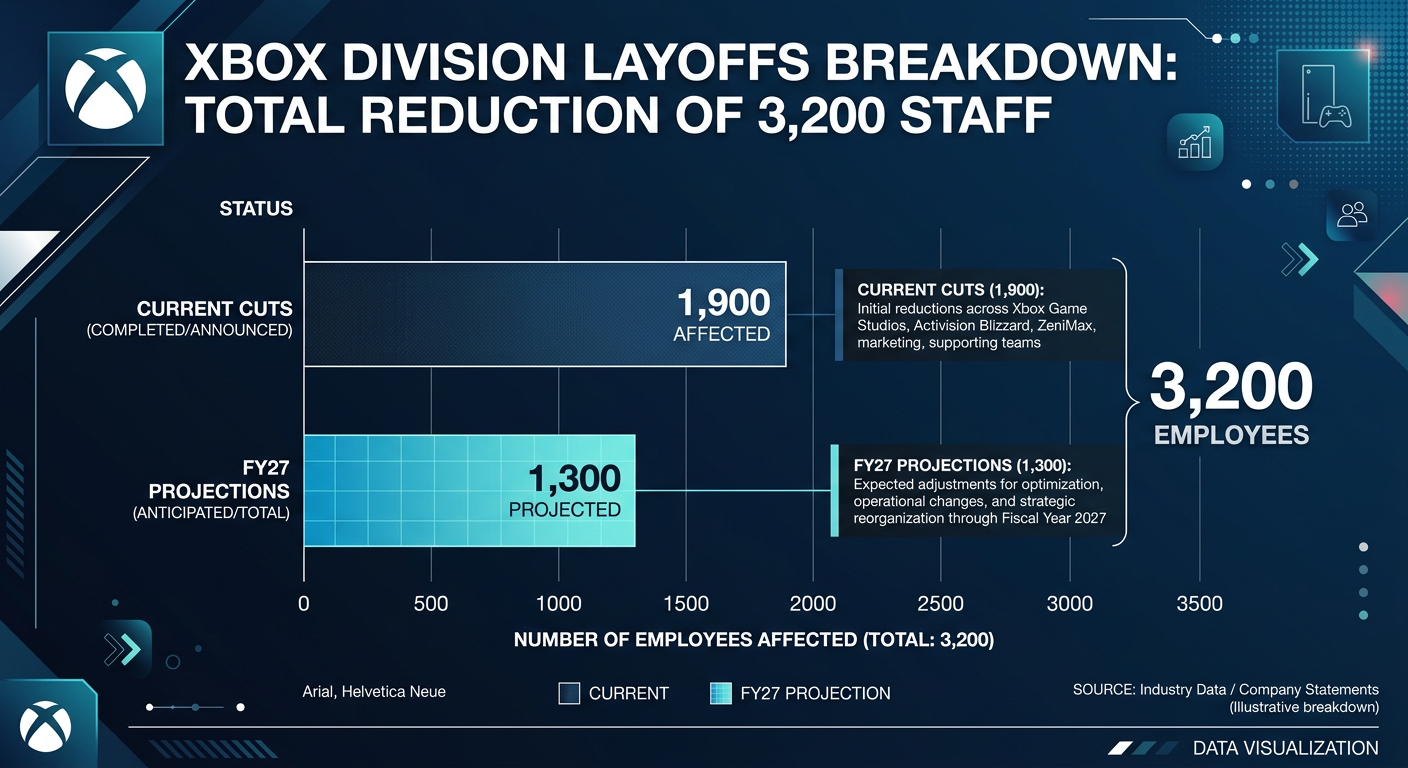
The restructuring plan is being implemented in two distinct phases. 1,600 positions are being cut effective immediately, with an additional 1,600 roles identified for elimination by the end of fiscal year 2027. This reduction represents roughly 20% of the entire Xbox workforce.
Internal communications highlight a move to flatten the organization by removing 14 layers of management. The goal, according to the memo, is to improve decision-making velocity and remove the bureaucratic friction that many critics argue has plagued the division since the integration of ZeniMax and Activision Blizzard. For the Indian gaming sector, which relies heavily on global studio health for development and localization support, these cuts underscore a precarious shift in how major publishers manage their talent pools.
Divesting the Portfolio: The Future of Ninja Theory, Double Fine, and More
Perhaps the most jarring aspect of this announcement is the decision to spin off five key studios: Ninja Theory, Undead Labs, Double Fine, Compulsion Games, and Arkane Lyon. While some of these will return to independent status, others face an uncertain path forward.
The divestiture strategy employs a "runway-funded" model, where Microsoft provides initial capital to assist these studios in re-establishing their independence. However, industry analysts remain skeptical. While Microsoft framing this as "empowerment," many question whether these studios—accustomed to the deep pockets of a trillion-dollar parent company—possess the necessary administrative and business infrastructure to survive in an increasingly hostile, hit-driven market.
""Xbox - "In France, Arkane’s management is beginning required consultation with its Works Council to review potential strategic options."" — @Wario64, X
The Debate: Strategic Empowerment or Corporate Abandonment?
Is this a tactical retreat or a surrender? Critics argue that this restructuring is an admission of failure by leadership to successfully integrate and leverage high-value intellectual property like Fallout and The Elder Scrolls. By offloading these assets, Microsoft effectively washes its hands of the operational risks that come with mid-tier development.
""Xbox CEO Reflects On Massive Cuts: “We Simply Spread Ourselves Too Thin”" — @GameSpot, X
Conversely, some industry insiders suggest that forcing these studios back into independence might be the only way to preserve their unique creative cultures. Under the Microsoft umbrella, these developers were often relegated to support roles or squeezed into the Game Pass subscription churn, which some executives have admitted has not met internal financial expectations.
Unanswered Questions and Market Outlook
As the dust settles, significant questions remain. What becomes of the intellectual property rights for titles currently in development? Will these divested studios be able to secure long-term publishing partners, or are they destined for closure once their "runway" funding expires?
For now, the message is clear: the "buy-and-hold" strategy that characterized the last five years has reached its natural, and arguably unsustainable, conclusion. Microsoft is slimming down, likely to make its remaining gaming core a leaner, more profitable entity, but the human cost of this pivot remains staggering.
Bottom Line
Microsoft’s decision to cut 3,200 jobs and divest five studios is a cold, calculated move to prioritize efficiency over the broad portfolio strategy of the past. While it may stabilize the parent company's bottom line, it leaves a significant void in the gaming landscape, casting doubt on the future of five major studios and the thousands of developers caught in the crossfire of this corporate pivot.