The $1.5 Trillion AI Shift: Why TSMC is Rewriting the Future of Silicon
TSMC has unveiled an ambitious 2030 roadmap, projecting a $1.5 trillion semiconductor market led by a massive pivot toward AI and high-performance computing. As the company trims legacy holdings to focus on advanced node dominance, the global chip supply chain is undergoing its most significant structural change in decades.
The $1.5 Trillion AI Shift: Why TSMC is Rewriting the Future of Silicon
TSMC has unveiled an ambitious 2030 roadmap, projecting a $1.5 trillion semiconductor market led by a massive pivot toward AI and high-performance computing. As the company trims legacy holdings to focus on advanced node dominance, the global chip supply chain is undergoing its most significant structural change in decades.
The $1.5 Trillion Horizon: Reimagining the Silicon Economy
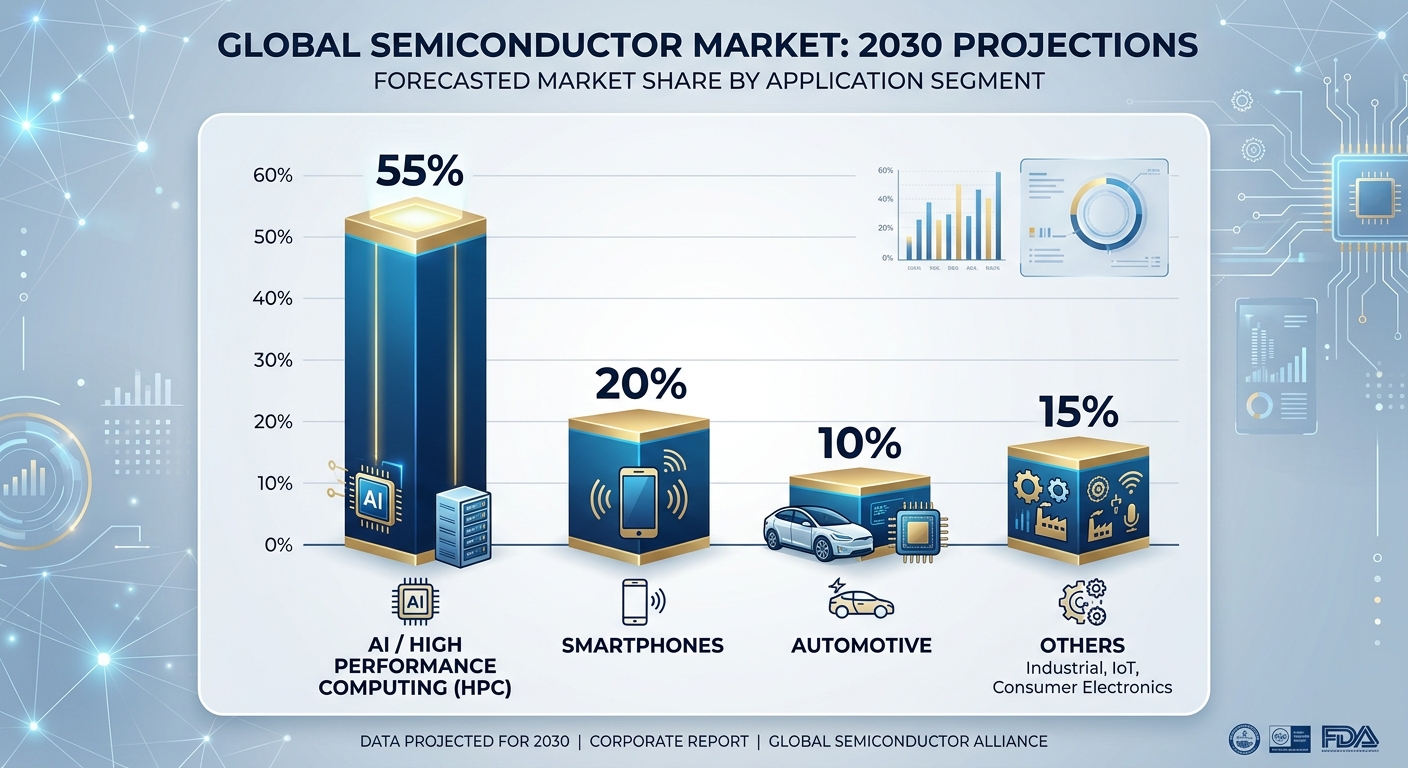
Taiwan Semiconductor Manufacturing Company (TSMC) has officially signaled the end of the mobile-first era. At its recent North America Technology Symposium, the foundry giant revealed a revised forecast that paints a staggering picture of the next five years. The company now expects the global semiconductor market to hit $1.5 trillion by 2030, a 50% upward revision from previous industry estimates.
At the heart of this growth is an aggressive shift in demand profiles. AI and High-Performance Computing (HPC) are expected to account for 55% of the total market, effectively cementing them as the primary engine of modern silicon. For years, the smartphone market dictated manufacturing priorities; that chapter is now closing as AI workloads demand more power, more density, and more specialized packaging.
"TSMC’s move to update the 2030 target by 50% isn't just about growth; it’s a reflection of how generative AI has fundamentally broken the old supply-demand curves for high-end logic chips." — u/tech_analyst_01, r/semiconductors
Capital Restructuring: The Divestment Strategy
To fund this transformation, TSMC is being clinical about its asset management. The recent institutional sale of its stake in Vanguard International Semiconductor Corp (VIS)—reducing ownership from 27% to 19%—is a clear strategic pivot. By offloading these legacy holdings, TSMC is freeing up capital to double down on the high-margin, high-complexity manufacturing of its 2nm and A16 nodes.
This is not merely about cash; it is about focus. Advanced nodes like the upcoming A16 platform require sustained R&D investments that dwarf legacy projects. Balancing these aggressive, multi-billion dollar expenditures with long-term margin preservation is the tightrope TSMC management must walk, especially as global interest rates remain a variable for capital-intensive construction.
The CoWoS Bottleneck and Advanced Packaging Roadmap
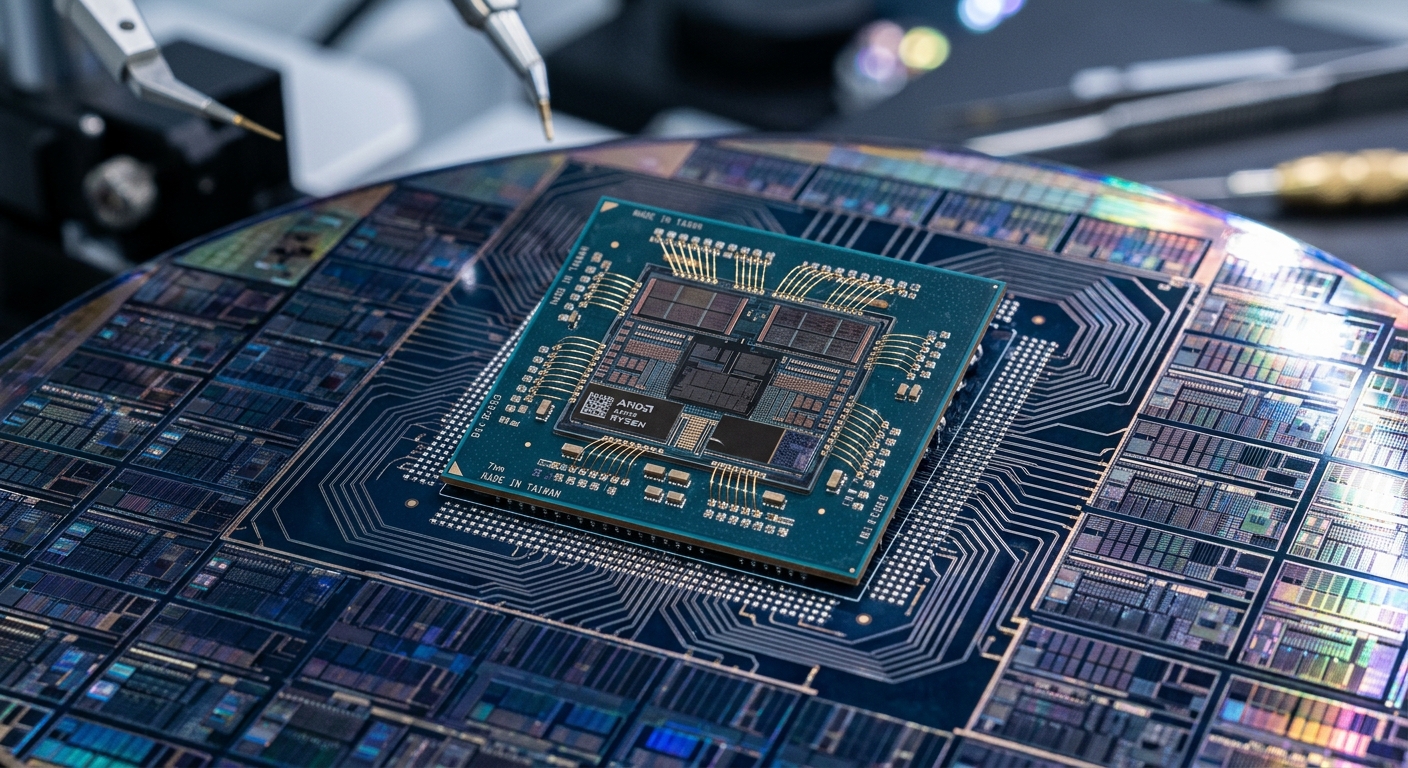
If silicon wafers are the foundation, packaging is the current ceiling. TSMC is currently grappling with a severe bottleneck in its CoWoS (Chip-on-Wafer-on-Substrate) capacity, which is the primary factor limiting the output of top-tier AI GPUs. Without fixing this, the promise of the $1.5 trillion market remains theoretical.
TSMC’s roadmap addresses this head-on, with a vision for 40-reticle System-on-Wafer (SoW) solutions by 2029. Furthermore, the move toward Silicon Photonics promises to be a game-changer for data center efficiency, potentially slashing energy consumption by orders of magnitude. For a world where AI electricity consumption is becoming a political and environmental flashpoint, this technical leap is vital.
"Everyone focuses on the node size, but the real moat for TSMC is the packaging. If they hit that 40-reticle milestone by 2029, nobody will be able to touch them on performance-per-watt." — u/silicon_wizard, r/NVDA_Stock
Global Expansion and the Competitive Landscape
TSMC’s geographic footprint is expanding, but the execution remains under intense scrutiny. While the Arizona fabs are making progress toward volume production, projects in Japan and Germany are also moving through critical phases. In India, the landscape is evolving differently; with partnerships like the Tata-ASML collaboration, emerging hubs are beginning to carve out space in the semiconductor value chain.
However, TSMC remains the undisputed king of the hill. The question for investors and analysts remains: is the AI boom already baked into the current valuation, or are we still underestimating the sheer scale of the shift toward autonomous, AI-integrated compute? As TSMC accelerates its timeline, the global tech sector is forced to follow suit, ensuring that the next five years will be the most capital-intensive period in the history of silicon.
The Bottom Line
TSMC is no longer just a manufacturer; it is the infrastructure provider for the AI revolution. By shifting focus toward a 55% AI-HPC market share and aggressive divestment of non-core assets, the company is positioning itself to be the ultimate beneficiary of the next decade of digital transformation. Whether that leads to a sustainable, trillion-dollar equilibrium or a volatile supply chain shakeout depends entirely on their ability to execute on the packaging and process nodes that define this new, silicon-heavy reality.