The $24,950 EV Truck: Slate Auto Promises Affordable Utility Amid Industry Skepticism
Slate Auto is betting that a stripped-back, low-tech electric truck can succeed where others have failed. With a sub-$25k price point, the startup hopes to redefine the economy vehicle, but analysts warn that manufacturing hurdles and feature compromises remain massive risks.
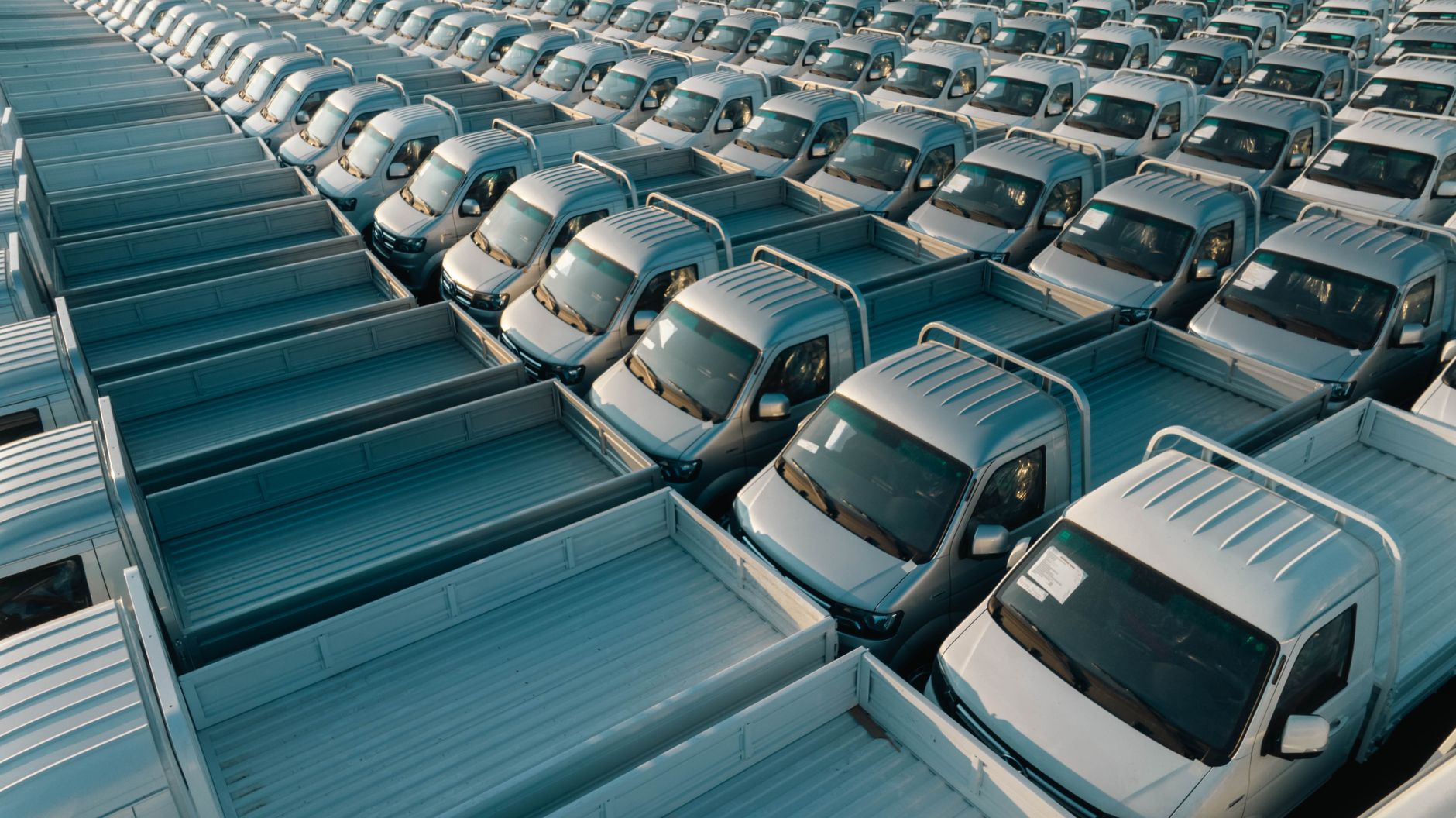
Photo by abdo alshreef on Pexels
The $24,950 EV Truck: Slate Auto Promises Affordable Utility Amid Industry Skepticism
Slate Auto is betting that a stripped-back, low-tech electric truck can succeed where others have failed. With a base price point of $24,950, the startup hopes to redefine the economy vehicle, but industry analysts warn that manufacturing hurdles and feature compromises remain massive risks for the newcomer.
The Rise of Radical Simplicity
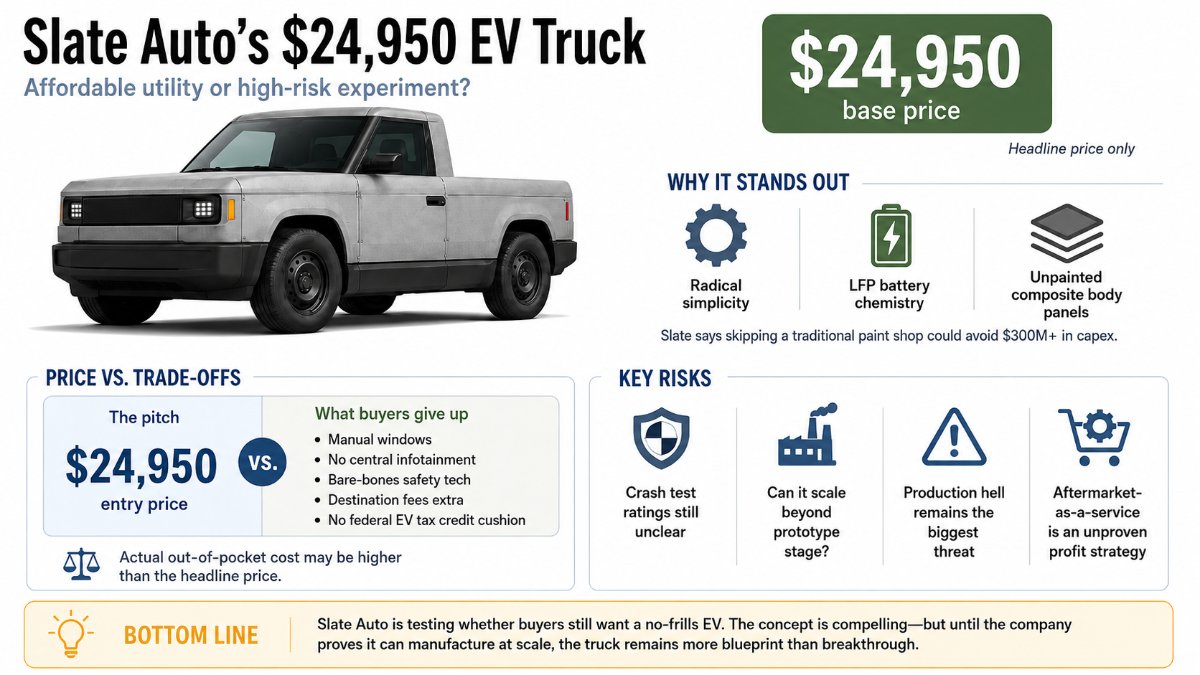
Slate Auto’s mission is to revive the “economy car” segment that legacy manufacturers have largely abandoned in favor of high-margin, tech-heavy SUVs. By opting for LFP (Lithium Iron Phosphate) battery chemistry—which is cheaper and more durable than traditional NMC batteries—and utilizing unpainted composite body panels, the company claims it can bypass the $300 million+ capital expenditure typically required for a automotive paint shop.
The startup envisions the vehicle as a “hardware platform” rather than a static appliance. By encouraging modularity and user-repairable designs, Slate aims to appeal to a demographic tired of “planned obsolescence.”
The $24,950 Price Point: Reality vs. Rhetoric
While the company has officially confirmed the $24,950 price, the devil is in the details. The base model intentionally lacks creature comforts: manual windows, a lack of central infotainment, and bare-bones safety tech are the trade-offs for that sticker price. Furthermore, the exclusion of destination fees and the loss of federal EV tax credits mean the actual out-of-pocket cost for a consumer is significantly higher than the marketing headline suggests.
Originally marketed as an "under $20k" disruptor, the shift in branding highlights the immense pressure even the simplest EV manufacturers face when transitioning from pitch deck to assembly line.
Performance and Practicality
For the price-conscious buyer, the specs are sobering. With a range of 205 miles and a towing capacity limited to just 1,000 pounds, the vehicle occupies a niche that struggles to compete with traditional trucks. While analog parts may offer long-term durability, the lack of modern connectivity and power features makes this vehicle a hard sell for the average urban driver accustomed to smartphone-integrated dashboards.
Furthermore, the automotive community remains divided on whether these “cost-cutting” measures represent genuine innovation or simply a regression in safety and quality standards. The question of crash test ratings remains a significant, unanswered variable in the company’s roadmap.
Can Slate Auto Scale?
The greatest barrier for Slate Auto is the dreaded "production hell" that has claimed the ambitions of dozens of EV startups before it. While the company touts "unit profitability" as its North Star, many analysts argue that this is a poor indicator of success for a firm that has yet to build a functional, large-scale assembly line.
""Slate Auto’s radical minimalism is a bold gamble. But can a startup survive on manual windows in an era where software-defined vehicles are the gold standard?"
Their pivot toward an “aftermarket-as-a-service” model—where profits are chased through modular accessories rather than just vehicle sales—is a high-risk strategy. It essentially treats the customer as a recurring revenue stream, a model that has seen mixed results in the automotive sector.
The Bottom Line
Slate Auto represents a fascinating, if precarious, experiment. By prioritizing raw, mechanical utility over digital polish, they are testing whether the market truly wants a "no-frills" EV. However, until the company demonstrates that it can move from a prototype to a high-volume manufacturing line, the $24,950 truck remains more of a blueprint for a potential future than a viable solution for the modern, budget-conscious driver.