The Data-Driven Disruption: How NEWME is Beating Incumbents at Their Own Game
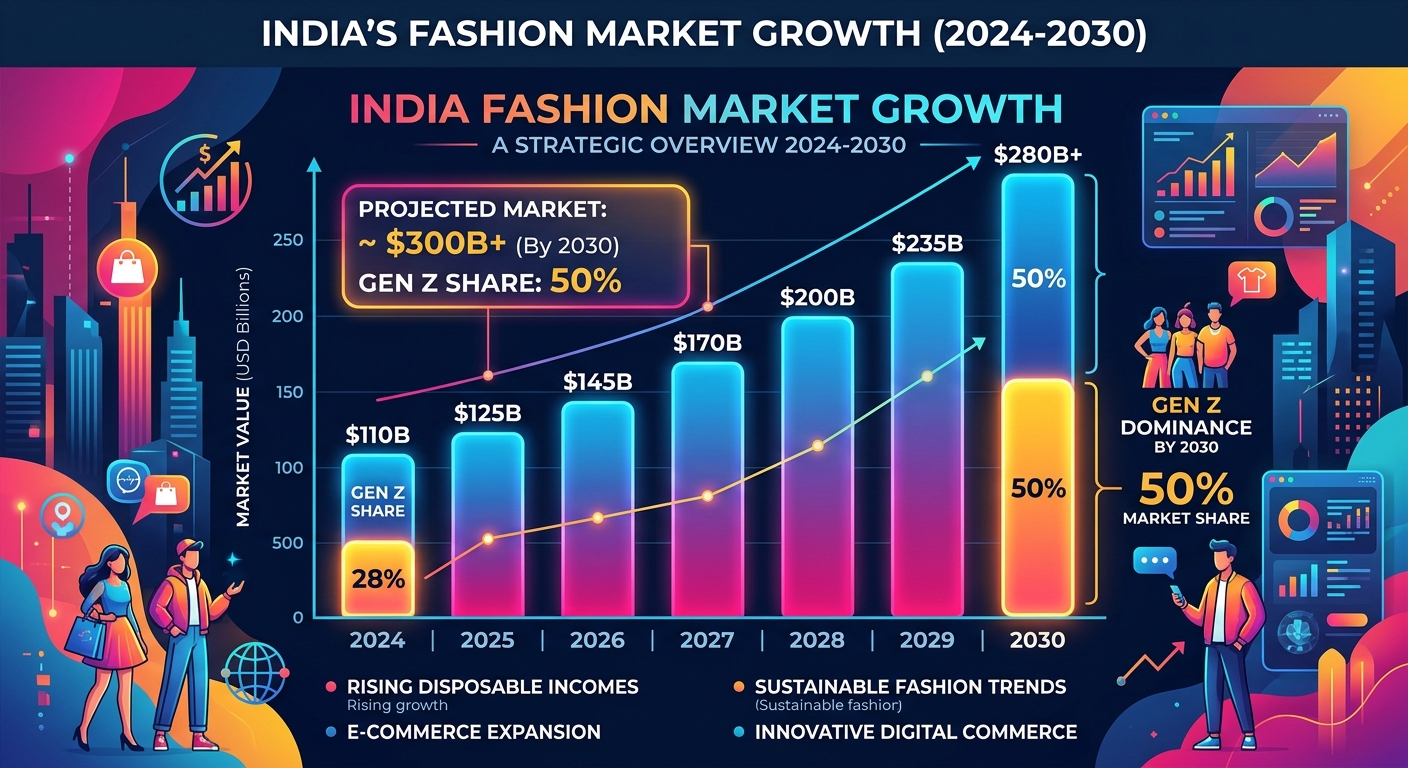
As Gen Z prepares to command 50% of India's $1.3 trillion fashion market by 2030, tech-first disruptors are rewriting the rules of retail. We analyze why traditional conglomerates are struggling to match the AI-powered agility of the new generation of D2C fashion.

Photo by Anna Shvets on Pexels
The Data-Driven Disruption: How NEWME is Beating Incumbents at Their Own Game
As Gen Z prepares to command 50% of India's $1.3 trillion fashion market by 2030, the retail landscape is undergoing a tectonic shift. While traditional conglomerates are struggling to pivot their legacy supply chains, tech-first disruptors are rewriting the rules of engagement, turning data into the most valuable asset in their inventory.
The $1.3 Trillion Pivot: Decoding the Gen Z Paradox
According to recent projections by Redseer, Gen Z is poised to become the primary driver of India’s fashion economy within the decade. This demographic presents a unique paradox: they are deeply price-sensitive, with the bulk of the fast fashion market dominated by products priced under Rs 1,000, yet they vocalize a strong preference for sustainability and ethical consumption.
This "reverse generation" is forcing retailers to move away from the traditional push-based manufacturing model toward a demand-driven pull model. The challenge lies in the fact that these consumers demand a fresh "drop" almost weekly, a pace that existing legacy infrastructures are ill-equipped to handle.
"The disconnect between Gen Z’s 'sustainable' aspirations and their actual buying habits in the sub-1k category is the biggest elephant in the room. Most brands are just playing optics while the real game is being played in supply chain speed." — u/RetailAnalyst_India, r/IndianRetailer
The NEWME Playbook: Tech as the New Creative Director
NEWME has emerged as the poster child for this transformation. Unlike traditional retailers that rely on seasonal buying cycles, NEWME operates as a tech company first. By leveraging real-time social listening, they identify micro-trends as they surface on short-form video platforms, often before those styles even hit the runway.
By moving away from marketplace dependence and building an owned D2C ecosystem, NEWME maintains granular control over its data loop. Their operational agility allows them to kill underperforming designs in days rather than months, effectively minimizing inventory bloat and maximizing turnover rates—a critical metric in the thin-margin, high-volume fast fashion sector.
The Incumbent's Dilemma: Can Giants Learn to Sprint?
Legacy players like ABFRL and global giants like H&M are caught in a classic "Incumbent’s Dilemma." While companies like Aditya Birla have invested heavily in youth-focused sub-brands, their underlying supply chains are often built for consistency and scale rather than the volatile, high-velocity requirements of Gen Z trends.
Replicating the weekly trend-drop model requires a level of manufacturing decentralization that threatens the cost efficiencies traditional giants have spent decades refining. Furthermore, the rising popularity of the secondhand market—often driven by the same Gen Z cohort—threatens to cannibalize the entry-level price point of these mass-market brands.
"It’s a passion, but also a gamble. We see a lot of younger shoppers moving toward thrifting not just for the price, but as a badge of 'conscious' consumption. The big retail chains are definitely sweating over this shift in market sentiment." — u/TrendWatcher_Del, r/FashionIndia
Sustainability vs. Affordability: A Question of Optics
Can sustainable production survive in a market driven by extreme discounting? For the average Indian consumer under 25, the price tag remains the ultimate gatekeeper. While brands market "conscious collections," the reality is that the vast majority of wallet share remains tethered to the under-Rs 1,000 price bracket.
Future-proofing for these brands requires a delicate balance. It is not enough to simply label a product as sustainable; brands must integrate circularity—such as buy-back programs or resale partnerships—to align with the values of their target audience without sacrificing their bottom line.
Engagement Snapshot
- Total Market Growth (2030 Projection): 50% of the market driven by Gen Z.
- Primary Price Sensitivity: Sub-Rs 1,000.
- Community Sentiment: Highly active discussion on Indian fashion forums regarding the conflict between "fast fashion" speed and "sustainable" values.
The Bottom Line
The dominance of Gen Z is not just a change in customer base—it is a fundamental change in the definition of a "fashion brand." As the lines between tech and retail blur, companies that treat their supply chain as a software problem—agile, iterative, and data-backed—will win. For the giants of Indian retail, the sprint is on, and the finish line is moving every day.