The 'Hidden' AI Supply Chain: Why Retail Investors Are Pivoting to Infrastructure Mid-Caps
Retail investors are moving beyond volatile penny stocks and mega-cap tech hype to target the 'pick-and-shovel' players in the AI supply chain. From optical networking to advanced chip packaging, this shift signals a more sophisticated approach to capitalizing on hyperscaler CAPEX.
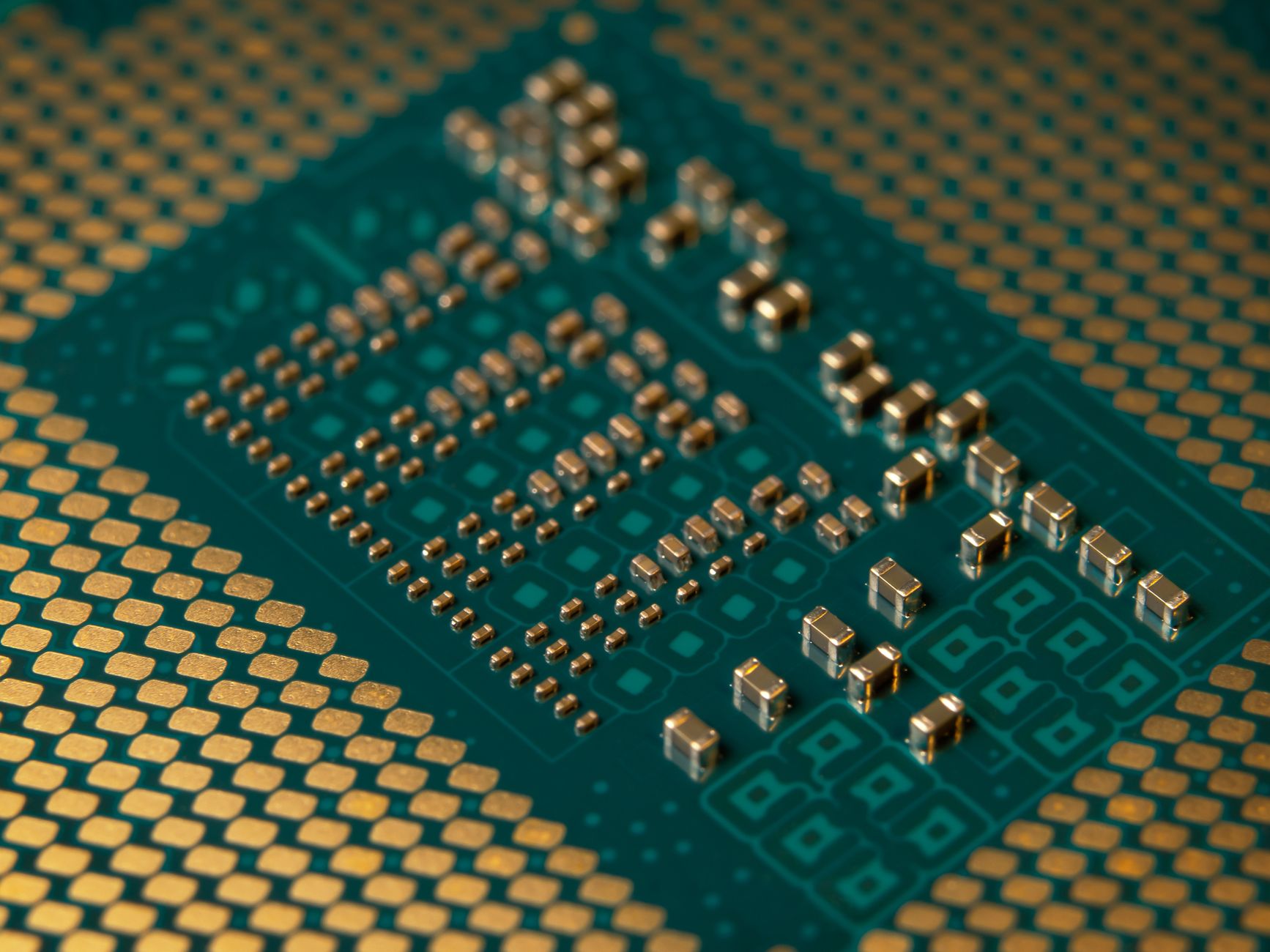
Photo by ed br on Pexels
The 'Hidden' AI Supply Chain: Why Retail Investors Are Pivoting to Infrastructure Mid-Caps
For the past two years, the retail investment narrative has been dominated by the "Magnificent Seven" and a parade of volatile, high-risk penny stocks hoping to strike gold in the LLM gold rush. But as the hype surrounding consumer-facing AI chatbots matures, a structural shift is occurring in the portfolios of individual investors. The new focus? The "pick-and-shovel" mid-caps—the unglamorous, mission-critical infrastructure players that allow hyperscalers like AWS, Microsoft, and Google to scale at speed.
The Death of the Penny Stock Dream
Retail sentiment is pivoting. Gone are the days of blindly chasing speculative AI startups; savvy individual investors are now scouring SEC filings and supply chain white papers to identify companies with tangible revenue pathways. This move toward mid-cap infrastructure firms suggests a maturation of the retail market, where institutional-grade analysis is replacing the "get-rich-quick" lottery ticket approach.
Community forums are increasingly skeptical of "AI-wash" companies that lack proprietary tech. Instead, investors are favoring firms that hold critical patents or unique manufacturing capabilities. As one user noted on Reddit regarding the tactical search for the "next monster" in the data center space:
"Listen up regards I'm not really sure how I learnt about VIAV but I think it has great potential to blow up. I think I got into it over researching optical stocks... After making bank on Sandisk and many others in the ai data center play I am constantly looking for the next monster." — u/anonymous, r/stocks
This trend is reflected in a shift toward companies like Viavi Solutions and semiconductor packaging firms, which are seen as "must-haves" rather than "nice-to-haves" for global digital infrastructure.
Follow the CAPEX: Why Optical and Packaging Matter
To understand why money is flowing into firms like Viavi Solutions and Japan’s Towa Corp, one must simply follow the $100 billion-plus in annual capital expenditure (CAPEX) currently being poured into hyperscale data centers. The primary bottleneck in AI infrastructure isn't just compute power; it is data movement and thermal efficiency.
As data centers push for 800G and 1.6T networking speeds, optical components—the literal fiber-optic nervous system of the AI cluster—have become a massive, high-margin opportunity. Similarly, in the world of High Bandwidth Memory (HBM), the physical assembly of chips is now as important as the silicon itself.
A clean, professional infographic showing the flow of AI data center investment from hyperscalers into semiconductor tes...
Towa Corp, for instance, has captured attention due to its near-monopoly in compression molding technology. By immersing die into resin, they solve the thermal management issues that occur when you stack chips to create the HBM required for high-end GPUs. For the retail investor, these companies represent a "direct line" from hyperscaler spending to corporate revenue.
"MXL: every dollar hyperscalers spend on AI data centres needs optical networking chips to connect the racks. MXL makes exactly those chips. Direct line from capex to revenue." — u/anonymous, r/investing
The Risks of Momentum and 'AI-Wash'
Despite the fundamental logic, risks remain high. The danger of buying at all-time highs, particularly when fueled by "Shamelessly copy-pasted" AI due diligence, is real. Many retail investors are using LLMs to analyze earnings calls, which can inadvertently reinforce confirmation bias rather than providing a critical assessment of a company's competitive moat.
Furthermore, the "AI-wash" phenomenon—where firms with minimal exposure to the sector rebrand themselves as AI-adjacent to inflate valuations—is rampant. Investors must distinguish between companies with signed, multi-billion dollar contracts and those merely riding industry-wide spending tailwinds. In the Indian market, where retail participation in global equities is on the rise, this distinction is critical to avoid being caught in a sector-wide correction.
Engagement Snapshot
- VIAV (Viavi Solutions): 26 upvotes, 23 comments. High sentiment for long-dated calls.
- MXL (MaxLinear): 11 upvotes, 18 comments. Focus on hyperscaler connectivity.
- Towa Corp ($6315.T): 5 upvotes, 1 comment. Cited for monopoly in compression molding.
Bottom Line
The pivot toward infrastructure mid-caps indicates a more sophisticated retail investor base. While the volatility of the AI sector is unlikely to subside, those who focus on the "bottleneck" players—the firms that control the optical highways and the chip-stacking machinery—are positioning themselves to profit from the foundational growth of the AI era, rather than its speculative surface layer.