The Hidden Engineering Debt: Why AI Couldn't Replicate Ford's Legacy Knowledge
Ford’s recent pivot to rehire veteran 'gray beard' engineers marks a stark reality check for the industry. It reveals that the most critical manufacturing expertise isn't found in data sets, but in the undocumented, tacit intuition of the humans who built the foundation.
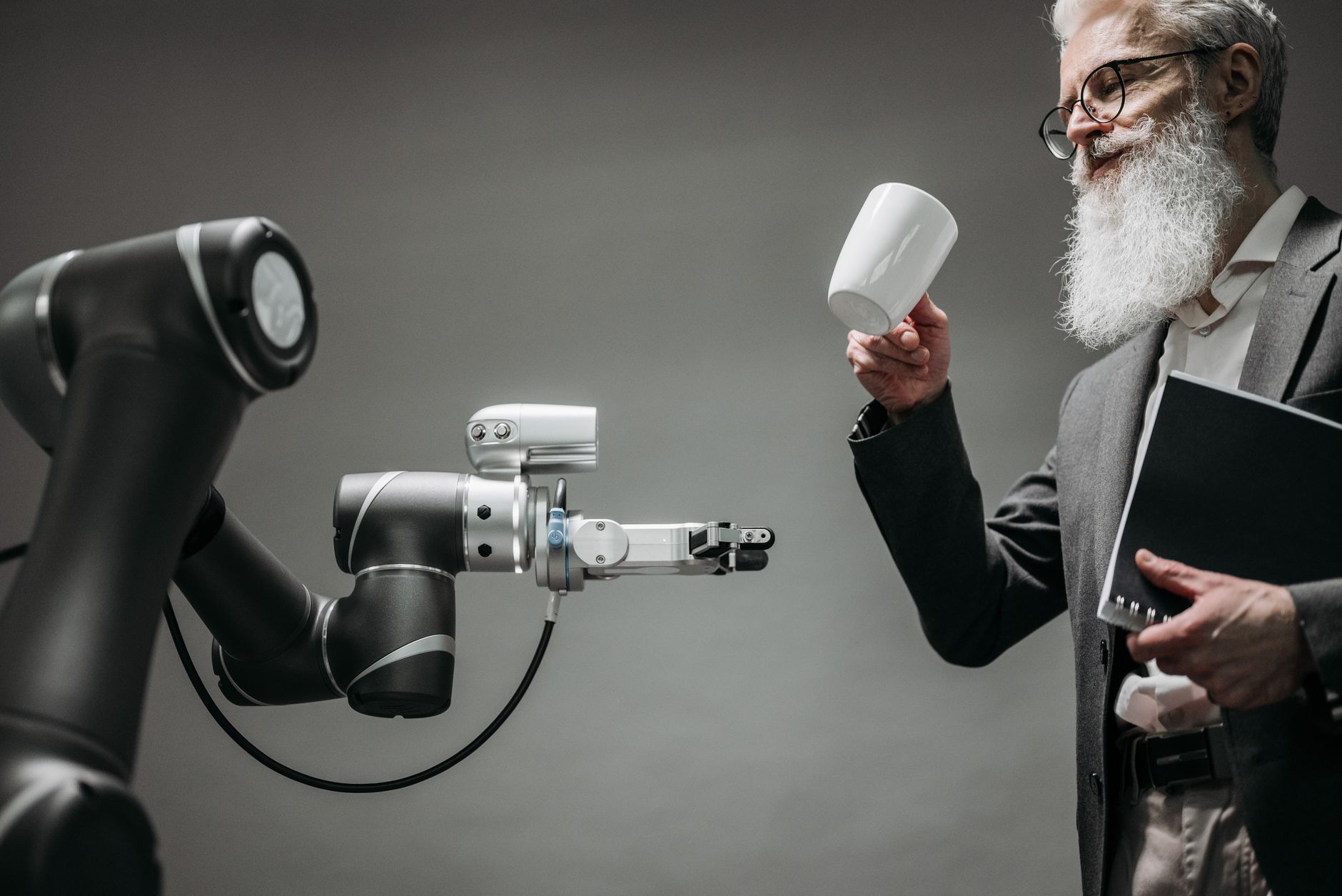
Photo by Pavel Danilyuk on Pexels
The Hidden Engineering Debt: Why AI Couldn't Replicate Ford's Legacy Knowledge
Ford’s recent pivot to rehire veteran 'gray beard' engineers marks a stark reality check for the automotive industry. It reveals that the most critical manufacturing expertise isn't found in data sets, but in the undocumented, tacit intuition of the humans who built the foundation. This move highlights a growing crisis: the 'intuition debt' that accumulates when companies treat engineering wisdom as a legacy burden to be offloaded rather than an asset to be preserved.
The Silent Archive: Why AI Hit a Wall at Ford
For years, the industry narrative has been driven by a 'move fast and break things' software ethos—a philosophy that often clashes with the high-consequence world of physical manufacturing. When Ford shifted focus toward AI-first engineering, it inadvertently ignored a foundational truth: their best design decisions were guided by human experience that was never documented in a digital ledger.
This 'Silent Archive' of institutional memory vanished during previous waves of layoffs. By the time Ford attempted to automate complex design processes, the AI models were being trained on incomplete data. The failure wasn't just in the algorithms; it was a fundamental breakdown in knowledge transfer. We are seeing a new category of risk emerge: 'intuition debt,' where the loss of the human 'biological hard drive' leaves software systems unable to account for the physical variables that veteran engineers handle instinctively.
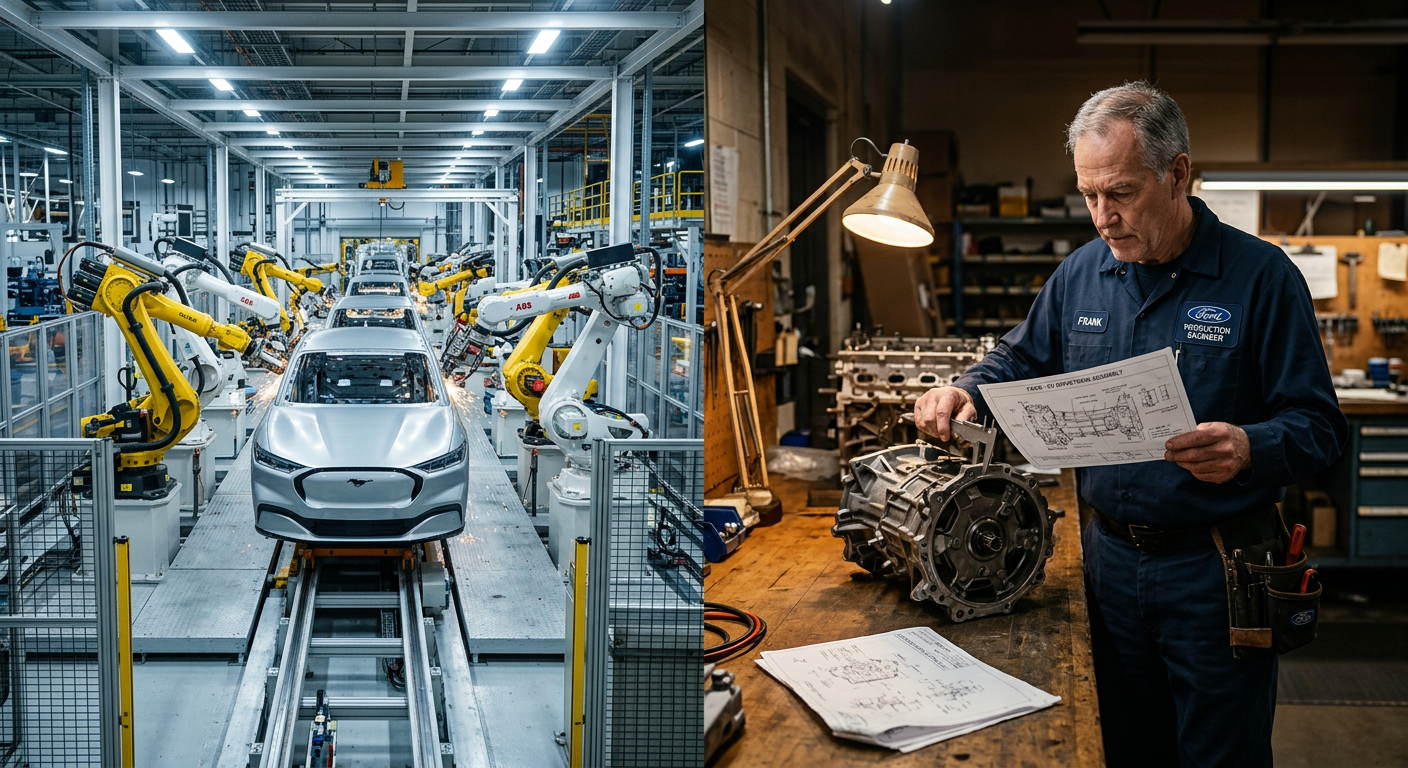
The Human-Centric Correction
Ford’s recent decision to bring back seasoned engineering talent is a necessary correction. While some critics might frame this as a defeat for AI, it is more accurately a maturation of the strategy. Ford is acknowledging that high-end manufacturing requires a 'human-in-the-loop' approach to bridge the chasm between legacy systems and modern automation.
""Ford rehires ‘gray beard’ engineers after AI falls short https://t.co/jdSLkvGtG5" — @TechCrunch
The veterans are not here to replace the AI; they are here to act as high-level supervisors, providing the context that the machines lack. As one industry observer noted:
""The irony is that to make AI effective in manufacturing, you need the very people you fired to teach the machines how the physical world actually works." — @IndustryVoice, X
Beyond Ford: The Industry Reckoning
This isn't just a Ford problem; it is an industry reckoning for major automakers worldwide, including those in India’s rapidly digitizing automotive sector. As companies rush to digitize legacy processes, they face a recurring debate: can human expert knowledge ever be fully codified, or is the experience of building a transmission or suspension system too nuanced for a neural network?
This represents a shift away from the blind optimism of the early 2020s toward a more pragmatic 'AI-augmented' reality. The verified claims confirm that Ford is actively rehiring after a period of layoffs, a move that signals a pivot in corporate strategy. The cost of this 'intuition debt' is proving to be far higher than the efficiency gains initially promised by AI integration.
Bottom Line
Ford’s return to human-led expertise proves that for complex physical systems, there is no shortcut to experience. AI is a powerful tool, but it is not a replacement for the tacit, lived knowledge of engineers who understand the 'why' behind the 'how.' The industry must learn that digital transformation should involve the preservation of human insight, not its erasure. If the goal is long-term manufacturing excellence, the future remains firmly rooted in human-AI collaboration.