The 'Hidden' Risk: How to Legally Vet Your Airbnb Before You Book
As travelers increasingly face abrupt evictions due to illegal building listings, the burden of verification is falling on the guest. Here is how you can perform due diligence to ensure your next international booking doesn't end in a compliance nightmare.

Photo by Markus Winkler on Pexels
The 'Hidden' Risk: How to Legally Vet Your Airbnb Before You Book
As travelers increasingly face abrupt evictions due to illegal building listings, the burden of verification is falling on the guest. For Indian travelers heading abroad to destinations like Paris, New York, or Barcelona, the dream of a local experience is occasionally turning into a compliance nightmare, where the host is operating in direct defiance of local municipal housing laws. Here is how you can perform due diligence to ensure your next international booking doesn't end in a forced eviction.
The Growing Trust Deficit: Why Your Booking Might Be Illegal
In recent years, the convenience of the "sharing economy" has collided head-first with the rigid realities of urban housing policy. While Airbnb markets itself as a seamless travel solution, a significant segment of its inventory exists in a regulatory gray area. Many listings are located in buildings where short-term rentals are explicitly prohibited by homeowners' associations (HOAs) or municipal bylaws.
This creates a precarious situation: you arrive at your destination, only to find you are essentially an intruder in a building that doesn't want you there. When the host instructs you to "act like a friend" or stay quiet, they aren't just being quirky—they are offloading the legal risk of their illicit business onto you. When things go wrong, Airbnb’s support systems often prove inadequate, leaving guests stranded in foreign cities without a refund or a place to sleep.
"Airbnb banned in building I just checked in. Followed all instructions for check in. Got the keys from the lockbox a few doors down only to find a sign saying airbnbs are prohibited in the building. I feel uncomfortable 'hiding' from neighbors. Had I known I wouldn’t have booked the place."
Red Flags: How to Spot a Non-Compliant Listing
To identify a non-compliant rental, you must look for the "friction points." Hosts who are operating against building policy often need to circumvent security to keep their listing alive. Warning signs include instructions to pick up keys from off-site lockboxes, requests to bypass the front desk, or warnings to avoid talking to building staff or residents.
If a listing description is suspiciously vague about the exact street address until after booking, or if the host sends frantic messages about "not mentioning Airbnb" to the concierge, assume the rental is non-compliant. These aren't just minor inconveniences; they are structural indicators that the listing violates building covenants.
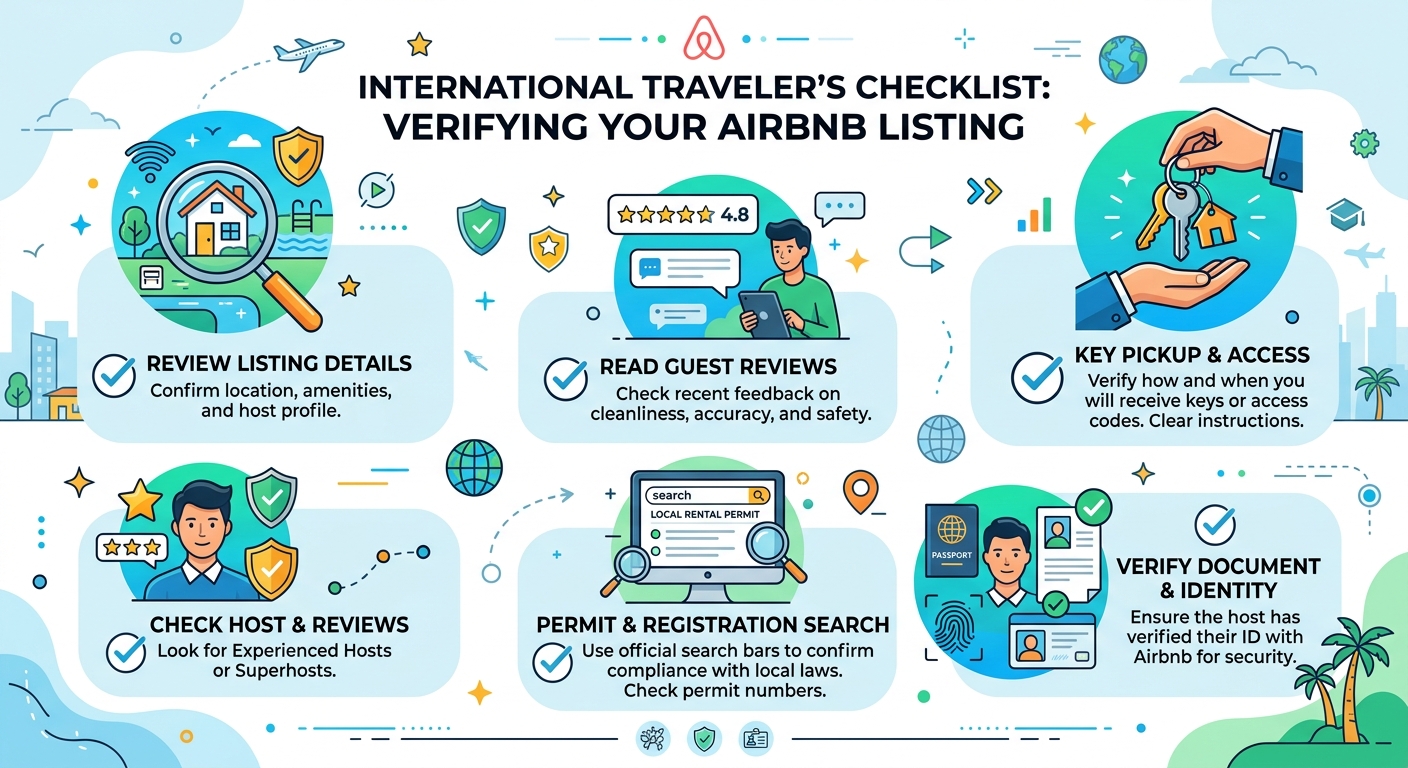
A Traveler’s Toolkit for Legal Verification
Before you finalize your booking, take 10 minutes to act as your own investigator. First, check if your destination has a registry for short-term rentals. A lot of Cities maintain public permit databases; if the listing doesn't feature a visible permit number, it is a massive red flag.
Second, use Google Maps to look at the exterior of the building. If it looks like a traditional apartment block, try searching for the building name alongside the phrase "short-term rental policy" or "HOA rules." Finally, ask the host directly via the platform: "Does the building management permit short-term rentals for guests?" Their answer—or their refusal to answer—will be telling.
""Useless customer service and completely company oriented. We are never using AirBnB again." - travellers
When Things Go Wrong: The Reality of Guest Liability
There is a prevailing myth that guests might face legal liability for staying in an illegal rental. In reality, the legal burden almost always rests with the host. However, the emotional and financial cost of displacement is entirely yours. When you are evicted, Airbnb's support infrastructure often defaults to a bureaucratic loop, prioritizing platform reputation over immediate guest safety.
If you find yourself in this situation, document everything. Take photos of the "No Airbnb" signage, keep a copy of the messages where the host asks you to hide, and contact Airbnb support through the official app immediately to establish a paper trail. Do not leave the property until you have a confirmation from support that your refund process has begun; leaving voluntarily without a record can sometimes jeopardize your claims.
Engagement Snapshot
The community sentiment on platforms like Reddit remains predominantly negative, with an increasing volume of threads dedicated to "illegal listings" and "customer service failures." While data on how many of these listings are purged annually remains opaque, the frequency of user reports regarding building-wide bans suggests that the platform’s current vetting process is not keeping pace with local housing enforcement.
The Bottom Line
Travelers should view Airbnb listings with the same scrutiny they apply to any high-stakes contract. In the current regulatory environment, the "sharing economy" has become a game of cat-and-mouse between regulators and hosts, with guests often caught in the crossfire. If a listing feels too good to be true or requires you to break social or building codes to gain entry, trust your intuition: the cost of being wrong is simply too high.