The IT Job Seeker’s Checklist: How to Vet a Startup Before You Sign an Offer
In the wake of the Thynk Technology collapse that left 700 employees jobless, the vulnerabilities facing freshers in India's startup ecosystem have been laid bare. This guide provides a critical framework for vetting potential employers to avoid falling victim to employment traps.

Photo by Auto Click India on Pexels
The IT Job Seeker’s Checklist: How to Vet a Startup Before You Sign an Offer
In the wake of the Thynk Technology collapse that left 700 employees jobless, the vulnerabilities facing freshers in India's startup ecosystem have been laid bare. This guide provides a critical framework for vetting potential employers to avoid falling victim to employment traps.
The Anatomy of a Collapse: Lessons from Thynk Technology
The recent shutdown of Pune-based Thynk Technology has sent shockwaves through the Hinjawadi IT corridor. The sudden cessation of operations, which resulted in the arrest of CEO Harshal Thakre, highlights a disturbing trend: the use of distributed, small-office models to mask operational instability. By maintaining multiple modest locations, the firm effectively camouflaged the true scale of its workforce and financial health.
Investigations have surfaced concerns regarding the company’s business model. Specifically, the practice of demanding a 'laptop deposit' from new recruits—often freshers eager for their first break—is now being scrutinized as a potential predatory revenue source rather than a standard operational cost.
Red Flags in Offer Letters and Onboarding
For a junior developer or recent graduate, an offer letter is more than just a job description; it is a legal contract. Be wary of non-standard clauses. If an offer demands excessive 'training fees,' 'joining bonds,' or significant 'security deposits' for hardware, treat this as a major red flag. Legitimate companies rarely ask employees to finance their own onboarding.
Transparency is equally vital. If a recruiter cannot provide a clear picture of the company's financial runway or current funding stage, you are entering a high-risk environment. Always cross-reference salary promises against market standards for entry-level roles; if an offer sounds too good to be true, it likely is.
Performing Your Due Diligence
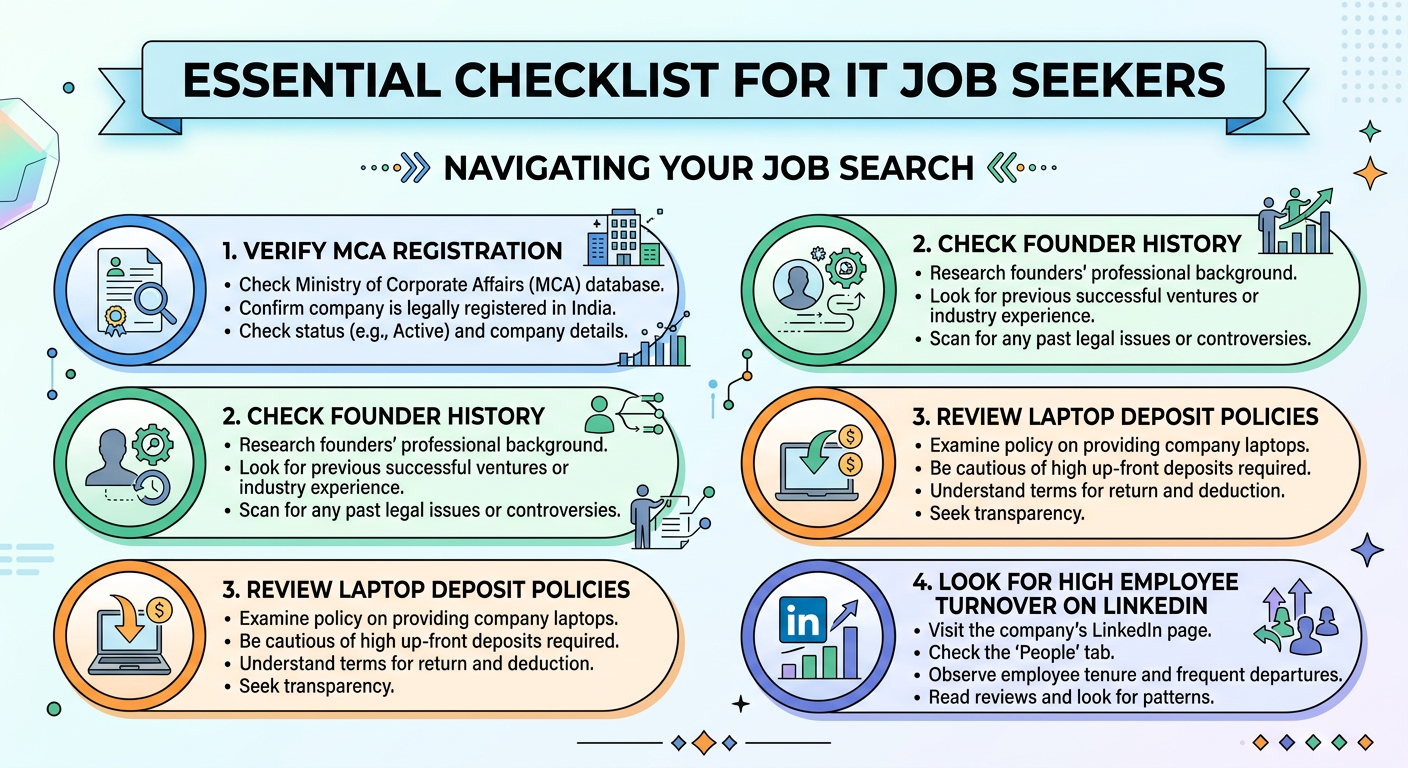
Before signing, you must act as your own investigator. Move beyond the polished LinkedIn profiles and marketing hype. Visit the Ministry of Corporate Affairs (MCA) portal to check the company’s registration status and, crucially, the history of its directors. A frequent rotation of directors in a short period is a classic warning sign.
Monitor the 'LinkedIn Turnover Velocity.' Are key technical leads and HR managers leaving in droves? If the company’s headcount seems to be bleeding talent simultaneously, it suggests internal instability rather than individual career growth. During the interview, ask pointed questions: "Can you provide the revenue model breakdown?" or "What is the current funding stage?" A company with nothing to hide will appreciate your diligence.
Legal Protections and Navigating the Aftermath
The arrest of a CEO might provide a sense of justice, but it does little to immediately recover lost wages. Many employees are currently questioning whether such legal actions are performative or substantive. In cases of sudden closure, you should document every communication, contract, and payslip, and file a formal grievance with the local Labour Commissioner.
There is also a broader regulatory gap concerning 'One Person Company' (OPC) structures. These entities are often easier to register but lack the transparency and governance required to protect 700+ employees. Until the regulatory framework for these startups catches up, the burden of protection remains squarely on the shoulders of the candidate.
The Bottom Line
The Thynk Technology scandal serves as a brutal reminder: in a competitive job market, your enthusiasm should not come at the expense of your skepticism. Verify the business structure, ignore high-pressure tactics, and if the financial disclosures don't add up, walk away. Your career is a marathon, not a sprint into an unstable venture.