The 'Mythology' Gap: What IPL Needs to Learn from Wimbledon and the NFL
Despite record-breaking valuations, the IPL faces an identity crossroads as it attempts to transition from a T20 entertainment product into a legacy-defining global institution. This analysis explores how the league must pivot from batting exhibitions to fostering the cultural folklore seen in the NFL and Wimbledon.

Photo by Shlok on Pexels
The 'Mythology' Gap: What IPL Needs to Learn from Wimbledon and the NFL
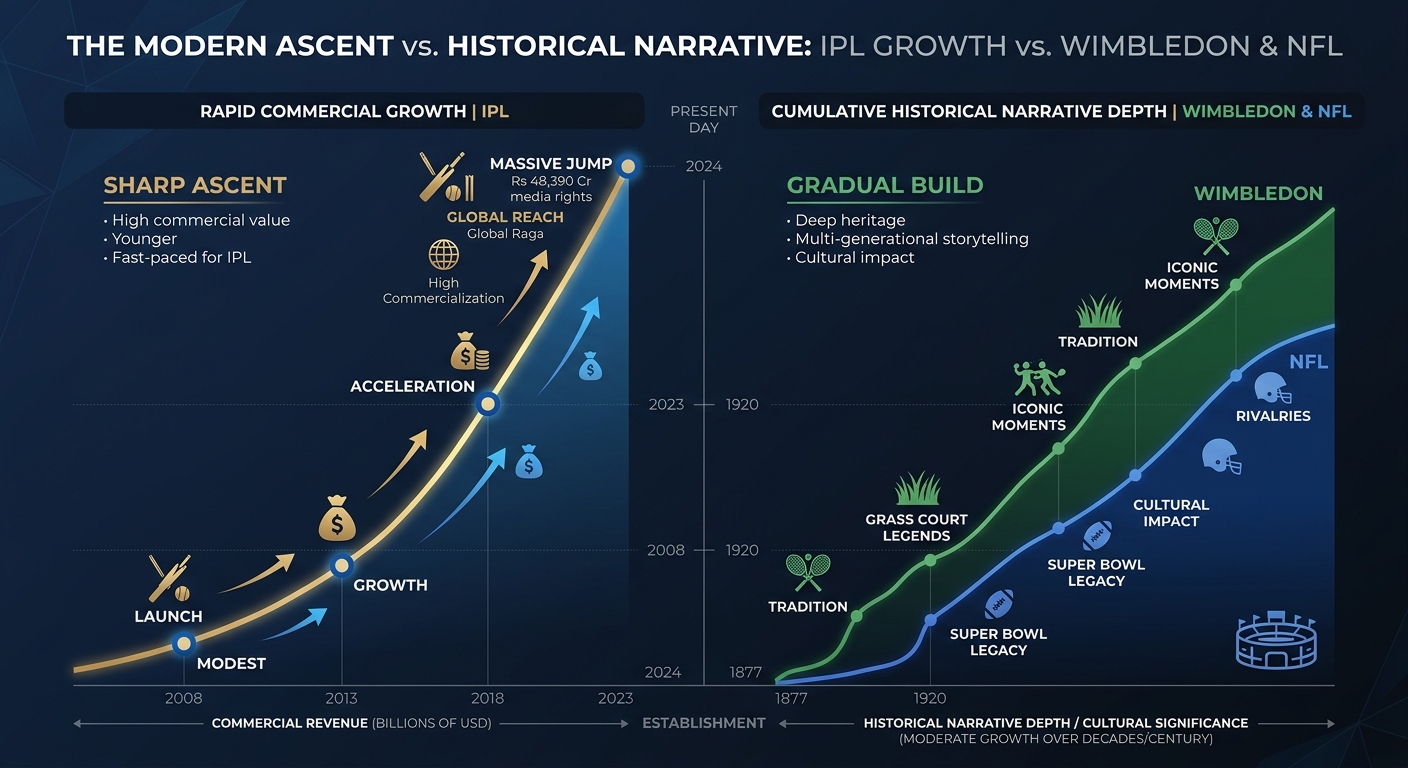
For nearly two decades, the Indian Premier League (IPL) has functioned as a gold-standard engine of hyper-commercialized cricket. With a valuation that has soared past $10 billion, it is undeniably the second most valuable sports league globally by per-match value, trailing only the NFL. Yet, as the league matures, it faces an existential identity crisis: it remains a collection of high-octane batting exhibitions rather than a repository of cultural folklore. To transition from a product into an institution, the IPL must bridge the 'mythology gap'—a hurdle that Wimbledon and the NFL have cleared by weaponizing heritage and narrative tension.
The Architecture of Lore: Why Consistency Matters
The NFL doesn't just sell games; it sells an annual cosmic event. By enforcing rigid salary caps, a draft system that rewards failure, and a monolithic playoff structure, the NFL ensures that no franchise remains irrelevant for long. Contrast this with the IPL, where the disparity in team management and long-term investment often leads to a 'transactional' rather than 'relational' fandom.
In Wimbledon, the sanctity of tradition—the white attire, the grass courts, the absence of overt commercialism on-court—creates a gravity that draws audiences back for the sheer aesthetic of history. The IPL, by contrast, feels like a restless startup. It pivots constantly to maximize reach, but in doing so, it risks diluting the 'myth' that sustains long-term loyalty across generations.
The IPL feels like a blockbuster movie that you watch once a year for the thrills, but the NFL feels like a seasonal epic series that defines your entire year. We know the players, we know the front office drama, and we feel the weight of the history. The IPL is still just a highlight reel.
— u/CricketAnalystIndia, r/IndiaCricket
Tactical Shifts: From Highlights to Narratives
If the IPL wants to mirror the longevity of its global peers, it must move beyond the 'six-hitting' fetish. Tactical depth is the hallmark of great leagues. The IPL currently lacks the granular storytelling of American sports, where the narrative of a franchise’s rebuild is as engaging as the final score.
Investment in 'behind-the-scenes' content and long-form storytelling is critical. While shows like Drive to Survive transformed Formula 1 into a cultural juggernaut, the IPL has largely relied on the ephemeral nature of the live broadcast. To build legacy, the league needs to cultivate rivalries that aren't just based on city geography but on deep-seated historical antagonism, akin to the Boston Red Sox-New York Yankees dynamic or the Manchester United-Liverpool rivalry.
We have the numbers, we have the money, but we lack the 'lore.' When a player leaves an IPL franchise, the fans often switch allegiance to wherever he goes. In the NFL or the Premier League, you support the badge, not the mercenary. That’s the gap we aren't closing.
— u/CricketTraditionalist, r/IPL
The Commercial Trap
The IPL is currently a victim of its own success. The sheer volume of matches (now 74 games per season) makes every individual contest feel less significant. Compare this to Wimbledon’s two-week sprint or the NFL’s 17-game regular season; scarcity creates value. By saturating the calendar, the IPL risks 'event fatigue,' where the spectacle becomes white noise.
To pivot, the BCCI must prioritize the 'heritage' of the franchises. This means incentivizing teams to invest in youth academies, local stadium culture, and, most importantly, keeping players in the same jersey for nearly a decade. Stability is the soil in which mythology grows.
The Bottom Line
The IPL is a commercial miracle, but it is not yet a cultural legacy. To survive the inevitable shifting of media consumption patterns, it must evolve from a platform that sells cricket to a platform that hosts human drama. It needs to stop chasing the next 'record-breaking valuation' and start chasing the kind of loyalty that makes a fan cry when a franchise loses, not just when a favorite player gets out. The numbers suggest the league is winning, but the history books are still empty.