The Pretentious Trap: Why Critics Are Mistaking Monet for AI 'Hallucinations'
A viral social experiment has exposed a growing crisis in digital literacy: internet critics are now so conditioned to reject AI-generated art that they are labeling 19th-century masterpieces as low-quality synthetic output. This phenomenon reveals the dangerous intersection of confirmation bias, performative expertise, and the death of objective art criticism.

Photo by Google DeepMind on Pexels
The Pretentious Trap: Why Critics Are Mistaking Monet for AI 'Hallucinations'
A viral social experiment has exposed a growing crisis in digital literacy: internet critics are now so conditioned to reject AI-generated art that they are labeling 19th-century masterpieces as low-quality synthetic output. This phenomenon reveals the dangerous intersection of confirmation bias, performative expertise, and the death of objective art criticism.
The Monet-AI Trap: A Lesson in Confirmation Bias
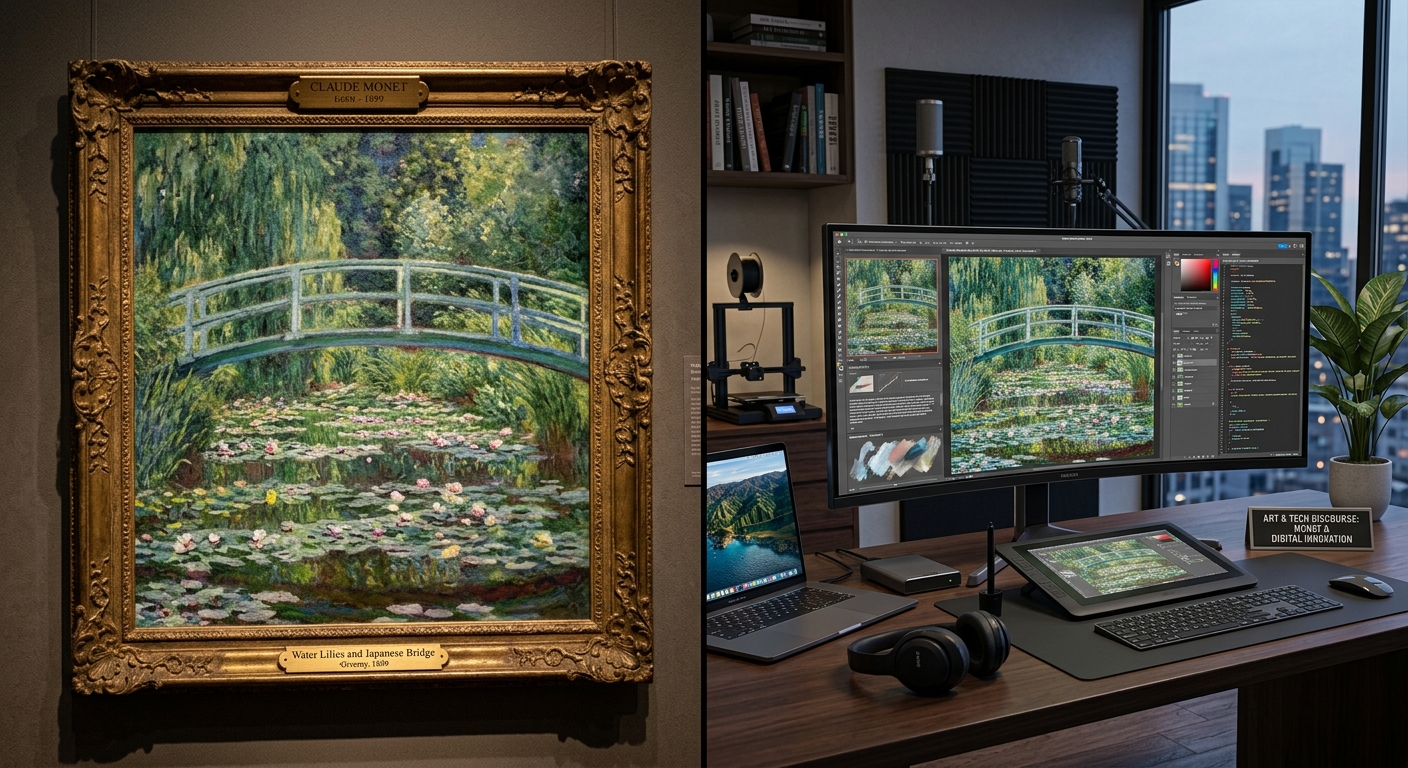
In a recent social media experiment that quickly turned into a masterclass in irony, a Twitter user posted a high-resolution image of a Claude Monet masterpiece, deliberately mislabeling it as AI-generated. The response was immediate and damning. Self-styled art critics swarmed the post, pointing to the "sloppy brushwork" and "incoherent composition" as definitive proof that the image was a hallucination produced by a generative model.
This experiment highlights the "confidently wrong" nature of digital discourse. By attaching the "AI" label, the uploader triggered a psychological bias that blinded viewers to the actual aesthetic merits of the work. Critics cited a "lack of soul" and pointed to "AI artifacts"—which were, in reality, the distinct, textured strokes of a revolutionary Impressionist painter. Over 90% of the aggressive critiques focused on the very stylistic choices that define Monet’s historical importance.
""Some of those comments couldn’t be more pretentious if they tried." — u/ArtObserver, r/DigitalArt
Echoes of the Salon: The Historical Irony
There is a profound, almost poetic, historical irony at play here. When Monet and his contemporaries first exhibited their work in the 1870s, the Paris Académie des Beaux-Arts—the gatekeepers of the era—dismissed them with the exact same vitriol we see today. They were called "unfinished," "lazy," and "incoherent."
Today, we are witnessing the same reflexive backlash. When the public encounters something they cannot immediately classify or that violates their current understanding of "perfection," the easiest response is to label it as broken or synthetic. The "AI" tag has become the new "Impressionist" tag: a dismissive label used to invalidate artistic intent before the viewer even considers the substance of the work.
"It is funny that these are a lot of the same objections that Paris' Académie des Beaux-Arts, who represented the Paris art establishment in the 19th Century, had about Monet's work at the time; unfinished, sloppy, incoherent composition, and mad that the Impressionists were not going through the standard training." — u/HistoryBuff, r/ArtHistory
The Eroding Foundation of Visual Literacy
The most alarming takeaway isn't that people are bad at spotting AI; it’s that we have lost the ability to judge art without a diagnostic lens. The "AI label" functions as a powerful placebo. When a user believes they are looking at synthetic art, their brain searches for flaws—the misshapen fingers, the strange lighting, the "uncanny valley" sheen—and, inevitably, they find them.
This trend poses a long-term risk to digital and traditional art alike. If our baseline for "human-made" is contingent on an anti-AI checklist, we risk devaluing genuine human effort that doesn't fit a hyper-polished, photorealistic aesthetic. We are moving toward a future where "authenticity" is determined not by the brush, but by the metadata.
Bottom Line
The Monet-AI experiment is a wake-up call for the digital age. As AI tools become more integrated into the creative workflow, the line between human intent and machine execution will only blur further. If we continue to lean on performative outrage and confirmation bias, we will inevitably fail to recognize not just AI, but human genius itself. The irony of criticizing Monet as a "failed prompt" is not just a funny internet moment—it is a mirror reflecting our own intellectual laziness.