The Rural vs. Urban Consumption Gap: Where is the Growth Actually Coming From?
While Q1 earnings paint a picture of a broad-based consumption revival, a closer look suggests a deepening divide. We dissect whether this volume-led growth is a sustainable recovery or a fragile uptick driven by urban premiumisation and inventory cycles.
Photo by freestocks.org on Pexels
The Rural vs. Urban Consumption Gap: Where is the Growth Actually Coming From?
While Q1 earnings paint a picture of a broad-based consumption revival, a closer look suggests a deepening divide. We dissect whether this volume-led growth is a sustainable recovery or a fragile uptick driven by urban premiumisation and inventory cycles.
The Illusion of Broad-Based Growth
The narrative emerging from recent Q1 corporate disclosures is one of unbridled optimism. FMCG giants and retail conglomerates are reporting a return to volume-led growth, a metric that had been noticeably absent for several quarters. However, analysts are beginning to peel back the layers of this narrative, questioning if the "broad-based" label holds up under scrutiny.
There is a growing suspicion that much of this reported growth is not born of a sudden surge in end-consumer demand, but rather a result of inventory restocking cycles as distributors rebuild buffers. While top-line figures look robust, the underlying reality reveals a sharp divergence between the spending power of metropolitan hubs and the persistent price sensitivity in rural hinterlands.
"Q1 Updates Signal Consumption Recovery: FMCG companies report strongest volume-led growth seen in several quarters. Retail, jewellery and discretionary segments witness broad-based demand strength. Margin pressures remain temporary; companies expect profitability to improve ahead." — @CNBCTV18News, X
Premiumisation at the Fringe: The New Rural Reality
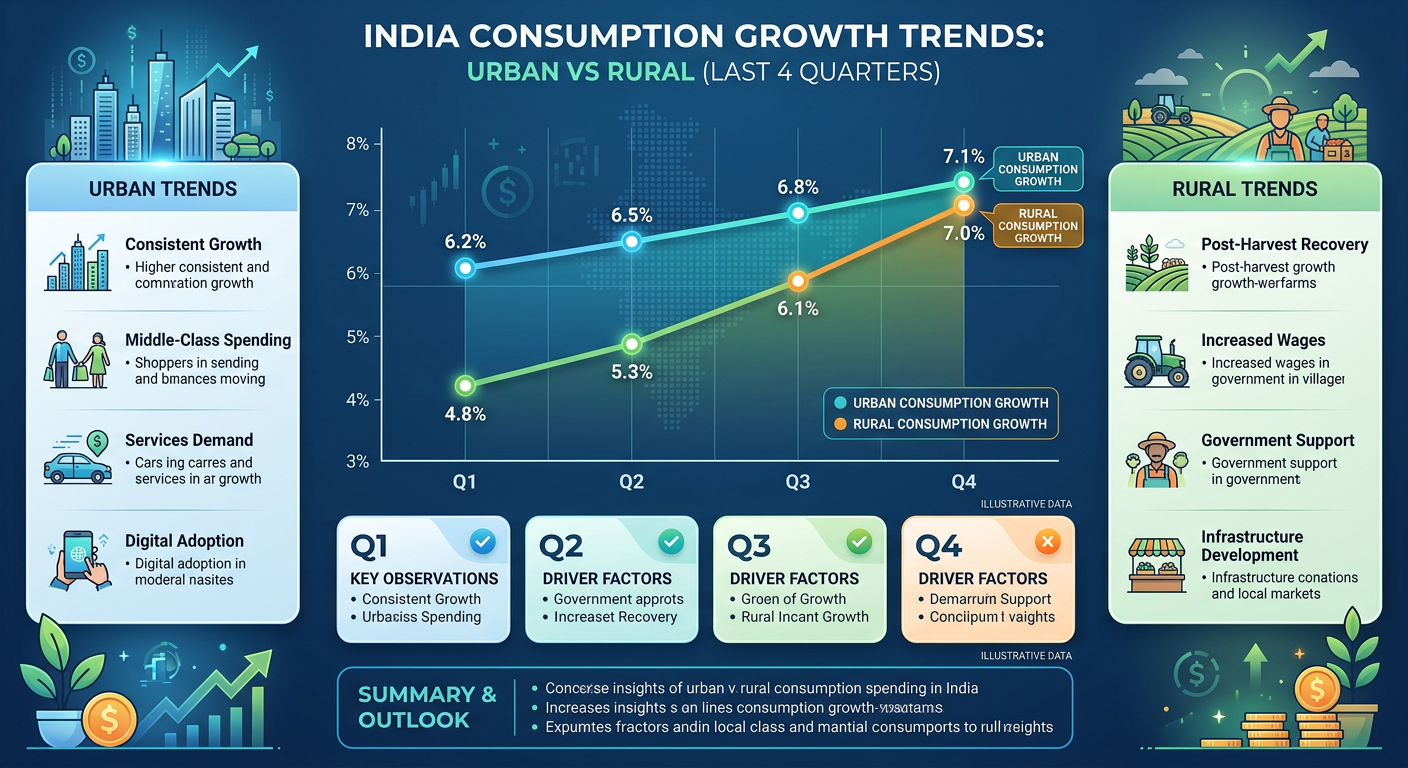
The rural landscape is undergoing a silent transformation. Rather than a blanket increase in consumption, we are seeing the rise of "affordable premium" products. Rural consumers, historically tethered to low-cost commodity staples, are increasingly shifting toward branded discretionary goods. This is not a shift of plenty, but a deliberate trade-off—sacrificing quantity for perceived quality.
However, this trend remains fragile. With agricultural income uncertainty looming, any disruption to rural sentiment could lead to an immediate contraction. The reliance on these "fringe" premium products as a growth engine for rural markets remains a risky strategy for FMCG firms, especially when mass-market product volumes continue to stagnate.
Margin Pressure and the K-Shaped Recovery
Is the current margin pressure merely a "temporary" blip, as corporate leadership suggests? Institutional investors are not so sure. There is a palpable fear that aggressive promotional discounting, used to maintain volume growth in a slowing environment, is cannibalizing long-term brand equity.
This is manifesting in a K-shaped recovery within the sector. While urban markets provide a stable margin floor through premium segments, mass-market goods are caught in a race to the bottom. For investors, the concern is structural: if volume growth requires perpetual discounting, profitability may remain permanently pressured, despite the topline optics.
"India's consumer sector is showing signs of renewed strength. Speaking to CNBC-TV18, @manojmenonk of #ICICISecurities says he's constructive on #FMCG, paints and alcoholic beverages, while remaining cautious on select stocks." — @CNBCTV18News, X
The Sustainability Outlook: Risks and Debates
As we look toward Q2, the sustainability of this recovery faces three primary headwinds: inflationary pressure, the potential for an El Niño-driven agricultural slump, and the risk that current stock valuations have front-run the recovery by a wide margin.
The debate remains polarized. Bulls argue that urban consumption is finally firing on all cylinders, providing a hedge against rural weakness. Skeptics, meanwhile, suggest that urban growth is currently inflated by price-hiking power—passing costs to a resilient consumer base—rather than genuine volume expansion. If the latter is true, the current valuation premiums for many consumer staples may be unsustainable.
The Bottom Line
The Q1 consumption rebound is real, but it is not the monolithic victory for the economy that headlines suggest. It is a tale of two markets: a robust, premium-focused urban core masking a cautious, price-sensitive, and highly fragile rural periphery. For investors, the search for alpha must now shift from headline growth figures to the underlying quality of that volume—specifically, how much of it is sustainable brand loyalty versus transient inventory stocking and discount-driven spending.