The Silent Battle for the Lock Screen: Why 'Liquid Glass' Remains the Most Polarizing iOS 26 Feature
With the release of iOS 26.5, Apple is doubling down on its 'Liquid Glass' aesthetic, sparking a fierce debate between design enthusiasts and power users. While performance stability improves, the lack of UI customization options is driving a growing movement of users seeking to disable Apple's most controversial design layer yet.
The Silent Battle for the Lock Screen: Why 'Liquid Glass' Remains the Most Polarizing iOS 26 Feature
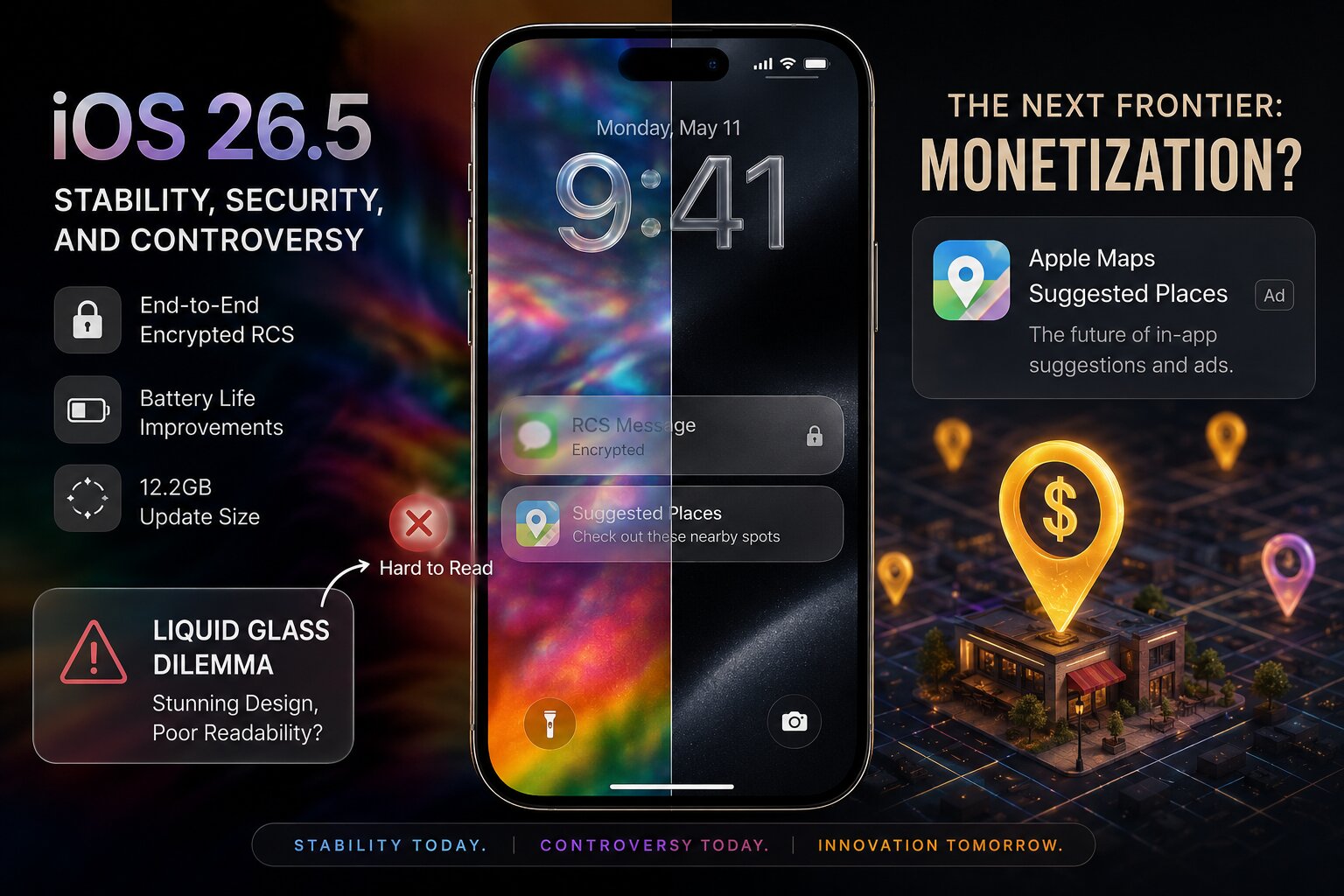
With the release of iOS 26.5 on May 11, 2026, Apple has once again attempted to strike a balance between system stability and the avant-garde aesthetic of its "Liquid Glass" interface. For millions of users, particularly the power-user base in markets like India where device longevity is paramount, this update is a double-edged sword. While it introduces critical security features like End-to-End Encrypted RCS, it also cements the position of a design layer that continues to prioritize visual refraction over essential UI legibility.
https://twitter.com/theapplehub/status/2053884654651064515
The 12GB Paradox: Stability at the Cost of Bloat
The most immediate point of contention is the sheer scale of the update. Clocking in at a staggering 12.2GB for many users, iOS 26.5 feels less like a point-update and more like a total system overhaul. While Apple maintains that this massive package is necessary to optimize the iPhone 16 and 17 series for upcoming AI-driven cycles, the lack of a corresponding "feature explosion" has left many feeling alienated.
Battery life remains the primary barometer for success or failure in the Indian tech community, where users often carry their devices through long, active days. Early reports indicate that for those coming off the regressions in 26.4.2, the 26.5 update offers a marginal, though not transformative, recovery in power efficiency.
Liquid Glass: Aesthetics Over Accessibility
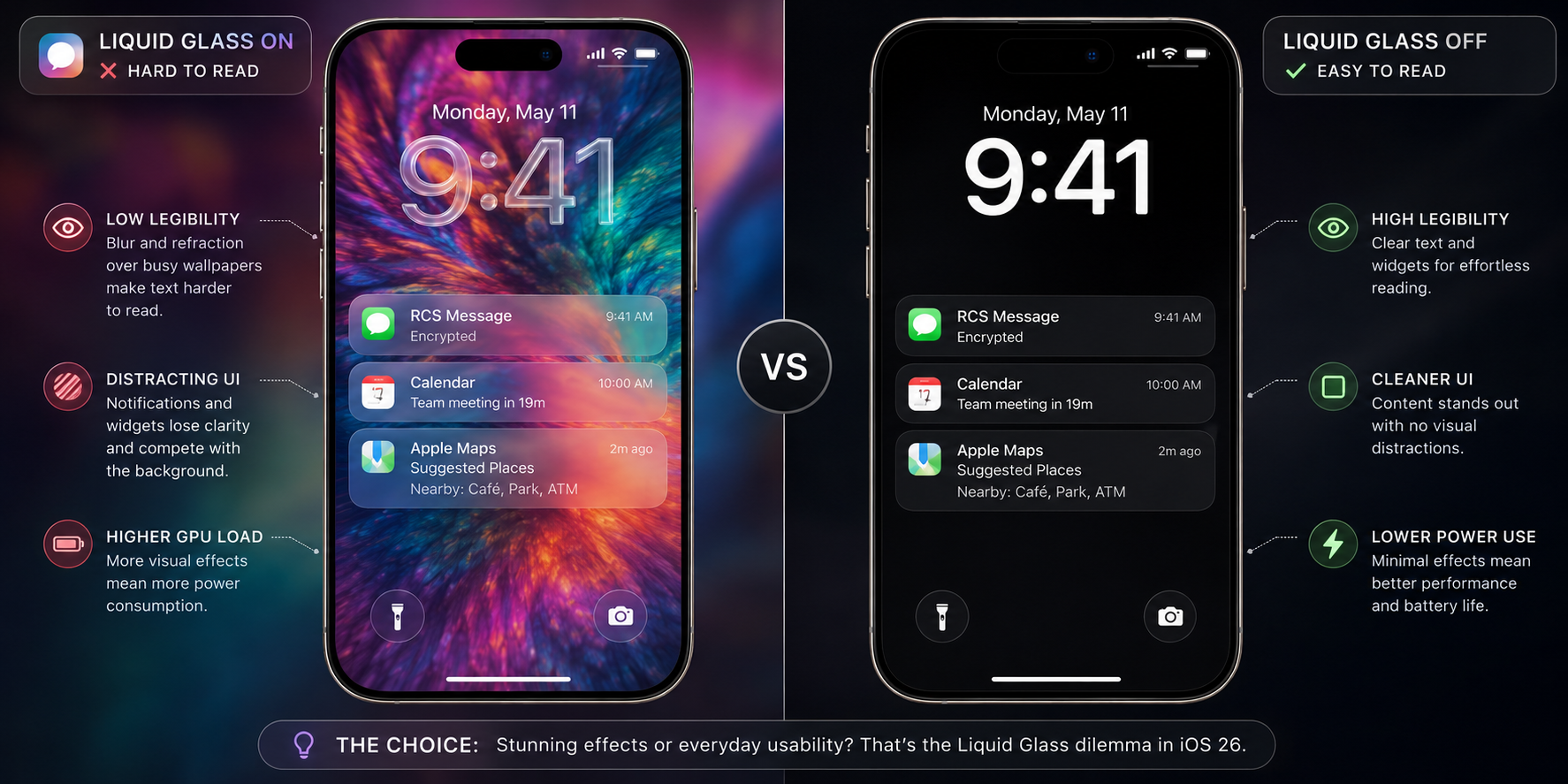
The "Liquid Glass" engine—Apple’s signature blur and refraction layer—remains the most controversial element of the current OS. By attempting to mimic real-world physics, the interface often renders lock screen text unreadable, depending on the wallpaper. The introduction of the "Pride Luminance" wallpaper has only exacerbated this, serving as a performance sink that draws heavily on the GPU to process real-time light refraction.
For those who prefer utility over the "glassy" aesthetic, a growing subculture of users has adopted the "Black-Hole" workaround: using an entirely pure black wallpaper to starve the refraction engine of data, effectively disabling the blur. However, the absence of a "Legacy UI" toggle remains a glaring omission for a company that prides itself on accessibility.
Monetization and the Evolution of Apple Maps
Beyond the visuals, iOS 26.5 marks a strategic pivot for Apple’s monetization engine. The introduction of "Suggested Places" in Apple Maps is widely viewed as a testbed for native, in-app advertising. In a market like India, where users have become accustomed to a premium, ad-free experience on their iPhones, the presence of these suggestions has sparked intense skepticism.
Critics are already questioning whether these ads will become unavoidable. More importantly, the lack of clarity on whether Apple One subscribers—who pay for an "all-in" ecosystem—will be exempt from these suggestions has created a trust gap that Apple will need to address before the next iteration of the software.
""Can we all agree that iOS 26.5 is how iOS 26 should’ve been released? If Apple had launched this version first and then just iterated on it, we’d be on track to a really superb update." — r/Apple
The Long Road to iOS 27
As we look toward the June WWDC event, it is clear that iOS 26.5 is a "feature-complete" baseline rather than an experimental playground. The notable absence of any significant Siri upgrades confirms that Apple is holding its cards for iOS 27, which is expected to overhaul the OS's underlying LLM architecture.
For now, iOS 26.5 sits in a strange limbo. It offers the stability that power users craved, but it simultaneously doubles down on a design language that feels increasingly at odds with the demands of day-to-day productivity.
Version 26.5 Finality: Bridging the Gap to iOS 27
iOS 26.5 is a necessary "housecleaning" update that successfully addresses legacy stability, but it fails to resolve the fundamental HCI (Human-Computer Interaction) conflict created by the Liquid Glass engine. For the average user, the security gains of encrypted messaging are welcome, but the aggressive monetization in Maps and the ongoing "physics-first" design philosophy suggest that the friction between Apple's aesthetic vision and user utility is only set to increase as we head into the iOS 27 era.