The Victim's Playbook: What to Do Within the First 60 Minutes of a Cyber Fraud
With financial scams surging, panic is the enemy of recovery. This tactical guide breaks down the essential steps to freeze compromised accounts and trigger the mandatory RBI cooling-off protocols to reclaim your funds.

The Victim's Playbook: What to Do Within the First 60 Minutes of a Cyber Fraud
With financial scams surging across the digital landscape, panic is the silent enemy of recovery. In the high-stakes world of Indian digital payments, the difference between losing your life savings and recovering them often comes down to the "Golden Hour." When a fraudulent transaction hits, silence is not an option—immediate, tactical intervention is the only way to trigger the RBI-mandated cooling-off protocols and reclaim your funds.
The Golden Hour: Immediate Tactical Response
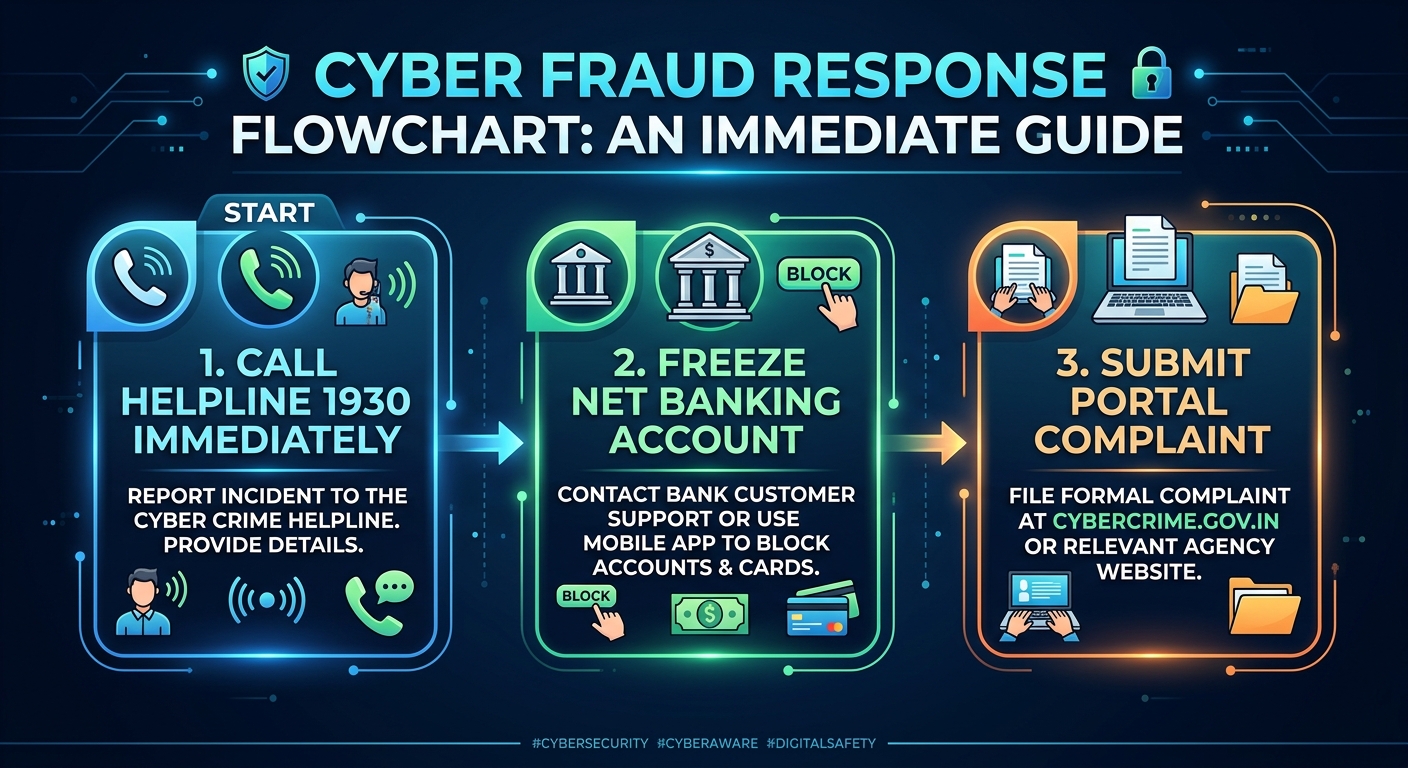
The moment you receive a suspicious transaction alert, the clock starts ticking. The National Cybercrime Helpline (1930) is your primary line of defense. By reporting the fraud within the first 60 minutes—the "Golden Hour"—you maximize the chances of the Financial Cyber Fraud Reporting and Management System (FCFRMS) freezing the money before it flows through multiple mule accounts.
Time is of the essence because scammers operate on a velocity-based model, moving funds out of the initial beneficiary account with lightning speed. Do not wait to talk to friends or family; gather your Transaction ID (UTR number) and merchant details immediately.
""How we lost ₹12270 in a wholesale scam and now we are literally broke af... please read so u dont get f**ked over too" — u/unknown, r/unknown
It is vital to distinguish between a bank "block" request and a police complaint. Calling your bank to freeze the card or account stops further damage, but filing a report via the 1930 helpline creates the digital paper trail necessary for the police to initiate a "hold" on the specific amount in the recipient's bank account.
Navigating the National Cybercrime Portal
Many victims waste precious time queuing at local police stations, where officials may be ill-equipped to handle digital-first crime reports. Instead, leverage cybercrime.gov.in. This portal acts as the central nerve center for digital evidence submission.
Filing here is superior because it generates an immediate acknowledgment report that serves as legal evidence of your prompt action. Myths suggest that reporting delays are acceptable, but in the realm of financial tracing, every minute of delay increases the likelihood of the funds being liquidated into untraceable assets or cryptocurrency.
Engaging Your Bank: The Zero Liability Template
Under the RBI 'Limited Liability' circulars, you are protected from unauthorized transactions if you report them promptly. Once you have initiated the 1930 report, your next step is to draft a formal grievance letter to your bank’s Nodal Officer.
Your letter must explicitly reference the transaction ID, the timestamp of your report to 1930, and a request for a reversal under the zero-liability framework. Maintain a meticulous log of all correspondence; this is your leverage if the matter needs to be escalated to the Banking Ombudsman.
""Banks On Edge, Finance Ministry On Alert: Mythos AI Panic Explained" — u/unknown, r/unknown
The Mythos AI Context: Why Banking Security is Evolving
We are witnessing a shift from manual phishing to AI-generated social engineering. Sophisticated deepfake calls and AI-driven script generators are allowing scammers to mirror the tone and urgency of legitimate banking authorities. While the Finance Ministry continues to push for better infrastructure, the current reality places a heavy burden on individual vigilance.
Institutional accountability remains a hot-button issue. As Indian journalists like Anand RK and Suparna Sharma have highlighted through award-winning investigative reports, the ecosystem must move toward a collective security model—where banks, telecom operators, and the government share real-time fraud telemetry to neutralize threats before they reach the user's screen.
Engagement Snapshot
Community sentiment remains volatile, reflecting the widespread anxiety regarding digital safety. Discussions on subreddits frequently emphasize that even the most tech-savvy individuals are falling prey to AI-enabled scams.
- Total community reach: Thousands of impacted users sharing recovery stories.
- Key sentiment: Frustration with delayed banking response times.
- Top advice: Document every single notification and interaction.
The Bottom Line
Financial recovery is not guaranteed, but your actions within the first hour of a scam determine your odds. Treat your digital bank account with the same security priority as your physical wallet. Report immediately, document thoroughly, and utilize the official government channels over informal social media advice. In the digital age, your greatest protection is not just your password, but your speed of response.