The 'WFH' Dilemma: Corporate Reality vs. The Prime Minister's Austerity Appeal
As crude prices soar past $120, the government’s call for a return to remote work to save foreign exchange has sparked a clash with India Inc.’s rigid office mandates. We examine the growing divide between national economic appeals and the corporate push for on-site presence.
The 'WFH' Dilemma: Corporate Reality vs. The Prime Minister's Austerity Appeal
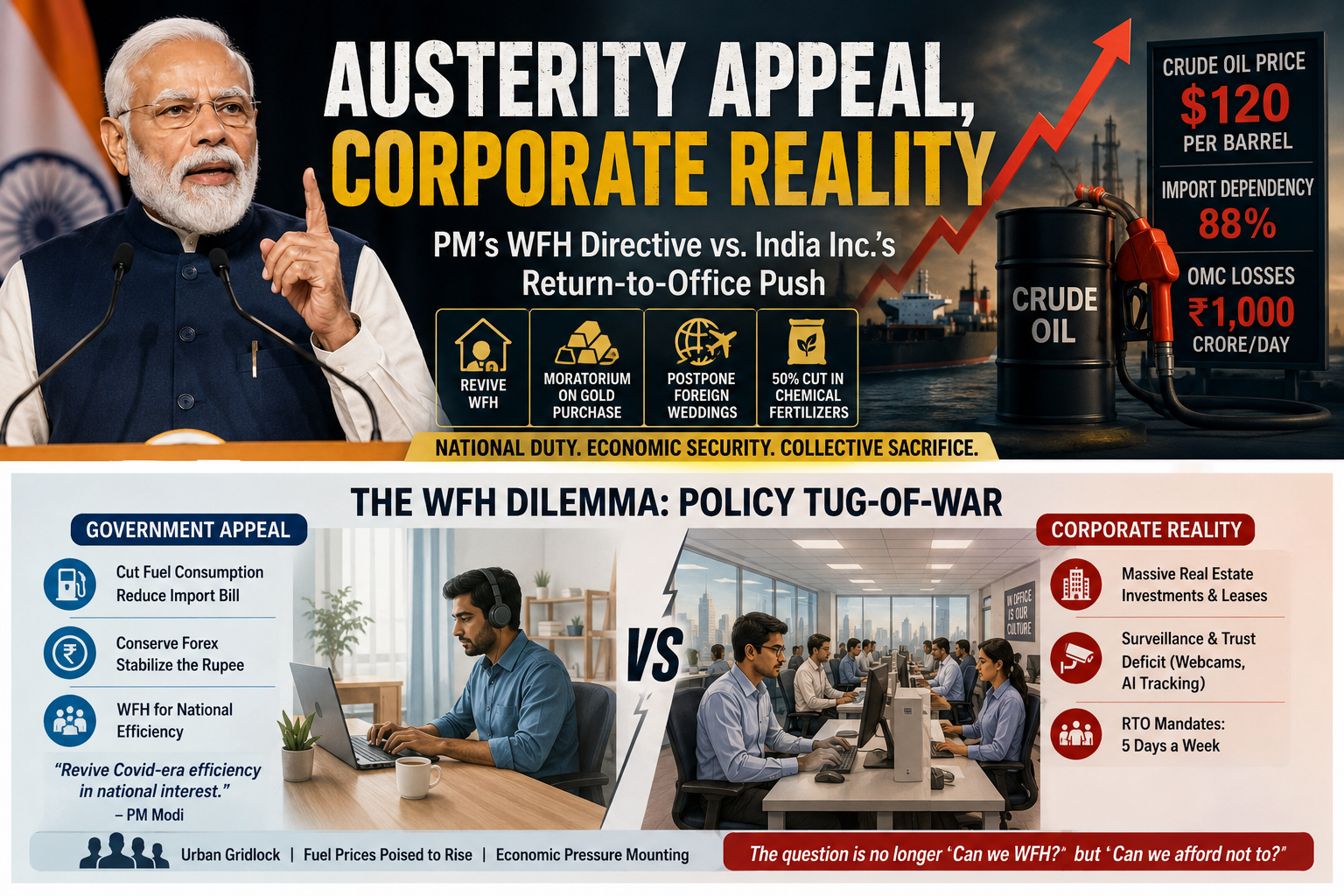
As crude oil prices soar past $120 per barrel, the Indian government’s desperate pivot toward voluntary austerity has hit a brick wall. In a sweeping appeal delivered from Secunderabad on May 10, 2026, Prime Minister Narendra Modi urged citizens to curtail fuel consumption, halt gold purchases, and revive the work-from-home (WFH) habits of the pandemic era to protect the nation's foreign exchange reserves. Yet, for millions of professionals, this call to 'national duty' feels disconnected from the rigid, surveillance-heavy return-to-office (RTO) mandates currently enforced by India Inc. The clash between government rhetoric and corporate reality has left the workforce caught in the middle, navigating a cost-of-living crisis that feels increasingly systemic.
The Hyderabad Appeal: A Shift in Tone
The Prime Minister’s address signaled a dramatic departure from the growth-centric narratives that defined the pre-election cycle. With geopolitical tensions in West Asia threatening the Strait of Hormuz—the artery for nearly 20% of global oil—the economic stakes have shifted from inflation management to survival. The government is essentially asking citizens to adopt a wartime footing, requesting a one-year moratorium on gold—a traditional household safety net—and a structural shift in transit habits.
This transition from promoting an 'India Growth Story' to 'Austerity for National Duty' has left many citizens feeling blindsided. By tethering the appeal to the broader West Asian conflict, the administration is attempting to manage expectations for a long-term energy crunch that shows no signs of abating.
Corporate India’s Resistance: The RTO Wall
While the government is pushing for a digital-first approach to save fuel, the private sector has spent the last 18 months moving in the opposite direction. Major IT giants and BFSI firms have poured millions into long-term commercial real estate leases, creating an ironclad incentive for leaders to fill their offices. For these corporations, WFH isn't just an operational choice; it’s a failure to utilize expensive, high-occupancy assets.
Employees are reacting with deep cynicism, noting that many firms have replaced trust-based flexibility with invasive monitoring software and mandatory 'webcam-on' policies. For the white-collar workforce, the government's call to WFH lacks the teeth to override corporate policy.
""Officially cooked. Red alert. Also why not propose the companies to do it officially with notices?" — r/india
Economic Reality: The Cost of Waiting
The urgency behind the appeal is grounded in cold arithmetic. India imports 88% of its crude oil, and with prices spiking from $70 to $120 in just three months, the fiscal burden is unsustainable. Oil Marketing Companies (OMCs) are currently hemorrhaging nearly ₹1,000 crore every single day to prevent the full force of this price hike from hitting the consumer pump. The government’s reluctance to issue a formal mandate suggests a fear of political fallout, preferring to delegate the pain to the public through 'voluntary' cooperation.
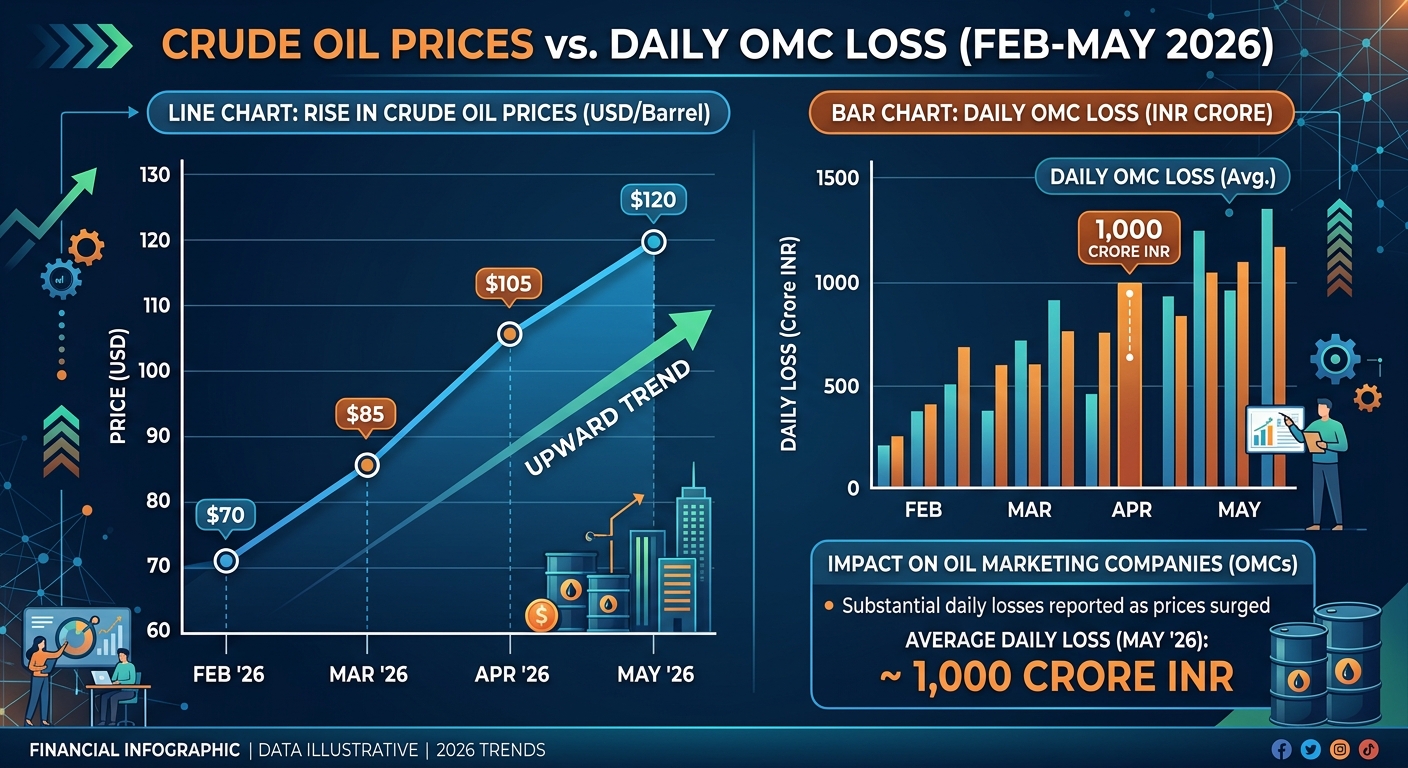
Should corporations refuse to pivot, the inevitable pass-through of these costs to consumers will likely trigger a fresh wave of inflation. The government is essentially betting that if it can lower fuel demand through voluntary WFH, it can forestall the necessity of a retail price hike.
Public Skepticism and the Election Aftermath
Timing is everything, and the public is taking note. The fact that this 'national duty' plea arrived immediately after the conclusion of state elections has fueled accusations of political convenience. Critics argue that the severity of the foreign exchange crisis was downplayed while electoral campaigns were active, leaving the middle class to now deal with the fallout of both high inflation and these new, restrictive lifestyle requests.
"As the state elections end last week, the true impact of the West Asian crisis appears on the Indian economy... there have already been few cases noted where industries are feeling the impact of labor shortage as lack of LPG pushed many workers to head back home to their villages." — u/NewsAggregator, r/The_Times_of_India
https://twitter.com/IndianTechGuide/status/2053497809676968346
The Bottom Line
There is a fundamental disconnect between the government's rhetoric and the structural reality of the Indian workplace. Without official guidelines to protect employees from RTO mandates, the Prime Minister’s appeal for WFH remains a hollow suggestion. Until the state moves beyond 'appeals' and mandates policy-level changes for the private sector, the burden of conserving India's precious foreign exchange will continue to rest solely on the individuals already feeling the squeeze of a global energy crisis.