Why House of the Dragon Replaced Nettles with Rhaena: A Summary of the Controversy
Showrunner Ryan Condal’s decision to merge the pivotal character Nettles into Rhaena Targaryen has sparked intense debate among ASOIAF purists. The move, aimed at streamlining the narrative, raises significant questions about the show’s shift from societal deconstruction to dynastic family drama.
Photo by Vika Glitter on Pexels
Why House of the Dragon Replaced Nettles with Rhaena: A Summary of the Controversy
Showrunner Ryan Condal’s decision to merge the pivotal character Nettles into Rhaena Targaryen has sparked intense debate among ASOIAF purists. The move, aimed at streamlining the narrative, raises significant questions about the show’s shift from societal deconstruction to dynastic family drama.
The Controversy: Merging Arcs, Losing Nuance
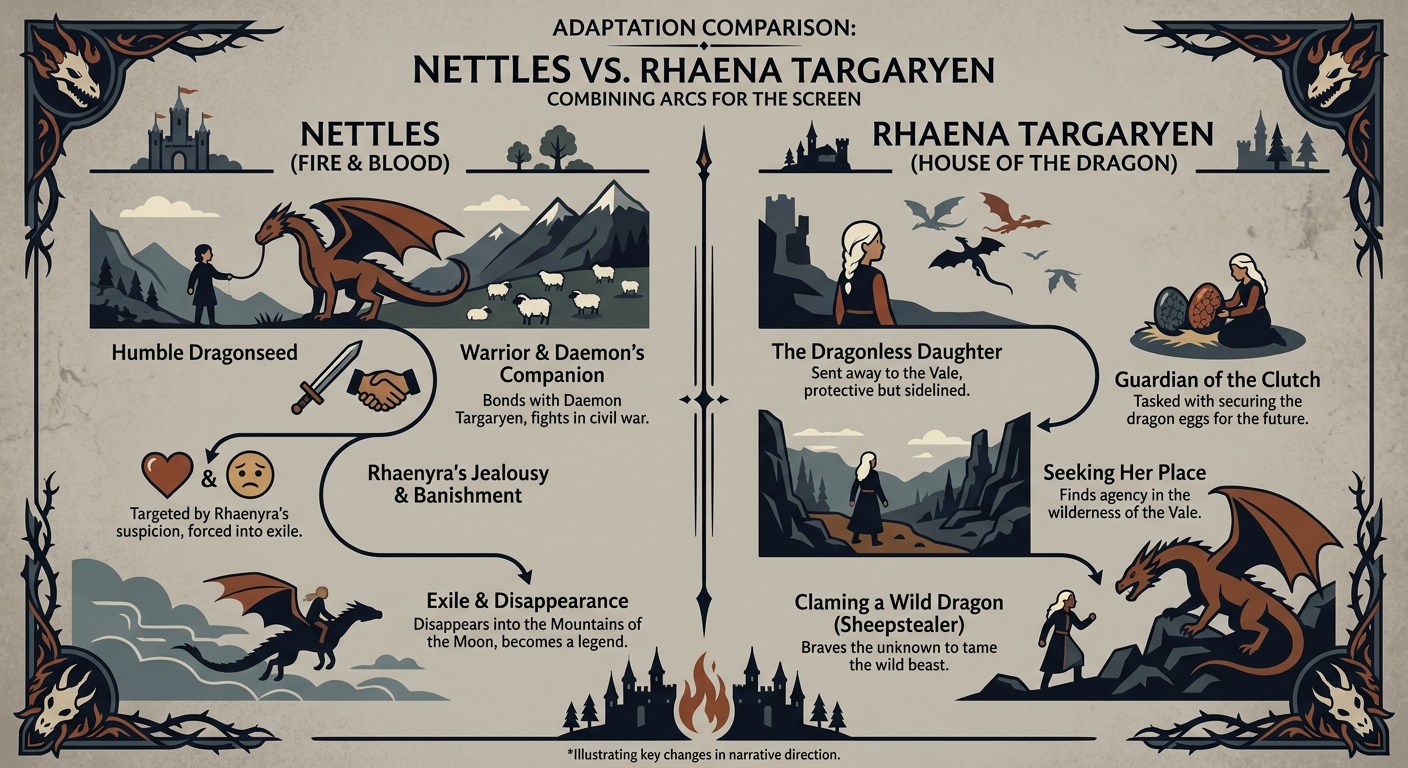
In recent interviews, showrunner Ryan Condal has defended the decision to excise the character of Nettles from House of the Dragon, opting instead to fold her narrative arc into Rhaena Targaryen. For the uninitiated, Nettles was a key commoner figure in George R.R. Martin’s Fire & Blood who successfully tamed a dragon, directly challenging the notion that dragon-riding was a birthright exclusive to the Valyrian nobility.
Book purists have been vocal about their disappointment. By removing a character who represented a meritocratic threat to the Targaryen blood-supremacy, critics argue the show is actively diluting the thematic edge of the source material. Where the books used Nettles to illustrate the chaotic, democratic nature of power during the Dance of the Dragons, the show appears to be doubling down on a narrative focused strictly on the internal machinations of a single family.
"The show feels like it's becoming a soap opera about one family's squabbles rather than the grim, systemic deconstruction of power that made the books and early GoT seasons so compelling. Losing Nettles isn't just about a character; it's about losing the commoner's perspective."
The Thematic Stakes: Power, Class, and Legacy
At the heart of the controversy is the concept of dragon-lord elitism. In the source material, the existence of a common-born dragon-rider was a narrative ticking clock—a destabilizing force that forced the characters to reconcile their notions of "divine" blood with the reality that, given the chance, anyone could command a dragon. By consolidating this arc into Rhaena, the series reinforces the Targaryen "exceptionalism" that the original text worked so hard to pick apart.
This shift highlights a move toward what critics call "narrative impatience." Instead of allowing the world to breathe and introducing complex, non-Targaryen agents who disrupt the established power structure, the show opts for familiarity. By keeping the dragon-riding power strictly within the family tree, the series leans into a tighter, more traditional tragedy but loses the sociological complexity that differentiates Martin’s work from standard high fantasy.
Evaluating the Counter-Narrative
Proponents of the show’s changes—and the creative team itself—argue that television demands a level of concision that novels do not. The introduction of a major new character in the final acts of a television series often leads to "character bloat," where the audience struggles to emotionally invest in a new face when the stakes for legacy characters are already so high.
Furthermore, giving Rhaena the dragon-taming role provides a long-awaited emotional payoff for a character who has been sidelined as the "dragonless Targaryen" since the series premiere. By removing the controversial and morally complex relationship between Nettles and Daemon Targaryen, the writers have arguably created a more cohesive, albeit less challenging, emotional arc for the family unit.
The Bottom Line
The choice to merge Nettles into Rhaena is a classic adaptation trade-off: narrative efficiency vs. thematic depth. While the show gains a more streamlined story and a deeper emotional investment in an existing cast member, it risks alienating fans who see the "Targaryen-only" lens as a regression. Whether this change will pay off in the final seasons or be viewed as a missed opportunity to critique the very power structures the show explores remains the central point of contention in the House of the Dragon fandom.