Why Your AI Tools Are Failing You in Technical Interviews
Hiring managers are increasingly spotting the signs of AI-assisted cheating as technical interviews shift focus. Here is why surface-level framework mastery is no longer enough to land a role in India’s competitive software landscape.
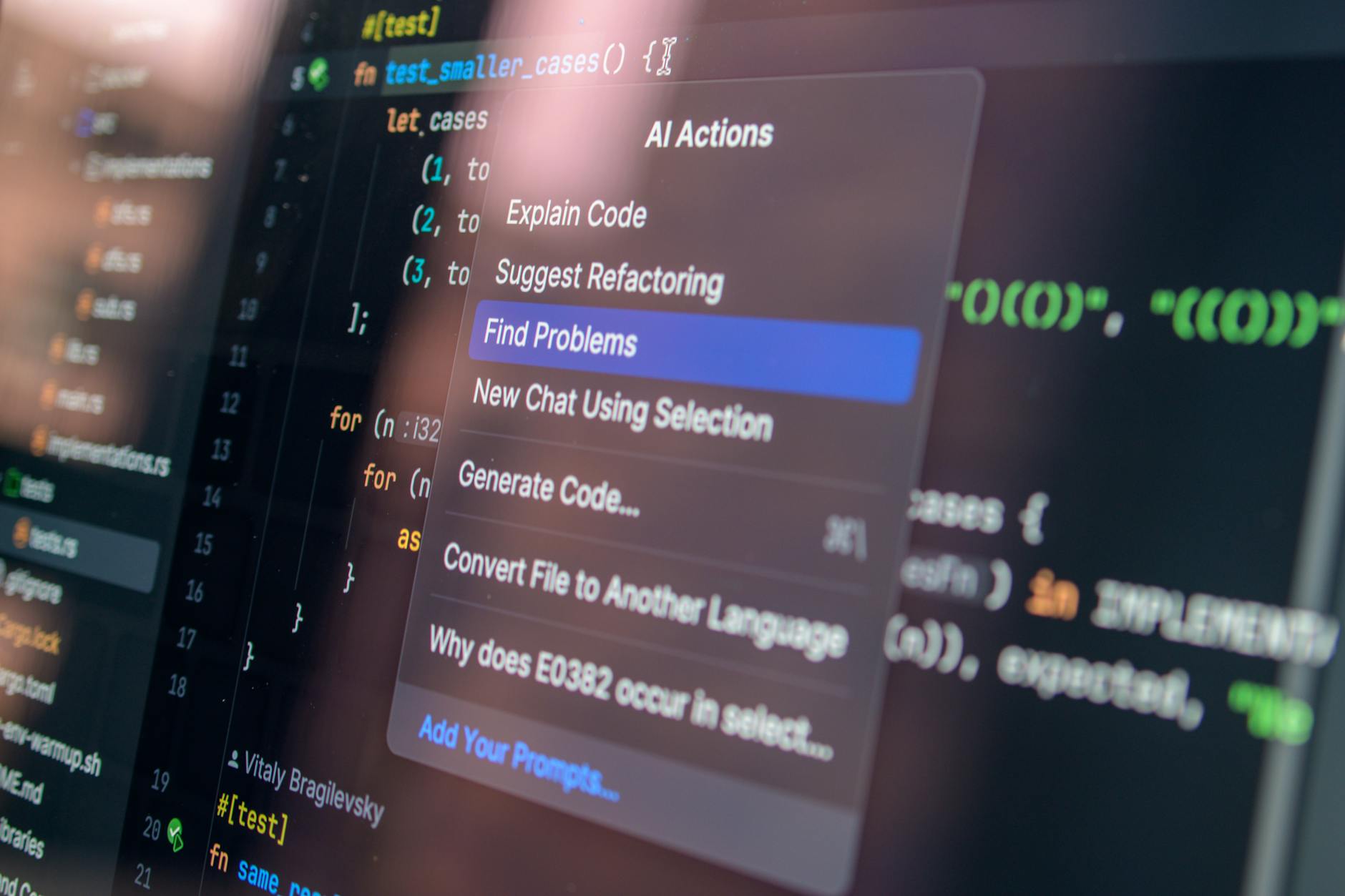
Photo by Daniil Komov on Pexels
Why Your AI Tools Are Failing You in Technical Interviews
Hiring managers are increasingly spotting the signs of AI-assisted cheating as technical interviews shift focus. Here is why surface-level framework mastery is no longer enough to land a role in India’s competitive software landscape.
The Rise of the 'First Principles' Filter
For years, the Indian tech hiring machine was fueled by LeetCode mastery—the ability to memorize patterns for coding challenges that bore little resemblance to daily production work. Today, that filter is broken. Hiring managers are pivoting away from simple syntax tests, which can now be solved in seconds by a standard LLM.
Instead, the focus has shifted toward 'Proof of Thought.' It is no longer enough to produce a working function; candidates are now being grilled on why they chose a specific memory allocation pattern or how their solution behaves under high-concurrency constraints. By forcing candidates to explain the architectural trade-offs of their code, interviewers are effectively stripping away the crutch of AI-generated boilerplate.
"The problem isn't that candidates use AI; it's that they can't defend the code once the 'magic' stops working. If you can't explain the time complexity of your data structure choice, you're not an engineer—you're just an API consumer." — @TechLeadIndia, X
Red Flags: How Interviewers Detect AI-Assisted Answers
Interviewers have become hyper-aware of the 'hallucination trap.' Robotic syntax—clean, comment-heavy code that perfectly adheres to naming conventions but lacks logical nuance—is an immediate red flag. When asked to debug a subtle race condition in their own AI-generated solution, many candidates crumble.
This inability to explain the underlying system architecture is the primary cause for rejection in the final rounds. When an interviewer asks a candidate to refactor a piece of code they didn't write, the discrepancy between their 'perfect' submission and their live performance becomes painfully obvious.

Combating the Imposter Syndrome Crisis
We are witnessing an 'Imposter Syndrome' crisis in the Indian tech workforce. Many juniors feel the gap between their flashy, AI-generated project portfolios and their actual technical depth. This creates a psychological toll: developers who rely solely on LLMs eventually realize they lack the 'mental models' to solve problems the AI hasn't seen before.
To move beyond the 'Prompt-Only' engineering trap, fresh graduates must pivot back to core-internals mastery. Productivity tools should be used for scaffolding, not for architecture. If you cannot describe the 'black box' of how your model performs inference, you are building your career on someone else's foundation.
The Evolution of Technical Competency
Is AI an accelerator or a crutch? The answer is nuanced. While proponents argue that AI democratizes development, hiring managers are increasingly favoring a 'two-tier' workforce: those who understand the internals of machine learning models versus those who simply consume the output.
Foundational skills are being redefined. We aren't moving toward a world where coding is obsolete, but rather toward one where 'Architectural Judgment'—the ability to evaluate, debug, and oversee AI output—is the primary measure of competence.
The Bottom Line
If you are relying on AI to bypass the hard work of learning system internals, you are failing the interview before it even starts. The goal of the modern interview is not to see if you can solve the problem; it is to see if you can explain it. Build your skills from the ground up, treat AI as a junior assistant rather than a lead architect, and focus on the 'why' behind the syntax. That is the only path to a sustainable career in the era of AI.