Why Your Grocery Bill Doesn't Match the CPI: Unpacking the Inflation Mirage
Official data points to moderate retail inflation, but the disconnect between wholesale costs and consumer experience has sparked widespread fiscal anxiety. We dive into the WPI-CPI divergence and why the numbers may not be telling the full story.

Photo by Erkan Utu on Pexels
Why Your Grocery Bill Doesn't Match the CPI: Unpacking the Inflation Mirage
Official government data consistently points to moderate retail inflation, yet the disconnect between these figures and the daily struggle at the checkout counter has sparked widespread fiscal anxiety. While policymakers highlight a stable Consumer Price Index (CPI), the lived experience of the Indian consumer tells a different, more expensive story.
The Great Statistical Divide
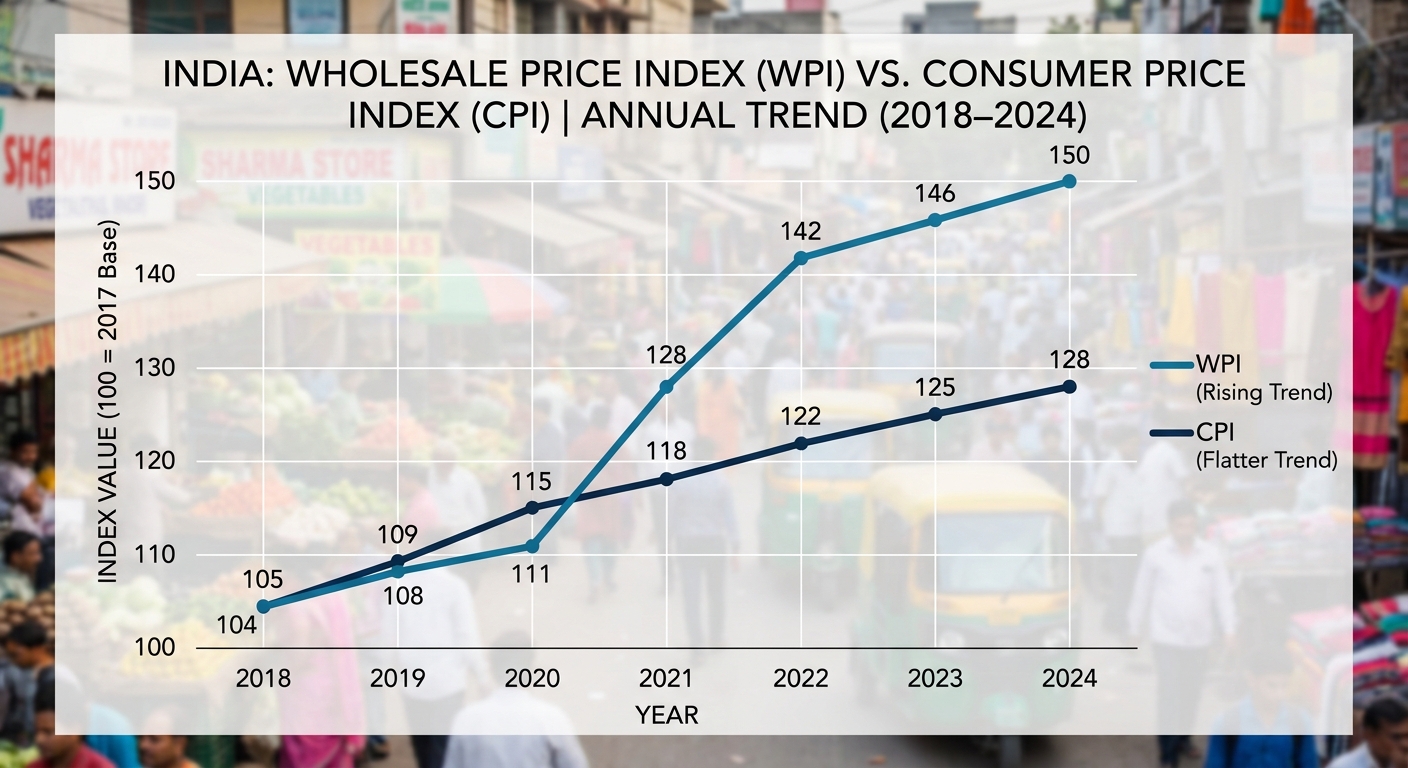
The fundamental tension lies in the weighting mechanics of the two primary inflation gauges. The Consumer Price Index (CPI) tracks the price of a basket of goods and services purchased by households, heavily skewed toward food and fuel. In contrast, the Wholesale Price Index (WPI) measures the change in the price of goods sold by wholesalers to other businesses, focusing heavily on manufactured products and raw materials.
Currently, we are witnessing a verified divergence between these indices. While CPI remains within the comfort zone, the WPI has surged to 8.3%. This gap is not merely a technicality; it represents a "lag effect" where input costs for manufacturers climb long before those costs are passed on to the final retail price. Consumers are essentially living in the calm before the storm, waiting for those wholesale price hikes to migrate to their local grocery shelves.
""India's retail inflation is 3.48% and everyone's relaxed. But WPI just hit 8.3%, and I think that's the number we should actually be worried about." — u/economic_observer, r/IndianEconomy
The SME Squeeze: When Costs Outpace Pricing Power
Small and Medium Enterprises (MSMEs) are currently trapped in a profit-margin vise. When wholesale costs spike, these businesses face a brutal choice: absorb the losses to keep customer loyalty or raise prices and risk losing market share. Because the domestic market remains highly price-sensitive, many retailers are opting to delay hikes, effectively subsidizing the current "low inflation" narrative at the expense of their own solvency.
This delay suggests that inflation may be more persistent than it appears. As margins erode, businesses will inevitably reach a breaking point where a sudden, sharp "catch-up" price increase becomes mandatory. This is why the perceived inflation rate for an average household feels significantly higher than the 3.48% cited in government briefings.
Currency, Commodities, and Recessionary Shadows
Economic anxiety is further compounded by the steady depreciation of the Rupee. Discussions on digital forums have turned increasingly bearish, with many retail investors fearing that the currency's slide against the dollar could be a precursor to imported inflation and a broader slowdown.
""INDIAN CURRENCY GOES TOWARD 100RS STRAIGHT" — u/market_bear, r/IndianEconomy
While the government maintains that current volatility is a standard market adjustment, the public discourse is dominated by fears of stagflation—a scenario where stagnant growth meets rising prices. Whether this is a temporary structural adjustment or a long-term decline remains the subject of intense debate among investors who are increasingly vocal about their lack of trust in official headline numbers.
""Is India in recession now ?" — u/anxious_investor, r/IndianEconomy
Beyond the Dashboard: Measuring Your Personal Inflation
To gauge the true health of your finances, you must move beyond aggregate indices. Citizens are encouraged to track their own "Personal Inflation Rate" by maintaining a rolling spreadsheet of high-frequency expenses. Focus on the cost of non-discretionary items: fuel for commuting, utility bills, and service-sector wage growth for household help.
These indicators act as a real-time health check, often predicting future CPI shifts months in advance. During periods of fiscal uncertainty, diversifying your assets—moving away from cash-heavy positions toward inflation-hedging instruments—becomes not just good advice, but a survival tactic.
The Bottom Line
The "inflation mirage" is a result of structural lag and a reluctance to pass on costs. While the official numbers are not incorrect, they are an incomplete reflection of the economic reality. As an investor or a citizen, paying attention to the 8.3% WPI figure is arguably a more prudent way to prepare for the months ahead than relying solely on the tempered optimism of CPI reports.