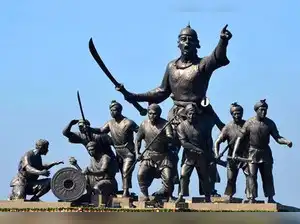
Filmmaker Aditya Dhar could soon bring one of India's greatest military heroes to the big screen. Assam Chief Minister Himanta Biswa Sarma has revealed that he has approached the Dhurandhar director to helm a Hindi biopic on legendary Ahom commander Lachit Borphukan, with the aim of introducing the Assamese icon's legacy to audiences across India and the world.
While Aditya Dhar has not officially announced his next directorial project, the proposed film has sparked renewed interest in the life and achievements of the 17th-century warrior. Here's everything you need to know about Lachit Borphukan.
Growing up in a royal family, Lachit received education in humanities, military strategy, Ahom scriptures, economics and religion. His early training prepared him for a career in administration and warfare.
His administrative skills, discipline and military talent impressed King Chakradhwaj Singha, who eventually appointed him Borphukan, the commander responsible for defending western Assam against the Mughal Empire.
After Mughal emperor Aurangzeb attempted to extend Mughal rule into Assam, a massive expedition led by Rajput commander Ram Singh advanced towards Guwahati. Despite being outnumbered and facing a better-equipped force, Lachit relied on guerrilla warfare and his deep knowledge of the Brahmaputra River to weaken the Mughal army.
During the decisive naval battle at Saraighat, Lachit was seriously ill. When some of his soldiers began retreating, he reportedly boarded a war boat himself and inspired his troops to continue fighting, declaring that he would rather die fulfilling his duty to his king and country than abandon the battlefield.
His leadership turned the tide of the battle, forcing the Mughal forces to retreat from Guwahati and halting Mughal expansion into Assam.
Today, he is celebrated as one of Assam's greatest heroes. Every year, Lachit Divas is observed to honour his bravery, sacrifice and leadership. His victory at Saraighat continues to be remembered as one of the finest examples of military strategy and resistance in Indian history.
If Aditya Dhar takes up the proposed biopic, the film could introduce the extraordinary story of Lachit Borphukan and his historic triumph over the Mughal Empire to a much wider audience.
(You can now subscribe to our Economic Times WhatsApp channel)
While Aditya Dhar has not officially announced his next directorial project, the proposed film has sparked renewed interest in the life and achievements of the 17th-century warrior. Here's everything you need to know about Lachit Borphukan.
Who was Lachit Borphukan?
Lachit Borphukan was one of the greatest military commanders in Indian history and is regarded as a symbol of courage, patriotism and leadership in Assam. Born on November 24, 1622, at Charaideo in present-day Assam, he was the youngest son of Momai Tamuli Borbarua, the commander-in-chief of the Ahom army under King Pratap Singha, and Kunti Moran.Growing up in a royal family, Lachit received education in humanities, military strategy, Ahom scriptures, economics and religion. His early training prepared him for a career in administration and warfare.
Rise through the Ahom administration
Before becoming commander-in-chief, Lachit Borphukan held several important administrative and military posts in the Ahom kingdom. He first served as the commander of Hanstidhara Tamuli and later held positions including Ghura Baruah, Shimaluguria Phukan and Dulakasharia Baruah.
His administrative skills, discipline and military talent impressed King Chakradhwaj Singha, who eventually appointed him Borphukan, the commander responsible for defending western Assam against the Mughal Empire.
The Battle of Saraighat that made him a legend
Lachit Borphukan is best remembered for leading the Ahom army to victory in the Battle of Saraighat in 1671, one of the most significant battles in Indian history.After Mughal emperor Aurangzeb attempted to extend Mughal rule into Assam, a massive expedition led by Rajput commander Ram Singh advanced towards Guwahati. Despite being outnumbered and facing a better-equipped force, Lachit relied on guerrilla warfare and his deep knowledge of the Brahmaputra River to weaken the Mughal army.
During the decisive naval battle at Saraighat, Lachit was seriously ill. When some of his soldiers began retreating, he reportedly boarded a war boat himself and inspired his troops to continue fighting, declaring that he would rather die fulfilling his duty to his king and country than abandon the battlefield.
His leadership turned the tide of the battle, forcing the Mughal forces to retreat from Guwahati and halting Mughal expansion into Assam.
Death and legacy
Lachit Borphukan died about a year after the Battle of Saraighat, reportedly due to natural causes. His memorial, Lachit Maidam, was built in 1672 at Hoolungapara near Jorhat by King Udayaditya Singha.Today, he is celebrated as one of Assam's greatest heroes. Every year, Lachit Divas is observed to honour his bravery, sacrifice and leadership. His victory at Saraighat continues to be remembered as one of the finest examples of military strategy and resistance in Indian history.
If Aditya Dhar takes up the proposed biopic, the film could introduce the extraordinary story of Lachit Borphukan and his historic triumph over the Mughal Empire to a much wider audience.
Add  as a Reliable and Trusted News Source
as a Reliable and Trusted News Source Add Now!
 (You can now subscribe to our Economic Times WhatsApp channel)