Listen to this article in summarized format
×
Subscribe to 
Unlock AI Briefing and Premium Content
New Year Offer 24 Hours Left
Subscribe NowAlready a member? Sign In
What's Included
- Exclusive Stories
- Daily ePaper Access
- Smart Market Tools
- Curated Investment Ideas
- Ad-lite Experience
Subscription

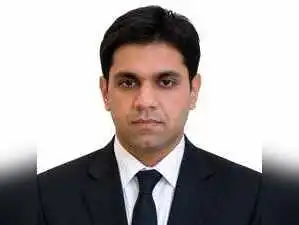
Artificial intelligence (AI) is reshaping recruitment, making it easier for candidates to polish resumes, prepare for interviews, and even receive real-time support during assessments. As a result, companies are increasingly looking beyond interview performance and conventional background checks to validate candidate credibility. In an interview with The Economic Times Digital, Karan Bhatty, Founder of Millow.io, an AI-assisted background verification platform based in Bengaluru, discusses the impact of AI on hiring, the growing importance of structured due diligence, the sectors that are driving demand for advanced verification, and more. Edited excerpts:
ET: With AI tools increasingly being used during interviews and assessments, how are companies rethinking traditional hiring and verification processes?
Karan Bhatty (KB): AI is changing both sides of recruitment. Employers are using it for screening, assessments, and workflow automation, while candidates are using it to refine resumes, prepare responses and, in some cases, assist during interviews. As a result, companies are relying more on evidence-based hiring through skill validation, live simulations, and deeper reference checks. Background verification is also expanding beyond identity, education, and employment checks. It now includes work history validation, document tampering detection, compensation verification, and identifying undisclosed employment or moonlighting. Companies are placing greater emphasis on evidence than interview performance alone.
ET: What gaps in traditional background verification led to the development of Millow?
KB: When we entered the background verification market in 2018, many processes were manual, slow, and dependent on third-party vendor networks with inconsistent quality. In one audit, two vendors returned verification reports for the same candidate using different college stamps, highlighting process gaps. The challenge was not just speed. It was also transparency, source quality, and accountability. We built Millow by combining AI-assisted workflows with direct data-source intelligence, document validation, database checks, field intelligence, and human review.
ET: Are employers paying greater attention to credibility checks beyond resumes, particularly for leadership and sensitive roles?
KB: Yes. While companies want faster pre-hire verification for junior and mid-level employees, senior leadership roles require much deeper scrutiny. A CXO or finance leader can significantly influence governance, culture, and customer trust. Besides employment verification, organisations increasingly conduct litigation and regulatory checks, adverse media screening, conflict-of-interest assessments and discreet market intelligence gathered from former colleagues, vendors and business associates.
ET: How is due diligence evolving beyond employee hiring into areas such as vendor onboarding, start-up investments, and founder verification?
KB: Due diligence is no longer limited to mergers and acquisitions or large enterprises. Manufacturers extending credit, investors evaluating start-ups, and businesses onboarding vendors increasingly seek structured risk assessments. Greater access to digital records, APIs, and automated workflows has made these checks more accessible. Founder backgrounds, litigation history, regulatory filings, and governance practices are now being examined alongside financial performance. Due diligence is increasingly viewed as a business safeguard rather than just a compliance exercise.
ET: Which sectors are seeing the strongest demand for AI-assisted verification and risk assessment?
KB: BFSI and IT services remain among the biggest adopters because of high hiring volumes, regulatory requirements, and data sensitivity. Healthcare is also seeing strong demand. In one engagement, a hospital chain reduced background verification turnaround time from 14 days to under 12 hours while lowering costs by about 30%. Pharma, manufacturing, and start-ups are also driving demand, as companies seek faster hiring, stronger compliance, and lower operational risk.
ET: What are the biggest operational, financial, and reputational risks of inadequate verification?
KB: Companies continue to encounter fake offer letters, altered salary slips, inflated compensation claims, and forged educational credentials. In one case, salary claims had been exaggerated by up to 70%, allowing the employer to avoid excess payouts exceeding Rs 17 lakh. In another, due diligence helped a foreign banking client identify misrepresented credentials by a vendor before awarding a project worth several crore rupees. Weak verification can expose organisations to fraud, financial losses, and reputational damage.
ET: Which industries stand to benefit the most from structured due diligence frameworks?
KB: Start-ups, BFSI, healthcare, logistics, and manufacturing can benefit significantly. Early hires, founders, and business partners shape a startup’s long-term risk profile, while financial institutions require stronger checks to protect customer data and meet regulatory expectations. Healthcare providers need faster onboarding of verified staff, and logistics companies managing distributed workforces can reduce operational risks. Structured due diligence also creates better audit trails for HR, legal, and procurement teams.
ET: Millow is an eight-year-old company. Could you tell us about the company’s growth in terms of revenue and client base?
KB: Millow, a bootstrapped start-up, is pacing toward $750,000 in revenue this financial year while maintaining profitability as it scales rapidly. Profitability remains uncommon in the background verification industry, where many players operate at a loss or on thin margins. The company attributes its performance to AI-led automation, which it says has fundamentally improved its unit economics.
We serve organisations across IT, BFSI, pharmaceuticals, manufacturing, e-commerce, legal, venture capital/private equity, and government-linked organisations. It also has clients in Singapore, the US, and Europe.
The company’s most in-demand offerings include automated employee background verification, senior management due diligence, and integrity due diligence, with applications across industries. Millow believes the long-term opportunity remains significant, as India’s verification infrastructure is still underpenetrated compared with the US and the UK. As Indian companies scale, list publicly, and attract foreign investment, compliance requirements are becoming more stringent, creating a larger opportunity for verification and due diligence services.
ET: Tell us about Millow’s partnerships with government bodies and public-sector institutions.
KB: Our first government client was the Pradhan Mantri Kaushal Vikas Yojana, and we have also worked with EXIM Bank of India. India’s digital public infrastructure, including DigiLocker, API Setu, MCA, and GST records, has made verification faster and more reliable. We are also in discussions with the Ministry of Labour on an awareness campaign aimed at reducing job fraud. The broader opportunity is to make verification more transparent and auditable across both the public and private sectors.
ET: What is your outlook for India’s employment screening and due diligence industry?
KB: India’s employment screening market, valued at $245.5 million in 2024, is projected to nearly double by 2035, as per Market Research Future. And India’s due diligence sector is among the fastest-growing globally, expanding at a CAGR of 9.8%, driven by rising mergers and acquisitions activity and tightening regulatory compliance, according to Strategic Revenue Insights.
ET: With AI tools increasingly being used during interviews and assessments, how are companies rethinking traditional hiring and verification processes?
Karan Bhatty (KB): AI is changing both sides of recruitment. Employers are using it for screening, assessments, and workflow automation, while candidates are using it to refine resumes, prepare responses and, in some cases, assist during interviews. As a result, companies are relying more on evidence-based hiring through skill validation, live simulations, and deeper reference checks. Background verification is also expanding beyond identity, education, and employment checks. It now includes work history validation, document tampering detection, compensation verification, and identifying undisclosed employment or moonlighting. Companies are placing greater emphasis on evidence than interview performance alone.
ET: What gaps in traditional background verification led to the development of Millow?
KB: When we entered the background verification market in 2018, many processes were manual, slow, and dependent on third-party vendor networks with inconsistent quality. In one audit, two vendors returned verification reports for the same candidate using different college stamps, highlighting process gaps. The challenge was not just speed. It was also transparency, source quality, and accountability. We built Millow by combining AI-assisted workflows with direct data-source intelligence, document validation, database checks, field intelligence, and human review.
ET: Are employers paying greater attention to credibility checks beyond resumes, particularly for leadership and sensitive roles?
KB: Yes. While companies want faster pre-hire verification for junior and mid-level employees, senior leadership roles require much deeper scrutiny. A CXO or finance leader can significantly influence governance, culture, and customer trust. Besides employment verification, organisations increasingly conduct litigation and regulatory checks, adverse media screening, conflict-of-interest assessments and discreet market intelligence gathered from former colleagues, vendors and business associates.

ET: How is due diligence evolving beyond employee hiring into areas such as vendor onboarding, start-up investments, and founder verification?
KB: Due diligence is no longer limited to mergers and acquisitions or large enterprises. Manufacturers extending credit, investors evaluating start-ups, and businesses onboarding vendors increasingly seek structured risk assessments. Greater access to digital records, APIs, and automated workflows has made these checks more accessible. Founder backgrounds, litigation history, regulatory filings, and governance practices are now being examined alongside financial performance. Due diligence is increasingly viewed as a business safeguard rather than just a compliance exercise.
ET: Which sectors are seeing the strongest demand for AI-assisted verification and risk assessment?
KB: BFSI and IT services remain among the biggest adopters because of high hiring volumes, regulatory requirements, and data sensitivity. Healthcare is also seeing strong demand. In one engagement, a hospital chain reduced background verification turnaround time from 14 days to under 12 hours while lowering costs by about 30%. Pharma, manufacturing, and start-ups are also driving demand, as companies seek faster hiring, stronger compliance, and lower operational risk.
ET: What are the biggest operational, financial, and reputational risks of inadequate verification?
KB: Companies continue to encounter fake offer letters, altered salary slips, inflated compensation claims, and forged educational credentials. In one case, salary claims had been exaggerated by up to 70%, allowing the employer to avoid excess payouts exceeding Rs 17 lakh. In another, due diligence helped a foreign banking client identify misrepresented credentials by a vendor before awarding a project worth several crore rupees. Weak verification can expose organisations to fraud, financial losses, and reputational damage.
ET: Which industries stand to benefit the most from structured due diligence frameworks?
KB: Start-ups, BFSI, healthcare, logistics, and manufacturing can benefit significantly. Early hires, founders, and business partners shape a startup’s long-term risk profile, while financial institutions require stronger checks to protect customer data and meet regulatory expectations. Healthcare providers need faster onboarding of verified staff, and logistics companies managing distributed workforces can reduce operational risks. Structured due diligence also creates better audit trails for HR, legal, and procurement teams.
ET: Millow is an eight-year-old company. Could you tell us about the company’s growth in terms of revenue and client base?
KB: Millow, a bootstrapped start-up, is pacing toward $750,000 in revenue this financial year while maintaining profitability as it scales rapidly. Profitability remains uncommon in the background verification industry, where many players operate at a loss or on thin margins. The company attributes its performance to AI-led automation, which it says has fundamentally improved its unit economics.
We serve organisations across IT, BFSI, pharmaceuticals, manufacturing, e-commerce, legal, venture capital/private equity, and government-linked organisations. It also has clients in Singapore, the US, and Europe.
The company’s most in-demand offerings include automated employee background verification, senior management due diligence, and integrity due diligence, with applications across industries. Millow believes the long-term opportunity remains significant, as India’s verification infrastructure is still underpenetrated compared with the US and the UK. As Indian companies scale, list publicly, and attract foreign investment, compliance requirements are becoming more stringent, creating a larger opportunity for verification and due diligence services.
ET: Tell us about Millow’s partnerships with government bodies and public-sector institutions.
KB: Our first government client was the Pradhan Mantri Kaushal Vikas Yojana, and we have also worked with EXIM Bank of India. India’s digital public infrastructure, including DigiLocker, API Setu, MCA, and GST records, has made verification faster and more reliable. We are also in discussions with the Ministry of Labour on an awareness campaign aimed at reducing job fraud. The broader opportunity is to make verification more transparent and auditable across both the public and private sectors.
ET: What is your outlook for India’s employment screening and due diligence industry?
KB: India’s employment screening market, valued at $245.5 million in 2024, is projected to nearly double by 2035, as per Market Research Future. And India’s due diligence sector is among the fastest-growing globally, expanding at a CAGR of 9.8%, driven by rising mergers and acquisitions activity and tightening regulatory compliance, according to Strategic Revenue Insights.
Add  as a Reliable and Trusted News Source
as a Reliable and Trusted News Source Add Now!