 Agencies
The Supreme Court on Monday said it would direct the Central Board of Secondary Education (CBSE) to examine concerns over data protection in the Aadhaar-linked APAAR ID scheme and ensure that the generation of APAAR IDs remains strictly voluntary across the country, in line with the Orissa High Court's ruling.
A bench comprising Chief Justice of India Surya Kant and Justices Joymalya Bagchi and V. Mohana observed that it would pass an appropriate order asking the CBSE to examine the issues raised by the petitioners and ensure nationwide compliance with the Orissa High Court's directions.
The observations came while hearing a petition filed by Abhisek Baxi challenging the APAAR ID framework. The plea contends that the Aadhaar-linked scheme violates the fundamental right to privacy, including the Right to be Forgotten.
What is APAAR ID?
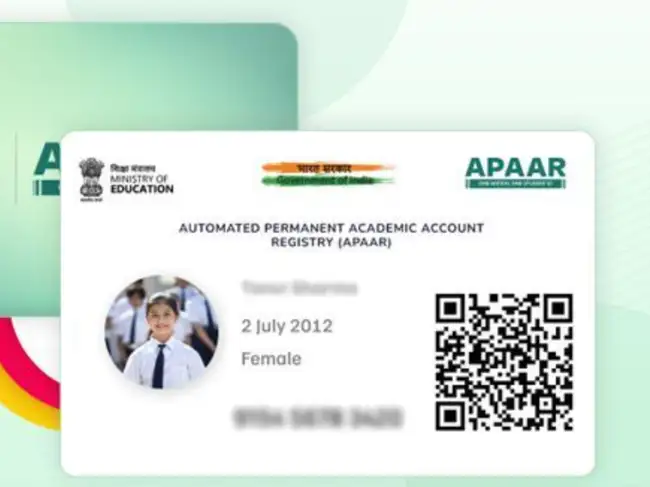
Introduced under the National Education Policy (NEP) 2020, the Automated Permanent Academic Account Registry (APAAR) ID is part of the National Credit Framework (NCrF), which aims to make India's education system more flexible and student-centric. Envisioned as the "One Nation, One Student ID", APAAR provides every student with a unique, lifelong digital identity that securely stores their academic records, achievements, credits and qualifications in one place.
APAAR assigns every student a unique 12-digit identification number that serves as a permanent academic identity. The ID stores a student's educational records, including degrees, scholarships, awards, certificates and academic credits, and remains valid throughout their learning journey, enabling seamless movement across different levels of education.
How APAAR works
APAAR is designed with safeguards to protect students' data. Information is shared only with authorised government agencies when required, while document sharing is consent-based, allowing students to control access to their academic records.
Academic progress tracking
The platform enables students to monitor their academic progress, access performance insights and identify skill gaps. It also supports personalised learning and connects students with relevant upskilling opportunities.
(You can now subscribe to our Economic Times WhatsApp channel)
A bench comprising Chief Justice of India Surya Kant and Justices Joymalya Bagchi and V. Mohana observed that it would pass an appropriate order asking the CBSE to examine the issues raised by the petitioners and ensure nationwide compliance with the Orissa High Court's directions.
The observations came while hearing a petition filed by Abhisek Baxi challenging the APAAR ID framework. The plea contends that the Aadhaar-linked scheme violates the fundamental right to privacy, including the Right to be Forgotten.
What is APAAR ID?
Introduced under the National Education Policy (NEP) 2020, the Automated Permanent Academic Account Registry (APAAR) ID is part of the National Credit Framework (NCrF), which aims to make India's education system more flexible and student-centric. Envisioned as the "One Nation, One Student ID", APAAR provides every student with a unique, lifelong digital identity that securely stores their academic records, achievements, credits and qualifications in one place. Key features of APAAR ID
Lifelong academic identity
APAAR assigns every student a unique 12-digit identification number that serves as a permanent academic identity. The ID stores a student's educational records, including degrees, scholarships, awards, certificates and academic credits, and remains valid throughout their learning journey, enabling seamless movement across different levels of education.
How APAAR works
- Schools: Record and maintain students' academic details, achievements and extracurricular activities on the APAAR platform.
- Higher Education Institutions (HEIs) and Skill Institutes: Access verified academic records for admissions and recruitment.
- Students: Securely store, retrieve and manage their academic records and achievements digitally.
- Employers and institutions: Verify students' academic credentials for recruitment or admission purposes.
- Creates a single digital identity for all academic records.
- Simplifies record management for students, parents and educational institutions.
- Provides a secure digital repository for certificates and achievements.
- Enables smooth transitions between schools, colleges and skill institutions.
APAAR is designed with safeguards to protect students' data. Information is shared only with authorised government agencies when required, while document sharing is consent-based, allowing students to control access to their academic records.
Academic progress tracking
The platform enables students to monitor their academic progress, access performance insights and identify skill gaps. It also supports personalised learning and connects students with relevant upskilling opportunities.
APAAR registration process
- Verification: Visit the school to verify demographic details.
- Parental consent: If the student is a minor, parental consent is required.
- Authentication: The school verifies the student's identity.
- APAAR ID creation: Once verification is complete, the APAAR ID is generated and linked to the student's DigiLocker account for secure digital access.
Add  as a Reliable and Trusted News Source
as a Reliable and Trusted News Source Add Now!
 (You can now subscribe to our Economic Times WhatsApp channel)