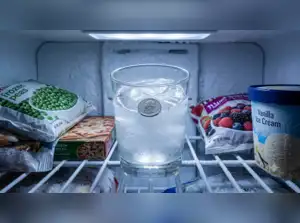
Heading out on a trip often means leaving your freezer running unattended for days. But if there's a power outage while you're away, it can be difficult to know whether your frozen food stayed safe. That's where the simple "coin in the freezer" trick comes in. While it isn't a perfect food safety test, it can offer a quick clue about whether the freezer experienced significant thawing during your absence.
Before leaving home for a holiday, many people take a few extra steps to protect the food stored in their freezer. One simple trick that has gained attention involves nothing more than a cup of water and a coin. The method is easy to set up and can provide a visual indication of whether the freezer lost power long enough for ice to melt before freezing again.
The process begins by filling a cup with water and allowing it to freeze completely. Once the water has turned into solid ice, place a coin on top of the frozen surface and return the cup to the freezer.
When you return from your trip, check the position of the coin. If the coin is still resting on top of the ice, the freezer likely maintained a stable temperature throughout your absence. However, if the coin has sunk below the surface, it suggests the ice melted at some point before freezing again.
According to the research paper "Fractal Analysis of Ice Crystals in Frozen Food," ice crystals change their structure during freezing and melting. As the crystals reorganize and grow, objects resting on or within the ice can shift position, which explains why the coin moves after temperature fluctuations.
Although the coin trick is useful, it does have important limitations. It cannot determine how long the freezer was without power or how warm it became. The position of the coin only indicates that melting and refreezing may have occurred.
As discussed in "Advances in Intelligent Time-Temperature Indicators for Cold Chain Monitoring: Mechanisms, Challenges, and Applications," food safety depends on both temperature and the length of time food remains exposed to changing conditions.
Even small temperature changes during storage can affect food quality and safety. Refreezing may hide damage that is not immediately visible.
For that reason, the coin test should never be the only method used to judge frozen food.
Instead, also check for other warning signs such as unusual ice crystal formation inside packaging, unpleasant smells or noticeable texture changes before deciding whether food is still safe.
A few simple habits can help maintain freezer temperatures while you're away. Keeping the freezer well stocked helps it stay colder for longer because frozen food retains cold more effectively. Adding frozen bottles of water can also improve cold retention.
During a power outage, avoid opening the freezer unless absolutely necessary. A closed freezer can remain cold for several hours and, under some conditions, for up to two days.
The coin test stands out because it requires only a cup, water and a coin. While it cannot measure exact temperatures or reveal how long an outage lasted, it offers a quick visual reminder that something may have changed inside the freezer.
Used together with careful inspection of frozen food, it can help you make better decisions after returning home from a trip.
It suggests the ice melted and later froze again after a temperature change.
Is the coin trick enough to confirm food is safe?
No. It should always be used along with other signs of food spoilage and safety checks.
(You can now subscribe to our Economic Times WhatsApp channel)
Before leaving home for a holiday, many people take a few extra steps to protect the food stored in their freezer. One simple trick that has gained attention involves nothing more than a cup of water and a coin. The method is easy to set up and can provide a visual indication of whether the freezer lost power long enough for ice to melt before freezing again.
How does the coin freezer hack work?
The process begins by filling a cup with water and allowing it to freeze completely. Once the water has turned into solid ice, place a coin on top of the frozen surface and return the cup to the freezer.


When you return from your trip, check the position of the coin. If the coin is still resting on top of the ice, the freezer likely maintained a stable temperature throughout your absence. However, if the coin has sunk below the surface, it suggests the ice melted at some point before freezing again.
According to the research paper "Fractal Analysis of Ice Crystals in Frozen Food," ice crystals change their structure during freezing and melting. As the crystals reorganize and grow, objects resting on or within the ice can shift position, which explains why the coin moves after temperature fluctuations.
What can the coin really tell you?

Although the coin trick is useful, it does have important limitations. It cannot determine how long the freezer was without power or how warm it became. The position of the coin only indicates that melting and refreezing may have occurred.
As discussed in "Advances in Intelligent Time-Temperature Indicators for Cold Chain Monitoring: Mechanisms, Challenges, and Applications," food safety depends on both temperature and the length of time food remains exposed to changing conditions.
Even small temperature changes during storage can affect food quality and safety. Refreezing may hide damage that is not immediately visible.
For that reason, the coin test should never be the only method used to judge frozen food.

Instead, also check for other warning signs such as unusual ice crystal formation inside packaging, unpleasant smells or noticeable texture changes before deciding whether food is still safe.
How can you keep frozen food safer?
A few simple habits can help maintain freezer temperatures while you're away. Keeping the freezer well stocked helps it stay colder for longer because frozen food retains cold more effectively. Adding frozen bottles of water can also improve cold retention.
During a power outage, avoid opening the freezer unless absolutely necessary. A closed freezer can remain cold for several hours and, under some conditions, for up to two days.
The coin test stands out because it requires only a cup, water and a coin. While it cannot measure exact temperatures or reveal how long an outage lasted, it offers a quick visual reminder that something may have changed inside the freezer.
Used together with careful inspection of frozen food, it can help you make better decisions after returning home from a trip.
FAQs
What does a sunk coin in the freezer mean?It suggests the ice melted and later froze again after a temperature change.
Is the coin trick enough to confirm food is safe?
No. It should always be used along with other signs of food spoilage and safety checks.

Add  as a Reliable and Trusted News Source
as a Reliable and Trusted News Source Add Now!
 (You can now subscribe to our Economic Times WhatsApp channel)
(Catch all the US News, UK News, Canada News, International Breaking News Events, and Latest News Updates on The Economic Times.)
Download The Economic Times News App to get Daily International News Updates.
Read More News on
(Catch all the US News, UK News, Canada News, International Breaking News Events, and Latest News Updates on The Economic Times.)
Download The Economic Times News App to get Daily International News Updates.