Listen to this article in summarized format
×
Subscribe to 
Unlock AI Briefing and Premium Content
New Year Offer 24 Hours Left
Subscribe NowAlready a member? Sign In
What's Included
- Exclusive Stories
- Daily ePaper Access
- Smart Market Tools
- Curated Investment Ideas
- Ad-lite Experience
Subscription

 iStock
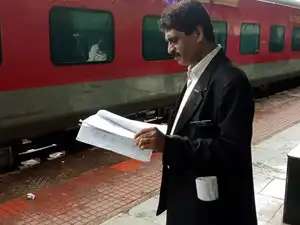
The Calcutta High Court has pulled up a section of travelling ticket examiners (TTEs) for allotting unoccupied berths to passengers for money, comparing the practice to selling "vegetables in a market". The court's remarks came in a case where a theft victim died after being drugged on a train, and it has now asked general managers of all railway zones across the country to ensure maximum penalties for such offenders.
The case relates to an incident from February 2009, when two men travelling from New Jalpaiguri to Sealdah on the Teesta Torsa Express boarded with unreserved tickets and paid off a TTE to secure berths. They were later drugged by two criminals who robbed them of their valuables. One of the victims, who had underlying health conditions, died after being administered the sedative.
A division bench of Justice Rajasekhar Mantha and Justice Biswaroop Choudhury, in a judgment delivered last week, directed that a copy of the ruling be sent to the general manager of Eastern Railway and other railway zones, asking them to impose the strictest possible penalties on TTEs found selling empty berths.
The bench noted that such practices have led to serious consequences for passengers who were originally only victims of petty theft, adding that many similar cases go unreported. It held that the "origin of such crimes" lies with the TTEs themselves, and that dereliction of duty by railway staff was central to the case.
Police probe also criticised
The court also flagged multiple lapses in the police investigation and the prosecution's case, and asked police authorities to be more diligent in probes that concern the safety of railway passengers.
In this particular case, two men, Aloke Ghosh and Gopal Mistry, had been convicted by the trial court and sentenced to life imprisonment for murder under Section 302 of the IPC, along with a seven-year term under Section 328 for causing hurt through poison or intoxicating substances, apart from convictions for theft and attempt to murder of the surviving victim. All sentences were to run concurrently.
The high court, however, partly allowed their appeals, holding that only the offence under Section 328 was proved against them and that the other charges did not hold up. It noted that Ghosh and Mistry have already spent 10 and 16 years in custody respectively and are currently out on bail. The bench ordered their release on execution of a bond, to remain valid for six months.
Ghosh and Mistry were originally convicted by the Sealdah sessions court on July 10, 2017, and sentenced the following day.
Investigation lapses
The division bench observed that the investigation was inadequate, pointing out that the investigating officer had failed to collect the forensic science laboratory (FSL) report on the victim's viscera. The court said there was no evidence that the viscera had even been sent for testing, calling the lapse "inexcusable".
It further noted serious lapses on the part of the TTE who allotted berths without prior reservation, as well as other TTEs on duty during the journey from New Jalpaiguri to Sealdah, describing this as a matter of grave concern. The bench observed that TTEs often allot berths at passengers' request in exchange for money, and held that such conduct by railway staff was primarily responsible for the crime.
According to the case details, passengers Arun Chakraborty and Sunil Kumar Das had boarded the train on unreserved tickets in February 2009, a practice they were accustomed to, and secured berths after bribing the TTE on duty. Both were later drugged and robbed. Chakraborty survived after nine days in hospital, while Das died.
(You can now subscribe to our Economic Times WhatsApp channel)
The case relates to an incident from February 2009, when two men travelling from New Jalpaiguri to Sealdah on the Teesta Torsa Express boarded with unreserved tickets and paid off a TTE to secure berths. They were later drugged by two criminals who robbed them of their valuables. One of the victims, who had underlying health conditions, died after being administered the sedative.
A division bench of Justice Rajasekhar Mantha and Justice Biswaroop Choudhury, in a judgment delivered last week, directed that a copy of the ruling be sent to the general manager of Eastern Railway and other railway zones, asking them to impose the strictest possible penalties on TTEs found selling empty berths.
The bench noted that such practices have led to serious consequences for passengers who were originally only victims of petty theft, adding that many similar cases go unreported. It held that the "origin of such crimes" lies with the TTEs themselves, and that dereliction of duty by railway staff was central to the case.

Police probe also criticised
The court also flagged multiple lapses in the police investigation and the prosecution's case, and asked police authorities to be more diligent in probes that concern the safety of railway passengers.
In this particular case, two men, Aloke Ghosh and Gopal Mistry, had been convicted by the trial court and sentenced to life imprisonment for murder under Section 302 of the IPC, along with a seven-year term under Section 328 for causing hurt through poison or intoxicating substances, apart from convictions for theft and attempt to murder of the surviving victim. All sentences were to run concurrently.
The high court, however, partly allowed their appeals, holding that only the offence under Section 328 was proved against them and that the other charges did not hold up. It noted that Ghosh and Mistry have already spent 10 and 16 years in custody respectively and are currently out on bail. The bench ordered their release on execution of a bond, to remain valid for six months.
Ghosh and Mistry were originally convicted by the Sealdah sessions court on July 10, 2017, and sentenced the following day.
Investigation lapses
The division bench observed that the investigation was inadequate, pointing out that the investigating officer had failed to collect the forensic science laboratory (FSL) report on the victim's viscera. The court said there was no evidence that the viscera had even been sent for testing, calling the lapse "inexcusable".
It further noted serious lapses on the part of the TTE who allotted berths without prior reservation, as well as other TTEs on duty during the journey from New Jalpaiguri to Sealdah, describing this as a matter of grave concern. The bench observed that TTEs often allot berths at passengers' request in exchange for money, and held that such conduct by railway staff was primarily responsible for the crime.
According to the case details, passengers Arun Chakraborty and Sunil Kumar Das had boarded the train on unreserved tickets in February 2009, a practice they were accustomed to, and secured berths after bribing the TTE on duty. Both were later drugged and robbed. Chakraborty survived after nine days in hospital, while Das died.
Add  as a Reliable and Trusted News Source
as a Reliable and Trusted News Source Add Now!
 (You can now subscribe to our Economic Times WhatsApp channel)