
Listen to this article in summarized format
×
Subscribe to 
Unlock AI Briefing and Premium Content
New Year Offer 24 Hours Left
Subscribe NowAlready a member? Sign In
What's Included
- Exclusive Stories
- Daily ePaper Access
- Smart Market Tools
- Curated Investment Ideas
- Ad-lite Experience
Subscription

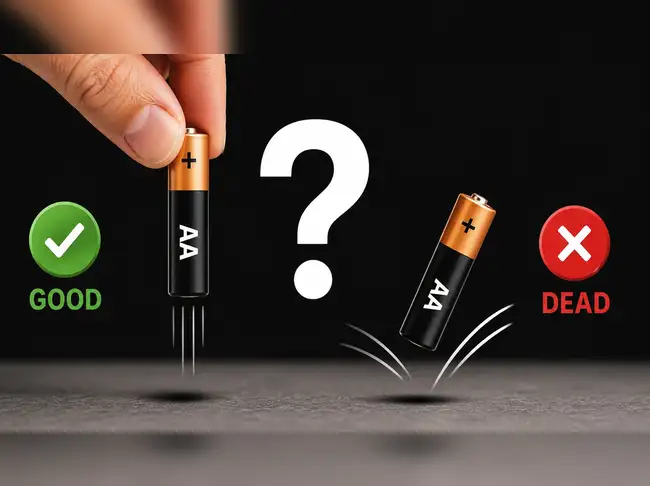
A battery that's been sitting in your kitchen drawer for months can be difficult to judge just by looking at it. That's one reason a simple trick known as the battery bounce test continues to spread across social media and DIY forums. The idea is surprisingly simple: drop an AA battery on a hard surface. If it bounces, many people believe it's dead. If it barely moves, it's still good.
It sounds almost too easy, but unlike many internet hacks, this one has some real science behind it. Researchers have found that alkaline batteries change physically as they discharge, and those changes affect how they react when dropped. The catch is that the bounce test is only a rough indicator—not a precise measurement of battery life.
The viral battery bounce test is one of those rare internet tricks that actually holds water, but it's important to understand it's a rough triage tool, not a precise battery meter. Fresh alkaline cells are packed with a dense, gel-like paste of zinc and manganese dioxide that acts like a tiny shock absorber, soaking up the impact so the battery plops down with a dull thud.
As the battery discharges, that internal slurry chemically transforms into a rigid, crystalline matrix of zinc oxide. This hardened structure acts like a tiny internal spring, transferring the kinetic energy right back out and causing a dead or heavily used battery to bounce high into the air. It’s a great, tool-free way to sort an unlabeled pile of junk-drawer AAs into "probably fine" versus "probably spent."
However, gravity is a terrible substitute for a multimeter, and the test has strict limits. Because that internal zinc matrix solidifies completely when a battery is only about halfway empty, a cell with 50% juice left will bounce just as high as one that is completely dead—meaning you might inadvertently throw away perfectly usable energy.
Furthermore, the trick is strictly exclusive to alkaline chemistry; rechargeable NiMH or lithium batteries don’t undergo this structural hardening, so dropping them tells you absolutely nothing. Factor in variables like drop height, ambient temperature, and surface hardness, and it's easy to get a false reading. Use it as a fun, kitchen-science sorting trick, but buy a cheap digital tester if you want the real truth.
If you're trying to sort through a handful of loose batteries before loading up a TV remote, flashlight, or child's toy, understanding what this test can and cannot tell you could save both time and frustration.
The bounce test is intended for single-use alkaline AA and AAA batteries, the type commonly found in remote controls, wall clocks, wireless mice, flashlights, and children's toys. It does not apply to rechargeable batteries or lithium-ion cells used in smartphones and laptops.
To try the test, hold the battery vertically about one or two inches above a hard countertop, tile floor, or similar flat surface. Drop it with the flat end facing downward and watch what happens.
A fresh battery usually lands with a dull thud and stays upright or tips over with very little bounce. A heavily discharged battery often rebounds noticeably before falling onto its side.
That difference isn't random. Scientists at Princeton University examined the phenomenon and found that batteries do, in fact, bounce differently depending on how much they have been used. Their research showed that discharged alkaline batteries tend to rebound higher because the materials inside become harder as the battery loses energy.
As electricity is used, those materials gradually change. The zinc inside the battery transforms into compounds that are denser and more rigid. Instead of cushioning the impact, the hardened interior behaves more like a solid object, allowing the battery to bounce higher.
Think of the difference between dropping a beanbag and dropping a rubber ball. One absorbs energy, while the other returns much of it. A discharged alkaline battery becomes more like the latter.
Researchers observed that this physical change is real, but they also noted that the relationship between bounce height and remaining battery life is not exact. A battery that bounces is not necessarily completely dead, and one that barely bounces may not be fully charged either. That's why experts say the bounce test should be treated as a quick estimate rather than a reliable measurement.
Several factors can affect the result. Different battery manufacturers use slightly different materials and designs. The type of surface you drop the battery on also matters. A polished granite countertop, ceramic tile, hardwood floor, or concrete slab can all produce slightly different bounce patterns.
Even the angle at which the battery lands can change the outcome. Because of these variables, battery engineers recommend using a battery tester or a digital multimeter whenever you need dependable information. These inexpensive tools measure voltage directly and provide a much clearer picture of whether a battery still has enough power for a specific device.
This becomes especially important for smoke alarms, carbon monoxide detectors, emergency flashlights, medical equipment, security systems, and other devices where battery failure could create safety risks.
Rechargeable nickel-metal hydride (NiMH) batteries behave differently. Lithium-ion batteries, lithium primary cells, coin batteries, and rechargeable AA batteries also have different internal structures that make the bounce test unreliable.
Attempting to judge these batteries by how they bounce can easily lead to incorrect conclusions. If you regularly use rechargeable batteries, investing in a charger with built-in battery health monitoring or a dedicated battery analyzer is a much more dependable option.
When batteries are no longer usable, recycle them through approved battery recycling collection programs instead of disposing of them improperly. Many home improvement stores, electronics retailers, and local recycling centers accept used household batteries under local recycling guidelines.
The battery bounce test remains one of the internet's most interesting science-backed household tricks because it is rooted in genuine chemistry rather than myth. Still, it should be viewed as a helpful clue—not a definitive answer.
For everyday household use, the drop test may help you separate likely fresh batteries from heavily discharged ones in just a few seconds. But when accuracy matters, especially for safety devices, proper battery testing is the smarter and more reliable choice.
(You can now subscribe to our Economic Times WhatsApp channel)
It sounds almost too easy, but unlike many internet hacks, this one has some real science behind it. Researchers have found that alkaline batteries change physically as they discharge, and those changes affect how they react when dropped. The catch is that the bounce test is only a rough indicator—not a precise measurement of battery life.
The viral battery bounce test is one of those rare internet tricks that actually holds water, but it's important to understand it's a rough triage tool, not a precise battery meter. Fresh alkaline cells are packed with a dense, gel-like paste of zinc and manganese dioxide that acts like a tiny shock absorber, soaking up the impact so the battery plops down with a dull thud.
As the battery discharges, that internal slurry chemically transforms into a rigid, crystalline matrix of zinc oxide. This hardened structure acts like a tiny internal spring, transferring the kinetic energy right back out and causing a dead or heavily used battery to bounce high into the air. It’s a great, tool-free way to sort an unlabeled pile of junk-drawer AAs into "probably fine" versus "probably spent."
However, gravity is a terrible substitute for a multimeter, and the test has strict limits. Because that internal zinc matrix solidifies completely when a battery is only about halfway empty, a cell with 50% juice left will bounce just as high as one that is completely dead—meaning you might inadvertently throw away perfectly usable energy.

Furthermore, the trick is strictly exclusive to alkaline chemistry; rechargeable NiMH or lithium batteries don’t undergo this structural hardening, so dropping them tells you absolutely nothing. Factor in variables like drop height, ambient temperature, and surface hardness, and it's easy to get a false reading. Use it as a fun, kitchen-science sorting trick, but buy a cheap digital tester if you want the real truth.
If you're trying to sort through a handful of loose batteries before loading up a TV remote, flashlight, or child's toy, understanding what this test can and cannot tell you could save both time and frustration.
Can you really tell if a battery is dead just by dropping it?
The short answer is sometimes—but only for certain batteries.The bounce test is intended for single-use alkaline AA and AAA batteries, the type commonly found in remote controls, wall clocks, wireless mice, flashlights, and children's toys. It does not apply to rechargeable batteries or lithium-ion cells used in smartphones and laptops.
To try the test, hold the battery vertically about one or two inches above a hard countertop, tile floor, or similar flat surface. Drop it with the flat end facing downward and watch what happens.
A fresh battery usually lands with a dull thud and stays upright or tips over with very little bounce. A heavily discharged battery often rebounds noticeably before falling onto its side.
That difference isn't random. Scientists at Princeton University examined the phenomenon and found that batteries do, in fact, bounce differently depending on how much they have been used. Their research showed that discharged alkaline batteries tend to rebound higher because the materials inside become harder as the battery loses energy.
Why does a dead battery bounce more than a new one?
The explanation comes down to chemistry. Inside every alkaline battery, chemical reactions generate the electricity that powers everyday devices. When the battery is brand new, its internal materials are relatively soft and absorb much of the impact when the battery strikes a hard surface.As electricity is used, those materials gradually change. The zinc inside the battery transforms into compounds that are denser and more rigid. Instead of cushioning the impact, the hardened interior behaves more like a solid object, allowing the battery to bounce higher.
Think of the difference between dropping a beanbag and dropping a rubber ball. One absorbs energy, while the other returns much of it. A discharged alkaline battery becomes more like the latter.
Researchers observed that this physical change is real, but they also noted that the relationship between bounce height and remaining battery life is not exact. A battery that bounces is not necessarily completely dead, and one that barely bounces may not be fully charged either. That's why experts say the bounce test should be treated as a quick estimate rather than a reliable measurement.
Should you trust the battery bounce test before throwing batteries away?
Probably not. The bounce test is best used as a screening method, especially when you're sorting through loose alkaline batteries with no labels or packaging. It can help identify batteries that are likely nearing the end of their useful life, but it cannot tell you exactly how much power remains.Several factors can affect the result. Different battery manufacturers use slightly different materials and designs. The type of surface you drop the battery on also matters. A polished granite countertop, ceramic tile, hardwood floor, or concrete slab can all produce slightly different bounce patterns.
Even the angle at which the battery lands can change the outcome. Because of these variables, battery engineers recommend using a battery tester or a digital multimeter whenever you need dependable information. These inexpensive tools measure voltage directly and provide a much clearer picture of whether a battery still has enough power for a specific device.
This becomes especially important for smoke alarms, carbon monoxide detectors, emergency flashlights, medical equipment, security systems, and other devices where battery failure could create safety risks.
Which batteries should never be checked using the bounce test?
One of the biggest misconceptions surrounding the viral trick is that it works for every battery. It doesn't. The bounce test is only relevant for single-use alkaline batteries because the chemical changes inside these batteries affect how they absorb impact.Rechargeable nickel-metal hydride (NiMH) batteries behave differently. Lithium-ion batteries, lithium primary cells, coin batteries, and rechargeable AA batteries also have different internal structures that make the bounce test unreliable.
Attempting to judge these batteries by how they bounce can easily lead to incorrect conclusions. If you regularly use rechargeable batteries, investing in a charger with built-in battery health monitoring or a dedicated battery analyzer is a much more dependable option.
What's the most reliable way to know if a battery still works?
The simplest and most accurate approach is to use a battery tester or check the battery in the device it is intended to power. If a flashlight grows dim, a wireless mouse stops responding, or a TV remote only works intermittently, the battery is probably nearing the end of its useful life regardless of how it behaves in a bounce test.When batteries are no longer usable, recycle them through approved battery recycling collection programs instead of disposing of them improperly. Many home improvement stores, electronics retailers, and local recycling centers accept used household batteries under local recycling guidelines.
The battery bounce test remains one of the internet's most interesting science-backed household tricks because it is rooted in genuine chemistry rather than myth. Still, it should be viewed as a helpful clue—not a definitive answer.
For everyday household use, the drop test may help you separate likely fresh batteries from heavily discharged ones in just a few seconds. But when accuracy matters, especially for safety devices, proper battery testing is the smarter and more reliable choice.
Add  as a Reliable and Trusted News Source
as a Reliable and Trusted News Source Add Now!
 (You can now subscribe to our Economic Times WhatsApp channel)
(Catch all the US News, UK News, Canada News, International Breaking News Events, and Latest News Updates on The Economic Times.)
Download The Economic Times News App to get Daily International News Updates.
Read More News on
(Catch all the US News, UK News, Canada News, International Breaking News Events, and Latest News Updates on The Economic Times.)
Download The Economic Times News App to get Daily International News Updates.