
Listen to this article in summarized format
×
Subscribe to 
Unlock AI Briefing and Premium Content
New Year Offer 24 Hours Left
Subscribe NowAlready a member? Sign In
What's Included
- Exclusive Stories
- Daily ePaper Access
- Smart Market Tools
- Curated Investment Ideas
- Ad-lite Experience
Subscription

 Reuters
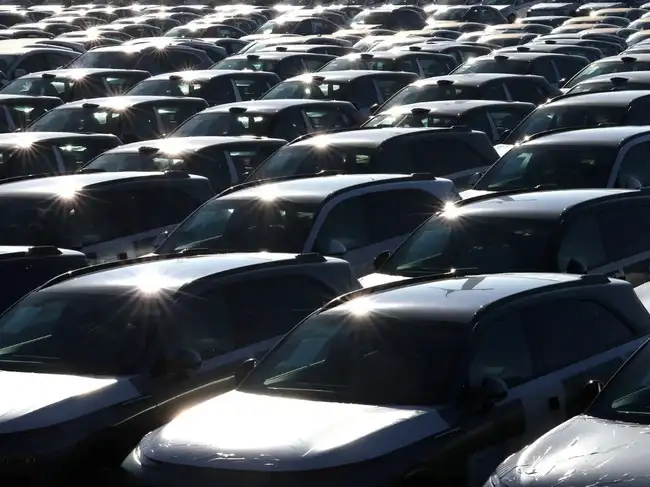
China's prolonged auto slowdown is rapidly becoming a global challenge. As domestic sales slide for a ninth straight month, the country's automakers are increasingly turning to overseas markets to absorb excess production, flooding global markets with competitively priced vehicles, intensifying price competition, squeezing established manufacturers and triggering fresh tariff battles from Europe to emerging economies.
Over the same period, car exports surged 82.1% to 882,000 vehicles. In the first half of the year, domestic sales dropped 20.4% to 8.8 million units, while exports jumped 70.6% to 4.28 million.
Also Read: China car sales slump for ninth straight month, exports stay strong
The widening gap reflects the growing weakness in China's domestic market. Household spending has remained subdued amid a prolonged property downturn, while the scaling back of government subsidies has hit demand for budget vehicles particularly hard. Sales of gasoline and electrified cars priced below 80,000 yuan have fallen sharply, leaving manufacturers with mounting inventories and excess production capacity.
For automakers, overseas markets have become the industry's most reliable growth engine. CPCA Secretary-General Cui Dongshu has described exports as entering a phase of "super high growth", with Chinese brands expanding aggressively across Europe, Southeast Asia, Latin America and the Middle East to offset slowing demand at home.
Backed by lower manufacturing costs, vertically integrated battery supply chains and aggressive pricing, Chinese automakers are steadily expanding into markets traditionally dominated by Japanese, German and American manufacturers.
With exports becoming a key growth engine for Chinese automakers, competition in overseas markets is set to intensify across both electric and conventional vehicle segments.
The influx of low-cost Chinese vehicles could pressure domestic manufacturers in importing countries to cut prices, eroding profit margins at a time when many global automakers are already grappling with slowing demand and the costly transition towards electrification.
For consumers, the trend could translate into more affordable vehicles. For incumbent manufacturers, however, it threatens a prolonged period of pricing pressure.
The shift also comes as traditional foreign automakers continue losing ground within China itself. Brands such as Volkswagen, General Motors, Toyota, Honda and Nissan have steadily ceded market share to Chinese rivals as consumers increasingly favour smart electric vehicles equipped with advanced technologies.
The European Union imposed additional tariffs on Chinese electric vehicles in October 2024 after concluding they benefited from unfair state subsidies, while several countries have since stepped up scrutiny of Chinese auto imports amid concerns over the impact on domestic manufacturers.
Also Read: China's domestic car demand under pressure, association exec says
Yet tariffs alone may not significantly slow China's overseas expansion. Many Chinese manufacturers are accelerating plans to localise production through overseas assembly plants and strategic partnerships, allowing them to sidestep some trade barriers while strengthening their foothold in key export markets.
As exports continue to rise, policymakers across multiple economies are likely to face a difficult balancing act—protecting domestic industries without depriving consumers of lower-cost vehicles.
While weakening domestic demand has weighed on sales at home, the automaker has relied increasingly on overseas markets to sustain growth. BYD's exports nearly doubled in June, rising 94.7% from a year earlier to more than 175,000 vehicles, helping offset a 22% decline in domestic sales, Reuters reported.
The company is also nearing a decision on a second European manufacturing plant after Hungary as it pursues its ambition of becoming the world's largest automaker within five years.
Other Chinese automakers, including Leapmotor, are also expanding overseas as intensifying competition and weakening domestic demand push manufacturers to look beyond China for growth, according to Reuters.
China's domestic auto market may be slowing, but its factories are still running at full speed. As production increasingly outpaces local demand, the country's manufacturers are turning the rest of the world into the outlet for their automotive ambitions. For global automakers and policymakers alike, China's export boom is no longer just a trade story—it is rapidly becoming the next defining competitive challenge for the global automobile industry.
(You can now subscribe to our Economic Times WhatsApp channel)
Exports replace home demand
The shift is evident in the numbers. Domestic passenger vehicle sales fell 23.4% year-on-year in June to 1.62 million units, marking the ninth consecutive monthly decline, according to the China Passenger Car Association (CPCA), as reported by Reuters.Over the same period, car exports surged 82.1% to 882,000 vehicles. In the first half of the year, domestic sales dropped 20.4% to 8.8 million units, while exports jumped 70.6% to 4.28 million.
Also Read: China car sales slump for ninth straight month, exports stay strong
The widening gap reflects the growing weakness in China's domestic market. Household spending has remained subdued amid a prolonged property downturn, while the scaling back of government subsidies has hit demand for budget vehicles particularly hard. Sales of gasoline and electrified cars priced below 80,000 yuan have fallen sharply, leaving manufacturers with mounting inventories and excess production capacity.

For automakers, overseas markets have become the industry's most reliable growth engine. CPCA Secretary-General Cui Dongshu has described exports as entering a phase of "super high growth", with Chinese brands expanding aggressively across Europe, Southeast Asia, Latin America and the Middle East to offset slowing demand at home.
The world braces for cheaper Chinese cars
China's export push is reshaping the global automotive landscape.Backed by lower manufacturing costs, vertically integrated battery supply chains and aggressive pricing, Chinese automakers are steadily expanding into markets traditionally dominated by Japanese, German and American manufacturers.
With exports becoming a key growth engine for Chinese automakers, competition in overseas markets is set to intensify across both electric and conventional vehicle segments.
The influx of low-cost Chinese vehicles could pressure domestic manufacturers in importing countries to cut prices, eroding profit margins at a time when many global automakers are already grappling with slowing demand and the costly transition towards electrification.
For consumers, the trend could translate into more affordable vehicles. For incumbent manufacturers, however, it threatens a prolonged period of pricing pressure.
The shift also comes as traditional foreign automakers continue losing ground within China itself. Brands such as Volkswagen, General Motors, Toyota, Honda and Nissan have steadily ceded market share to Chinese rivals as consumers increasingly favour smart electric vehicles equipped with advanced technologies.
Tariffs may not be enough
Governments have already begun responding to China's export surge.The European Union imposed additional tariffs on Chinese electric vehicles in October 2024 after concluding they benefited from unfair state subsidies, while several countries have since stepped up scrutiny of Chinese auto imports amid concerns over the impact on domestic manufacturers.
Also Read: China's domestic car demand under pressure, association exec says
Yet tariffs alone may not significantly slow China's overseas expansion. Many Chinese manufacturers are accelerating plans to localise production through overseas assembly plants and strategic partnerships, allowing them to sidestep some trade barriers while strengthening their foothold in key export markets.
As exports continue to rise, policymakers across multiple economies are likely to face a difficult balancing act—protecting domestic industries without depriving consumers of lower-cost vehicles.
The next battleground for global automakers
No company illustrates China's export pivot better than BYD.While weakening domestic demand has weighed on sales at home, the automaker has relied increasingly on overseas markets to sustain growth. BYD's exports nearly doubled in June, rising 94.7% from a year earlier to more than 175,000 vehicles, helping offset a 22% decline in domestic sales, Reuters reported.
The company is also nearing a decision on a second European manufacturing plant after Hungary as it pursues its ambition of becoming the world's largest automaker within five years.
Other Chinese automakers, including Leapmotor, are also expanding overseas as intensifying competition and weakening domestic demand push manufacturers to look beyond China for growth, according to Reuters.
China's domestic auto market may be slowing, but its factories are still running at full speed. As production increasingly outpaces local demand, the country's manufacturers are turning the rest of the world into the outlet for their automotive ambitions. For global automakers and policymakers alike, China's export boom is no longer just a trade story—it is rapidly becoming the next defining competitive challenge for the global automobile industry.
Add  as a Reliable and Trusted News Source
as a Reliable and Trusted News Source Add Now!
 (You can now subscribe to our Economic Times WhatsApp channel)