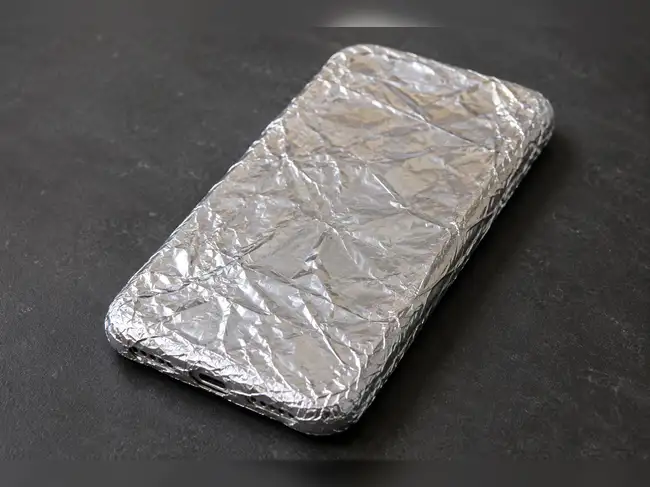
In an age where digital privacy is a growing concern, many people are looking for quick ways to protect their smartphones from being tracked. One unusual method that often circulates online is wrapping a phone in aluminum foil. But does this trick actually work, or is it just a myth?
If the foil completely covers the phone without any gaps, it may temporarily weaken or block incoming and outgoing signals.
First, it is extremely difficult to seal a phone perfectly. Even small openings in the foil can allow signals to pass through. Second, modern smartphones are designed to reconnect quickly to networks once a signal becomes available, meaning any interruption is only temporary.
Additionally, tracking is not limited to just signal transmission. Apps, accounts, and stored data can still record and sync your activity once your phone reconnects to the internet. This makes foil an ineffective long-term solution.
Moreover, blocking signals entirely would also make your phone unusable for calls, messages, or internet access, which defeats the purpose for most users.
These methods provide more consistent and practical control over your personal data.
Reality: It only weakens signals, not eliminates them
Myth: No signal = no tracking
Reality: Data can still be stored and later transmitted
(You can now subscribe to our Economic Times WhatsApp channel)
Why Wrapping Your Phone in Foil Isn’t Effective
Unfortunately, this method doesn’t really work. Although covering a phone in aluminum foil may cause some signal interference, it is unlikely to fully stop the device from sending or receiving signals. In fact, the more noticeable impact is on the phone’s battery life. As the device struggles to connect to a network, it consumes more power and generates heat that cannot easily escape. Over time, this can drain the battery completely, causing the phone to shut down, as noted by Forbes, is actually the most effective way to stop the device from being tracked.How the Aluminum Foil Idea Works
The concept behind using aluminum foil comes from something called a Faraday cage. This is a structure made from conductive material that can block electromagnetic signals. Since smartphones rely on signals like cellular networks, Wi-Fi, Bluetooth, and GPS to function, wrapping a phone in foil could, in theory, reduce its ability to send and receive signals.If the foil completely covers the phone without any gaps, it may temporarily weaken or block incoming and outgoing signals.
What Actually Happens When You Wrap Your Phone
Instead of going “invisible,” your phone behaves like this:
- Struggles to connect to a network
- Boosts power to regain signal
- Drains battery faster
- Generates more heat
Why It Doesn’t Fully Prevent Tracking
While the idea sounds convincing, in practice, wrapping your phone in aluminum foil is not a reliable way to stop tracking.First, it is extremely difficult to seal a phone perfectly. Even small openings in the foil can allow signals to pass through. Second, modern smartphones are designed to reconnect quickly to networks once a signal becomes available, meaning any interruption is only temporary.
Additionally, tracking is not limited to just signal transmission. Apps, accounts, and stored data can still record and sync your activity once your phone reconnects to the internet. This makes foil an ineffective long-term solution.
Can It Block GPS and Signals?
Aluminum foil may reduce the strength of certain signals, including GPS, but it does not guarantee complete blockage. GPS signals come from satellites and can sometimes still reach your device, especially if the foil wrapping is not airtight.Moreover, blocking signals entirely would also make your phone unusable for calls, messages, or internet access, which defeats the purpose for most users.
GPS Can Still Be Partially Active
GPS signals come from satellites and can sometimes penetrate weak shielding. While accuracy may drop, your location can still be estimated, especially when combined with other data like nearby Wi-Fi networks.Why Phones Keep Trying to Connect
Smartphones are designed to stay connected at all times. Even when signals are weak or blocked, the device continuously searches for networks. This constant searching increases battery usage and can cause overheating, especially when wrapped in foil.Better Ways to Protect Your Privacy
Instead of relying on unreliable hacks, there are more effective ways to limit tracking:- Turn on Airplane Mode when you want to disconnect completely
- Disable location services for apps that don’t need it
- Review and restrict app permissions
- Turn off Bluetooth and Wi-Fi scanning when not in use
- Use built-in privacy settings on your device
These methods provide more consistent and practical control over your personal data.
Risks of DIY Signal Blocking Hacks
Using methods like aluminum foil can have unintended consequences:- Reduced device performance
- Faster battery drain
- Overheating due to trapped heat
- Interrupted emergency communication
Common Myth vs Reality
Myth: Foil makes your phone untraceableReality: It only weakens signals, not eliminates them
Myth: No signal = no tracking
Reality: Data can still be stored and later transmitted
Add  as a Reliable and Trusted News Source
as a Reliable and Trusted News Source Add Now!
 (You can now subscribe to our Economic Times WhatsApp channel)