Listen to this article in summarized format
×
Subscribe to 
Unlock AI Briefing and Premium Content
New Year Offer 24 Hours Left
Subscribe NowAlready a member? Sign In
What's Included
- Exclusive Stories
- Daily ePaper Access
- Smart Market Tools
- Curated Investment Ideas
- Ad-lite Experience
Subscription

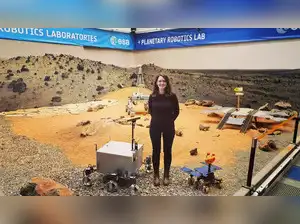
How careers change in the industry. Once who used to clean space toilet now leads Mars exploration studies at the European Space Agency. The journey for Claire Parfitt was not easy.
Claire Parfitt was just 14 years old when she first dreamed of building a career in the space industry. Fascinated by spacecraft and astronauts, she applied for a work experience opportunity at NASA, hoping to get a chance to be part of the world of space exploration. However, her application was rejected. Instead of giving up, she found another opportunity at the National Space Science Centre in Leicester, England.
Her first assignment was far from glamorous, cleaning a replica of a space toilet. But that early experience became the beginning of a remarkable journey that would eventually take her to the European Space Agency (ESA), where she now leads teams working on future Mars exploration missions.
While these tasks may have seemed ordinary, they gave her valuable insight into the space sector and helped her understand the many roles involved in making space exploration possible.
Seeing a woman in a senior leadership role had a powerful impact on Parfitt. It helped her picture herself in a field where women have traditionally been underrepresented.
Her story also reflects the growing importance of engineers in space exploration. Missions beyond Earth rely not only on astronauts but also on thousands of scientists and engineers who design spacecraft, develop technology and create systems that make exploration possible.
[With TOI inputs]
(You can now subscribe to our Economic Times WhatsApp channel)
Claire Parfitt was just 14 years old when she first dreamed of building a career in the space industry. Fascinated by spacecraft and astronauts, she applied for a work experience opportunity at NASA, hoping to get a chance to be part of the world of space exploration. However, her application was rejected. Instead of giving up, she found another opportunity at the National Space Science Centre in Leicester, England.
Her first assignment was far from glamorous, cleaning a replica of a space toilet. But that early experience became the beginning of a remarkable journey that would eventually take her to the European Space Agency (ESA), where she now leads teams working on future Mars exploration missions.
A Humble Beginning That Shaped Her Space Career
During her placement at the National Space Science Centre, Parfitt worked on various tasks, including unpacking important space-related items such as the spacesuit worn by Helen Sharman, the first British astronaut. She was also involved in maintaining exhibits, including a space toilet replica that was later displayed at the centre.While these tasks may have seemed ordinary, they gave her valuable insight into the space sector and helped her understand the many roles involved in making space exploration possible.

The Leader Who Inspired Her Future
A key moment in Parfitt’s journey came when she met Alex Hall, who was then the director of the space centre. Hall showed the young student that leadership positions in the space industry were achievable.Seeing a woman in a senior leadership role had a powerful impact on Parfitt. It helped her picture herself in a field where women have traditionally been underrepresented.
From Physics Student to Space Engineer
Motivated to pursue her ambitions, Parfitt went on to study physics before earning a PhD in spacecraft power systems engineering. Her academic background eventually opened the door to a career at the European Space Agency’s European Space Research and Technology Centre (ESTEC) in the Netherlands, ESA’s largest technical facility.Contributing to Future Mars Exploration
Her current role involves leading engineering teams that design and plan future exploration missions. This includes ensuring spacecraft systems are capable of surviving the extreme conditions of deep space.A Story of Persistence and Unexpected Opportunities
Parfitt’s journey highlights how early setbacks do not define future success. Her rejection from NASA could have ended her dream, but an unexpected opportunity at a local space centre became the foundation for a successful career.Her story also reflects the growing importance of engineers in space exploration. Missions beyond Earth rely not only on astronauts but also on thousands of scientists and engineers who design spacecraft, develop technology and create systems that make exploration possible.
[With TOI inputs]
Add  as a Reliable and Trusted News Source
as a Reliable and Trusted News Source Add Now!
 (You can now subscribe to our Economic Times WhatsApp channel)
Read More News on
claire parfitt esa journeyclaire parfitt nasa rejection storyclaire parfitt mars exploration missionseuropean space agency mars missionsesa engineer claire parfittnasa rejected claire parfitt at 14woman space engineer inspiring storywomen in space explorationmars exploration studies esafuture mars missions engineers
Read More News on
claire parfitt esa journeyclaire parfitt nasa rejection storyclaire parfitt mars exploration missionseuropean space agency mars missionsesa engineer claire parfittnasa rejected claire parfitt at 14woman space engineer inspiring storywomen in space explorationmars exploration studies esafuture mars missions engineers