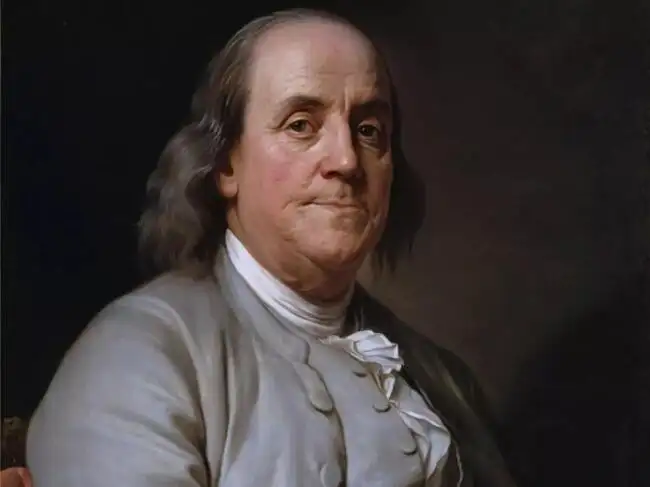
Many people spend years chasing life's biggest milestones, believing happiness will finally arrive with a dream job, a promotion, a new house or financial success. But according to Benjamin Franklin, one of the most influential figures in American history, lasting happiness is often built in much smaller ways.
Franklin once wrote, "Happiness consists more in small conveniences or pleasures that occur every day, than in great pieces of good fortune that happen but seldom to a man in the course of his life." His words remain remarkably relevant, reminding us that joy is often hidden in everyday moments rather than rare, life-changing events.
What does Benjamin Franklin's quote mean?
At its heart, Franklin's quote suggests that true happiness is rarely created by extraordinary moments alone.
Major achievements, promotions, awards or strokes of good fortune certainly bring excitement, but they happen only occasionally. Everyday comforts, however, are available far more often. A peaceful morning, a meaningful conversation, good health, a favourite meal, time with loved ones, or simply completing a productive day can contribute far more consistently to our overall happiness.
Franklin's message encourages people to stop treating happiness as a distant destination and instead recognise it in the ordinary experiences that quietly enrich daily life.
Why the quote remains relevant today
Modern life often encourages people to postpone happiness until they achieve their next big goal. Social media frequently highlights extraordinary vacations, luxury purchases and career milestones, making everyday life seem less meaningful by comparison. Franklin's perspective offers an important counterbalance.
His words remind us that a fulfilling life is not measured only by rare moments of success but also by the countless small experiences that bring comfort, peace and gratitude. People who appreciate daily pleasures often develop greater resilience because their happiness does not depend entirely on unpredictable external events.
Who was Benjamin Franklin?
Benjamin Franklin was one of the most accomplished figures in American history. An American polymath, he was among the Founding Fathers of the United States, helped draft and sign the Declaration of Independence, and became the country's first postmaster general.
Born in the Province of Massachusetts Bay, Franklin built a successful career as a newspaper editor and printer in Philadelphia. At just 23, he published The Pennsylvania Gazette, later achieving widespread popularity through Poor Richard's Almanack, which he wrote under the pseudonym Richard Saunders.
His influence extended far beyond publishing. Franklin organised and became the first president of the Academy and College of Philadelphia, which later evolved into the University of Pennsylvania. He also founded the American Philosophical Society and played a major role in establishing the first national communications network after becoming deputy postmaster-general for the British colonies.
Franklin was also a highly respected diplomat whose efforts helped secure crucial French support during the American Revolution. He later served as President of Pennsylvania and eventually became an outspoken abolitionist, advocating against slavery and supporting the education and integration of African Americans into American society.
A scientist, inventor and nation builder
Franklin's curiosity extended into science, where his pioneering work on electricity made him one of the leading scientific minds of the American Enlightenment. He named and charted the Gulf Stream and invented several practical devices that continue to influence modern life, including the lightning rod, bifocals, the Franklin stove and the glass harmonica.
His contributions to science, politics, education and public service earned him the nickname "The First American." He also holds the rare distinction of being the only individual to sign the Declaration of Independence, the Treaty of Paris that ended the Revolutionary War, and the United States Constitution.
More than two centuries after his death, Franklin's legacy continues to endure. His portrait appears on the US $100 bill, while his name lives on through universities, towns, institutions and thousands of preserved letters and writings that continue to inspire readers around the world. His timeless reminder about finding happiness in life's small pleasures remains just as meaningful today as it was centuries ago.
Franklin once wrote, "Happiness consists more in small conveniences or pleasures that occur every day, than in great pieces of good fortune that happen but seldom to a man in the course of his life." His words remain remarkably relevant, reminding us that joy is often hidden in everyday moments rather than rare, life-changing events.
What does Benjamin Franklin's quote mean?
At its heart, Franklin's quote suggests that true happiness is rarely created by extraordinary moments alone.Major achievements, promotions, awards or strokes of good fortune certainly bring excitement, but they happen only occasionally. Everyday comforts, however, are available far more often. A peaceful morning, a meaningful conversation, good health, a favourite meal, time with loved ones, or simply completing a productive day can contribute far more consistently to our overall happiness.
Franklin's message encourages people to stop treating happiness as a distant destination and instead recognise it in the ordinary experiences that quietly enrich daily life.
Why the quote remains relevant today
Modern life often encourages people to postpone happiness until they achieve their next big goal. Social media frequently highlights extraordinary vacations, luxury purchases and career milestones, making everyday life seem less meaningful by comparison. Franklin's perspective offers an important counterbalance.His words remind us that a fulfilling life is not measured only by rare moments of success but also by the countless small experiences that bring comfort, peace and gratitude. People who appreciate daily pleasures often develop greater resilience because their happiness does not depend entirely on unpredictable external events.
Who was Benjamin Franklin?
Benjamin Franklin was one of the most accomplished figures in American history. An American polymath, he was among the Founding Fathers of the United States, helped draft and sign the Declaration of Independence, and became the country's first postmaster general.Born in the Province of Massachusetts Bay, Franklin built a successful career as a newspaper editor and printer in Philadelphia. At just 23, he published The Pennsylvania Gazette, later achieving widespread popularity through Poor Richard's Almanack, which he wrote under the pseudonym Richard Saunders.
His influence extended far beyond publishing. Franklin organised and became the first president of the Academy and College of Philadelphia, which later evolved into the University of Pennsylvania. He also founded the American Philosophical Society and played a major role in establishing the first national communications network after becoming deputy postmaster-general for the British colonies.
Franklin was also a highly respected diplomat whose efforts helped secure crucial French support during the American Revolution. He later served as President of Pennsylvania and eventually became an outspoken abolitionist, advocating against slavery and supporting the education and integration of African Americans into American society.
A scientist, inventor and nation builder
Franklin's curiosity extended into science, where his pioneering work on electricity made him one of the leading scientific minds of the American Enlightenment. He named and charted the Gulf Stream and invented several practical devices that continue to influence modern life, including the lightning rod, bifocals, the Franklin stove and the glass harmonica.His contributions to science, politics, education and public service earned him the nickname "The First American." He also holds the rare distinction of being the only individual to sign the Declaration of Independence, the Treaty of Paris that ended the Revolutionary War, and the United States Constitution.
More than two centuries after his death, Franklin's legacy continues to endure. His portrait appears on the US $100 bill, while his name lives on through universities, towns, institutions and thousands of preserved letters and writings that continue to inspire readers around the world. His timeless reminder about finding happiness in life's small pleasures remains just as meaningful today as it was centuries ago.
Add  as a Reliable and Trusted News Source
as a Reliable and Trusted News Source Add Now!
 (Catch all the Business News, Breaking News, and Latest News Updates on The Economic Times.)
Subscribe to The Economic Times Prime and read the ET ePaper online.
Read More News on
(Catch all the Business News, Breaking News, and Latest News Updates on The Economic Times.)
Subscribe to The Economic Times Prime and read the ET ePaper online.