Listen to this article in summarized format
×
Subscribe to 
Unlock AI Briefing and Premium Content
New Year Offer 24 Hours Left
Subscribe NowAlready a member? Sign In
What's Included
- Exclusive Stories
- Daily ePaper Access
- Smart Market Tools
- Curated Investment Ideas
- Ad-lite Experience
Subscription

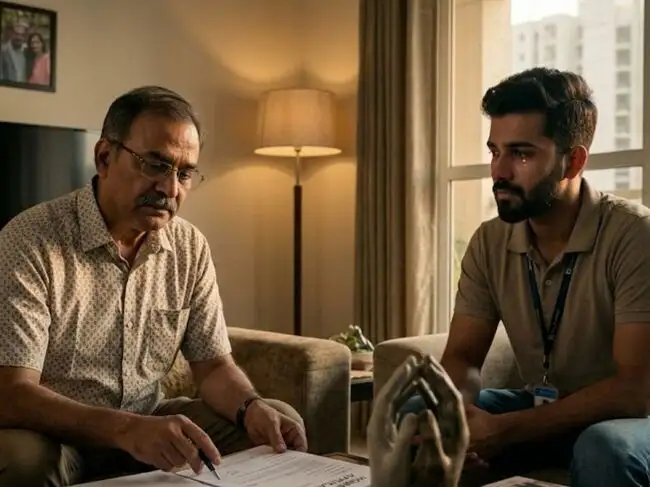
A viral social media post by Gurgaon-based CEO Jasveer Singh, also co-founder of Knot Dating, has reignited conversations about parenting, emotional communication, and the relationship between Indian fathers and their sons. Instead of focusing on finances or academic success, Singh argued that the real gap in many families lies in emotional connection. According to him, many fathers know their son's marks, salary, and job but know very little about what is happening in their minds.
Sharing his thoughts on X, Singh said the biggest failure of Indian parenting is not a lack of love. Rather, he believes many fathers never become someone their sons feel comfortable talking to.
He also argued that many Indian parents struggle to accept that their children may know more than they do in certain areas. Using an example, Singh said that even if a father studied only until Class 10 while his son has a PhD, the father may still insist on deciding the son's career or life choices. In his view, this mindset stems less from expertise and more from the belief that being a parent automatically means being right.
Recalling his own family, Singh shared that his grandfather would proudly say in Hindi that his son never talked back and always did exactly what he was told. Reflecting on that memory, Singh said the statement represented pride in control rather than mutual respect. He argued that when obedience becomes the only valued quality, children who ask questions are labelled difficult, while those who remain silent are rewarded.
He wrote that children raised in such environments often learn that silence is safer than honesty. Calling this pattern "conditioning" rather than parenting, Singh made one of the strongest remarks in his post, saying parents are "not raising a son" but "raising a hostage with good manners."
As a result, conversations are replaced by secrecy, and relationships go underground because children fear being judged instead of understood. Singh believes society often focuses on the visible outcomes while ignoring the deeper issue. In his view, the real problem is treating adult children like permanent minors, confusing authority with respect, and mistaking obedience for love.
He also encouraged people to reflect on how many fathers and sons can openly discuss topics such as love, failure, anxiety, or sex without fear of criticism. For many families, he observed, the relationship feels less like that of a father and son and more like one between a boss and an employee.
For Singh, the larger cultural challenge is not whether parents love their children but whether they create an environment where honesty, questioning, and open conversations can exist alongside respect.
However, not everyone agreed with Singh's view. One user defended fathers, saying most listen to their sons and even seek opinions from others before offering advice. The commenter added that fathers are generally motivated by a desire to secure a better future for their children rather than simply expecting unquestioned obedience.
Sharing his thoughts on X, Singh said the biggest failure of Indian parenting is not a lack of love. Rather, he believes many fathers never become someone their sons feel comfortable talking to.
'Control gets passed down'
According to Singh, controlling parenting often continues across generations without being questioned. He wrote that one generation controls the next, creating a pattern that becomes a family habit rather than a conscious choice.He also argued that many Indian parents struggle to accept that their children may know more than they do in certain areas. Using an example, Singh said that even if a father studied only until Class 10 while his son has a PhD, the father may still insist on deciding the son's career or life choices. In his view, this mindset stems less from expertise and more from the belief that being a parent automatically means being right.
When obedience becomes the goal
Singh said children in many Indian households are rarely treated as independent adults. Instead, they are often seen as family property, where parents feel entitled to make decisions simply because they raised them. He compared this dynamic to a boss-employee relationship rather than a healthy parent-child bond.Recalling his own family, Singh shared that his grandfather would proudly say in Hindi that his son never talked back and always did exactly what he was told. Reflecting on that memory, Singh said the statement represented pride in control rather than mutual respect. He argued that when obedience becomes the only valued quality, children who ask questions are labelled difficult, while those who remain silent are rewarded.
Why questioning should not be seen as rebellion
Singh believes questioning is essential for growth, whether in science, business, or everyday life. Yet, he said that in many Indian homes, asking questions is treated as an act of rebellion.He wrote that children raised in such environments often learn that silence is safer than honesty. Calling this pattern "conditioning" rather than parenting, Singh made one of the strongest remarks in his post, saying parents are "not raising a son" but "raising a hostage with good manners."
The long-term impact on relationships
According to Singh, the consequences often become visible only later in life. He argued that children who are never treated as equals may find it difficult to tell their parents about important life decisions, such as falling in love or wanting to marry someone of their choice. The hesitation, he said, does not arise overnight but develops over years of learning that disagreement leads to anger, punishment, or emotional blackmail.As a result, conversations are replaced by secrecy, and relationships go underground because children fear being judged instead of understood. Singh believes society often focuses on the visible outcomes while ignoring the deeper issue. In his view, the real problem is treating adult children like permanent minors, confusing authority with respect, and mistaking obedience for love.
He also encouraged people to reflect on how many fathers and sons can openly discuss topics such as love, failure, anxiety, or sex without fear of criticism. For many families, he observed, the relationship feels less like that of a father and son and more like one between a boss and an employee.
For Singh, the larger cultural challenge is not whether parents love their children but whether they create an environment where honesty, questioning, and open conversations can exist alongside respect.
Internet reacts
The post sparked a discussion online, with many users sharing their perspectives on father-son relationships and parenting. One user said the comparison between a boss-employee relationship and many father-son dynamics was painfully accurate. Another agreed that control is often mistaken for care, arguing that this confusion lies at the heart of the problem.However, not everyone agreed with Singh's view. One user defended fathers, saying most listen to their sons and even seek opinions from others before offering advice. The commenter added that fathers are generally motivated by a desire to secure a better future for their children rather than simply expecting unquestioned obedience.
Add  as a Reliable and Trusted News Source
as a Reliable and Trusted News Source Add Now!
 (Catch all the Business News, Breaking News, and Latest News Updates on The Economic Times.)
Subscribe to The Economic Times Prime and read the ET ePaper online.
Read More News on
(Catch all the Business News, Breaking News, and Latest News Updates on The Economic Times.)
Subscribe to The Economic Times Prime and read the ET ePaper online.