 Agencies
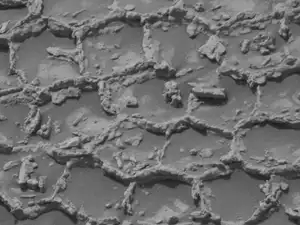
Mars continues to surprise scientists. Nearly 14 years after landing on the Red Planet, NASA's Curiosity rover has captured images of an unusual honeycomb-like formation, adding a new mystery to the planet's growing list of unexplained geological features.
The discovery was made during Curiosity's latest exploration of Gale Crater, where the rover photographed a network of polygon-shaped ridges spread across a light-toned rock formation. According to NASA, the feature appeared just as striking from the surface as it had in orbital images.
The origin of these rocks remains uncertain.
"A still-to-be-resolved question is whether these are bits of Mars that 'floated' down from higher in the stratigraphy, were ejected from distant impacts outside of Gale crater, or are meteorites from beyond Mars altogether," the NASA blog said.
Over billions of years, Mars has been shaped by volcanic eruptions, flowing water, shifting sediments, wind erosion and dramatic climate changes. Researchers believe one or more of these geological processes may have played a role in forming the honeycomb-like structures.
On Earth, similar geometric patterns are created when mud dries and cracks, minerals crystallise, or the ground repeatedly freezes and thaws. Whether the Martian formations developed through comparable processes remains unknown.
Scientists believe uncovering the origin of these structures could provide valuable clues about the environmental conditions that once existed on Mars.
During the mission, Curiosity also examined a dark-toned cobble named "Cortadera" using its APXS, MAHLI and ChemCam instruments. The rover also captured detailed observations of the nearby "Cordillera" mesa and the "Valle Grande" channel.
Scientists are considering several explanations for the dark rocks. They may have broken away from higher geological layers and rolled downhill, been thrown into the area during the ancient impact that formed Gale Crater, or even be meteorites that landed on Mars millions of years ago.
Earlier Mars missions have identified dark rocks containing minerals such as nickel, which is commonly found in meteorites but is relatively rare in Martian rocks. Researchers will now study whether the newly discovered rocks have a similar composition.
Even after nearly 14 years of exploration, the rover continues to uncover discoveries that challenge scientists' understanding of the Red Planet's geological history.
For now, the honeycomb-like landscape remains one of Mars' newest unsolved puzzles. Scientists will continue analysing the images and geological data returned by Curiosity to determine whether the polygonal formations and nearby dark rocks are connected or are the result of separate geological events.
The latest discovery is another reminder that Mars still holds many secrets waiting to be unravelled.
(You can now subscribe to our Economic Times WhatsApp channel)
The discovery was made during Curiosity's latest exploration of Gale Crater, where the rover photographed a network of polygon-shaped ridges spread across a light-toned rock formation. According to NASA, the feature appeared just as striking from the surface as it had in orbital images.
What did Curiosity discover?
According to a NASA blog, the rover team was surprised to find the area covered with polygonal structures resembling the top of a giant honeycomb. As Curiosity moved deeper into the formation, the polygonal ridges appeared increasingly eroded. The site was also littered with dark-toned rocks ranging from pebble to cobble size.The origin of these rocks remains uncertain.
"A still-to-be-resolved question is whether these are bits of Mars that 'floated' down from higher in the stratigraphy, were ejected from distant impacts outside of Gale crater, or are meteorites from beyond Mars altogether," the NASA blog said.

How did the honeycomb pattern form?
Scientists have yet to determine how the unusual polygonal landscape was created.Over billions of years, Mars has been shaped by volcanic eruptions, flowing water, shifting sediments, wind erosion and dramatic climate changes. Researchers believe one or more of these geological processes may have played a role in forming the honeycomb-like structures.
On Earth, similar geometric patterns are created when mud dries and cracks, minerals crystallise, or the ground repeatedly freezes and thaws. Whether the Martian formations developed through comparable processes remains unknown.
Scientists believe uncovering the origin of these structures could provide valuable clues about the environmental conditions that once existed on Mars.
Dark rocks deepen the mystery
The honeycomb-like terrain was not the only feature to intrigue researchers.During the mission, Curiosity also examined a dark-toned cobble named "Cortadera" using its APXS, MAHLI and ChemCam instruments. The rover also captured detailed observations of the nearby "Cordillera" mesa and the "Valle Grande" channel.
Scientists are considering several explanations for the dark rocks. They may have broken away from higher geological layers and rolled downhill, been thrown into the area during the ancient impact that formed Gale Crater, or even be meteorites that landed on Mars millions of years ago.
Earlier Mars missions have identified dark rocks containing minerals such as nickel, which is commonly found in meteorites but is relatively rare in Martian rocks. Researchers will now study whether the newly discovered rocks have a similar composition.
Why the discovery is important
Since touching down on Mars in 2012, Curiosity has been exploring Gale Crater to study ancient rock layers, dried riverbeds and mineral deposits in search of evidence that the planet once had conditions capable of supporting microbial life.Even after nearly 14 years of exploration, the rover continues to uncover discoveries that challenge scientists' understanding of the Red Planet's geological history.
For now, the honeycomb-like landscape remains one of Mars' newest unsolved puzzles. Scientists will continue analysing the images and geological data returned by Curiosity to determine whether the polygonal formations and nearby dark rocks are connected or are the result of separate geological events.
The latest discovery is another reminder that Mars still holds many secrets waiting to be unravelled.
Add  as a Reliable and Trusted News Source
as a Reliable and Trusted News Source Add Now!
 (You can now subscribe to our Economic Times WhatsApp channel)