Listen to this article in summarized format
×
Subscribe to 
Unlock AI Briefing and Premium Content
New Year Offer 24 Hours Left
Subscribe NowAlready a member? Sign In
What's Included
- Exclusive Stories
- Daily ePaper Access
- Smart Market Tools
- Curated Investment Ideas
- Ad-lite Experience
Subscription

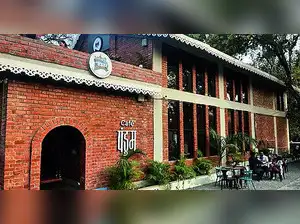
Raipur: For third-year law students at Hidayatullah National Law University in Nava Raipur, ordering food on Zomato or Blinkit is often a challenge, with deliveries frequently refused or delayed. Residents also complain that Uber rides are routinely cancelled, while poor public transport and the absence of authorised markets have led to the mushrooming of unauthorised shops.
ET spoke to government officials to understand citizens' concerns and gain insights into the planning, governance and policing of Chhattisgarh's ambitious new township.
"We bought a scooty because the bus stop is far from my college. Though I'm from Raipur, I shifted to the hostel, after which my parents got me a two-wheeler," said Khushi Verma, a third-year law student. Similarly, Class XI student Viraj Deo told ET that online orders are either unavailable or too expensive. "Whenever I need school supplies or want to eat outside food, I have to step out," he said.
Many residents believe Nava Raipur will evolve into a modern city once fully developed and prefer investing in real estate there while continuing to live in Raipur, 25-30 km away. For Shreya, a student from Kanpur in Uttar Pradesh, online deliveries and last-mile connectivity remain major challenges. "We no longer rely on online deliveries and instead plan our visits to the market for shopping or food," she told ET.
For Paridhi Dubey, a homemaker, adjusting to life in Nava Raipur has not been easy. She shifted there because of her children's school. "The school's bus service is adequate, but commuting on my own and ordering groceries online remain major challenges," she told ET. However, things are likely to change once the smart city project takes off.
The city is being planned in an area of 237 sq km divided into three layers. Layer-I covers the core city with 80.13 sq km with a green belt area of 95.22 sq km.
Chandan Kumar, CEO, NRANVP, told ET that Chhattisgarh's economy is driven by the agriculture and manufacturing sectors, which together contribute nearly 65% to the state's GSDP. However, growth of the tertiary sector is essential for the state's balanced and comprehensive development. NRANVP has been actively promoting this sector by facilitating private investment.
The station area comprises multiple zones with its own transportation and land use characteristics and a catchment area. To promote high speed roads on arterial roads, alternative roads for every destination have been planned. However, locals complain of very few trains and lack of rail connectivity remains an issue for daily movements.
(You can now subscribe to our Economic Times WhatsApp channel)
ET spoke to government officials to understand citizens' concerns and gain insights into the planning, governance and policing of Chhattisgarh's ambitious new township.
Current Woes
Law students and others studying in Nava Raipur often rely on hostels due to the lack of connectivity."We bought a scooty because the bus stop is far from my college. Though I'm from Raipur, I shifted to the hostel, after which my parents got me a two-wheeler," said Khushi Verma, a third-year law student. Similarly, Class XI student Viraj Deo told ET that online orders are either unavailable or too expensive. "Whenever I need school supplies or want to eat outside food, I have to step out," he said.
Many residents believe Nava Raipur will evolve into a modern city once fully developed and prefer investing in real estate there while continuing to live in Raipur, 25-30 km away. For Shreya, a student from Kanpur in Uttar Pradesh, online deliveries and last-mile connectivity remain major challenges. "We no longer rely on online deliveries and instead plan our visits to the market for shopping or food," she told ET.

For Paridhi Dubey, a homemaker, adjusting to life in Nava Raipur has not been easy. She shifted there because of her children's school. "The school's bus service is adequate, but commuting on my own and ordering groceries online remain major challenges," she told ET. However, things are likely to change once the smart city project takes off.
Nava Raipur Atal Nagar Vikas Pradhikaran
Nava Raipur is being developed by the NRANVP as a smart city with electricity, citizen services and other amenities integrated under one roof to minimise bureaucracy. In an exclusive presentation to ET, NRANVP officials outlined the city's vision, anchored in sustainable economic, environmental and social development.The city is being planned in an area of 237 sq km divided into three layers. Layer-I covers the core city with 80.13 sq km with a green belt area of 95.22 sq km.
Chandan Kumar, CEO, NRANVP, told ET that Chhattisgarh's economy is driven by the agriculture and manufacturing sectors, which together contribute nearly 65% to the state's GSDP. However, growth of the tertiary sector is essential for the state's balanced and comprehensive development. NRANVP has been actively promoting this sector by facilitating private investment.
Land and Housing
As much as 10% of the land is available for acquisition and up to 49% can be purchased with mutual agreement while the government transferred land constitutes 41% of the total area. Out of the 40 sectors being developed, five have been completed while the remaining is in various stages of development. Al amenities are accessible within a 5-10 min walk from all residential areas.Transportation and Green Belts
For transport, the concept of Transit Oriented Development (TOD) was adopted in Nava Raipur in 2015 and subsequently modifications were made in the Development Plan 2031. As per the TOD guidelines, easily accessible transit nodes are planned with station areas defined by 800 m or 10-minute walk distance as radius from the TOD point.The station area comprises multiple zones with its own transportation and land use characteristics and a catchment area. To promote high speed roads on arterial roads, alternative roads for every destination have been planned. However, locals complain of very few trains and lack of rail connectivity remains an issue for daily movements.
Add  as a Reliable and Trusted News Source
as a Reliable and Trusted News Source Add Now!
 (You can now subscribe to our Economic Times WhatsApp channel)
( Originally published on Jul 18, 2026 )