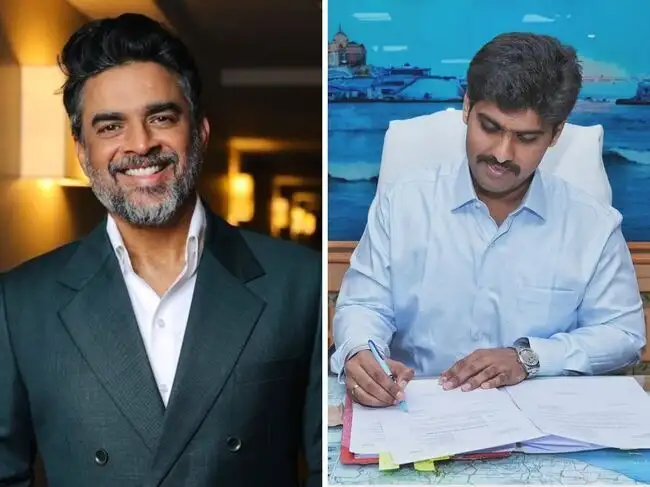
Actor R Madhavan never fails to make our day with his delightful social media posts. The actor, who was last seen in director Aditya Dhar’s blockbuster film Dhurandhar 2, often uploads interesting human stories, animal videos and even motivational thoughts on Instagram, indicating that beyond films, the 56-year-old is also deeply passionate about celebrating real-life changemakers and meaningful initiatives. On a more recent note, Madhavan shared another inspiring story of an IAS officer from Tamil Nadu who transformed 1,200 abandoned borewells into rainwater harvesting units, which raised groundwater levels by 5 to 10 feet in several areas, helping revive wells and support local farming communities.
From farmer's son to water conservationist
IAS officer Prathap Murugan was born into a farming family in Virudhunagar and hence understood the importance of water conservation. As per a report by The Better India, everyone in his household used to measure water carefully. As a kid, he used to cycle kilometres to school with a dream of serving society, unaware that he would soon turn the dream into reality.
Prathap Murugan, as District Collector in the Tiruvallur district of Tamil Nadu, noticed borewells were failing across villages. Farmers were drilling deeper for water but in vain. However, every monsoon, thousands of litres of rainwater flowed into drains and canals even before the dry land could absorb it. That’s when an idea struck him.
A low-cost solution with lasting impact
Prathap Murugan realised that across Tiruvallur, thousands of abandoned borewells were either sealed or forgotten after running dry. His strategy was to use the same borewells and send rainwater back underground. Under Prathap's leadership, the district repurposed more than 1,200 abandoned borewells into rainwater harvesting units by connecting them to a larger groundwater recharge system.
Instead of allowing monsoon rain to flow away through drains and canals, the water was channelled into these unused borewells, enabling it to seep deep into the ground and replenish depleted aquifers. What made the initiative stand out was its simplicity. Rather than relying on costly machinery or launching large-scale dam projects, the administration made effective use of existing infrastructure while encouraging active participation from local communities.
The impact became evident soon after the first monsoon. According to reports, groundwater levels increased by 5 to 10 feet in several parts of Tiruvallur. Wells that had remained dry for years began storing water again, hand pumps started functioning in villages that had depended on water tankers, and many farmers witnessed water returning to their fields after enduring repeated periods of drought.
From farmer's son to water conservationist
IAS officer Prathap Murugan was born into a farming family in Virudhunagar and hence understood the importance of water conservation. As per a report by The Better India, everyone in his household used to measure water carefully. As a kid, he used to cycle kilometres to school with a dream of serving society, unaware that he would soon turn the dream into reality.
Prathap Murugan, as District Collector in the Tiruvallur district of Tamil Nadu, noticed borewells were failing across villages. Farmers were drilling deeper for water but in vain. However, every monsoon, thousands of litres of rainwater flowed into drains and canals even before the dry land could absorb it. That’s when an idea struck him.
A low-cost solution with lasting impact
Prathap Murugan realised that across Tiruvallur, thousands of abandoned borewells were either sealed or forgotten after running dry. His strategy was to use the same borewells and send rainwater back underground. Under Prathap's leadership, the district repurposed more than 1,200 abandoned borewells into rainwater harvesting units by connecting them to a larger groundwater recharge system.
Instead of allowing monsoon rain to flow away through drains and canals, the water was channelled into these unused borewells, enabling it to seep deep into the ground and replenish depleted aquifers. What made the initiative stand out was its simplicity. Rather than relying on costly machinery or launching large-scale dam projects, the administration made effective use of existing infrastructure while encouraging active participation from local communities.
The impact became evident soon after the first monsoon. According to reports, groundwater levels increased by 5 to 10 feet in several parts of Tiruvallur. Wells that had remained dry for years began storing water again, hand pumps started functioning in villages that had depended on water tankers, and many farmers witnessed water returning to their fields after enduring repeated periods of drought.
Add  as a Reliable and Trusted News Source
as a Reliable and Trusted News Source Add Now!
 (Catch all the Business News, Breaking News, and Latest News Updates on The Economic Times.)
Subscribe to The Economic Times Prime and read the ET ePaper online.
Read More News on
(Catch all the Business News, Breaking News, and Latest News Updates on The Economic Times.)
Subscribe to The Economic Times Prime and read the ET ePaper online.