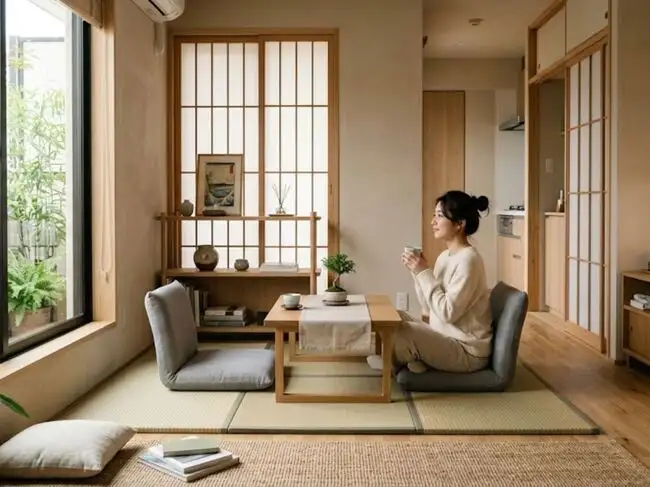
A peaceful home does not always require a large living area, expensive furniture or a complete renovation. Japanese homes have long been admired for their ability to create calm, balance and beauty even within limited spaces. The secret often lies not in adding more things but in being intentional about what stays.
Japanese-inspired interiors combine minimalism, functionality and a deep respect for nature. Concepts like Ma, Danshari, Wabi-sabi and Mottainai offer simple lessons on creating homes that feel more spacious, organised and peaceful. Here are some Japanese home habits that can transform small spaces.
For small homes, this approach can make spaces appear larger and more peaceful. Instead of adding more decor, removing unnecessary items can often create a bigger visual impact.
Practice Danshari: Let go of unnecessary possessions
The Japanese concept of Danshari focuses on decluttering and creating a healthier relationship with belongings.
The word combines three ideas:
- Dan means refusing unnecessary things
- Sha means letting go of items you no longer need
- Ri means distancing yourself from the desire to constantly acquire more
Danshari is not about throwing away everything or living with nothing. It encourages people to ask whether an item truly adds value to their life. Regularly clearing unused clothes, broken objects and forgotten items can help small homes feel lighter and more organised.
Follow Wabi-sabi: Appreciate simplicity and imperfection
Wabi-sabi is a Japanese philosophy that celebrates simplicity, natural beauty and the imperfections that come with time. Instead of chasing a perfectly styled home, Wabi-sabi encourages embracing spaces that feel authentic and lived-in. A wooden table with natural marks, handmade pottery or an old family item can add warmth and character.
For small homes, this means choosing meaningful pieces rather than filling rooms with decorations that have no personal connection.
Use Bento Box organisation for smarter storage
Japanese homes are known for clever storage solutions, especially when space is limited. One popular idea inspired by the Japanese Bento Box is dividing larger spaces into smaller compartments. Just like a bento box keeps different foods neatly separated, drawers, shelves and cabinets can be organised using small containers and dividers.
This method helps prevent clutter from building up and makes it easier to find everyday items. Kitchen drawers, wardrobes and bathroom shelves can all benefit from this approach.
Adding a few plants, a wooden accessory or natural textures can make a small apartment feel warmer. The goal is not to create an indoor jungle but to introduce small reminders of nature.
Instead of decorating every surface, creating one intentional display area can make the home feel more thoughtful and balanced.
Follow Osoji: Make cleaning a mindful habit
In Japanese culture, Osoji refers to deep cleaning and organising spaces. It is not just about removing dirt but about resetting the environment. Small daily habits like putting things back in their place, cleaning surfaces and organising before bedtime can prevent clutter from taking over. Maintaining a tidy home becomes less of a chore and more of a calming ritual.
This reflects the Japanese principle of Kaizen, which means continuous improvement through small changes. Instead of making dramatic transformations, small adjustments over time can make a home more functional.
This approach can make home makeovers more affordable while creating a more sustainable lifestyle.
By removing clutter, choosing meaningful objects, organising thoughtfully and making small improvements, even the smallest spaces can become a place of comfort and tranquillity.
Japanese-inspired interiors combine minimalism, functionality and a deep respect for nature. Concepts like Ma, Danshari, Wabi-sabi and Mottainai offer simple lessons on creating homes that feel more spacious, organised and peaceful. Here are some Japanese home habits that can transform small spaces.
Embrace Ma: The beauty of empty space
One of the most important Japanese design concepts is Ma, which refers to the appreciation of empty space or the pause between things. Unlike the idea that every corner of a home must be filled, Ma encourages leaving breathing room between furniture, objects and decorations. An empty wall, a clear tabletop or an open area on the floor is not considered incomplete. It allows the room and the mind to feel less crowded.For small homes, this approach can make spaces appear larger and more peaceful. Instead of adding more decor, removing unnecessary items can often create a bigger visual impact.
Practice Danshari: Let go of unnecessary possessions
The Japanese concept of Danshari focuses on decluttering and creating a healthier relationship with belongings.You Might Also Like:

- Dan means refusing unnecessary things
- Sha means letting go of items you no longer need
- Ri means distancing yourself from the desire to constantly acquire more
Danshari is not about throwing away everything or living with nothing. It encourages people to ask whether an item truly adds value to their life. Regularly clearing unused clothes, broken objects and forgotten items can help small homes feel lighter and more organised.
Follow Wabi-sabi: Appreciate simplicity and imperfection
Wabi-sabi is a Japanese philosophy that celebrates simplicity, natural beauty and the imperfections that come with time. Instead of chasing a perfectly styled home, Wabi-sabi encourages embracing spaces that feel authentic and lived-in. A wooden table with natural marks, handmade pottery or an old family item can add warmth and character.For small homes, this means choosing meaningful pieces rather than filling rooms with decorations that have no personal connection.
Use Bento Box organisation for smarter storage
Japanese homes are known for clever storage solutions, especially when space is limited. One popular idea inspired by the Japanese Bento Box is dividing larger spaces into smaller compartments. Just like a bento box keeps different foods neatly separated, drawers, shelves and cabinets can be organised using small containers and dividers.This method helps prevent clutter from building up and makes it easier to find everyday items. Kitchen drawers, wardrobes and bathroom shelves can all benefit from this approach.
Bring nature inside with Shizen
The Japanese concept of Shizen represents a connection with nature and natural simplicity. Many Japanese interiors use elements like wood, plants, stones, bamboo and natural fabrics to create a soothing atmosphere.Adding a few plants, a wooden accessory or natural textures can make a small apartment feel warmer. The goal is not to create an indoor jungle but to introduce small reminders of nature.
Create intentional corners using Tokonoma
Traditional Japanese homes often feature a Tokonoma, a small alcove designed to display something meaningful, such as artwork, flowers or a seasonal decoration. The idea can easily be adapted for modern homes. A small corner with a plant, a painting, a lamp or a favourite object can become a peaceful spot.Instead of decorating every surface, creating one intentional display area can make the home feel more thoughtful and balanced.
Follow Osoji: Make cleaning a mindful habit
In Japanese culture, Osoji refers to deep cleaning and organising spaces. It is not just about removing dirt but about resetting the environment. Small daily habits like putting things back in their place, cleaning surfaces and organising before bedtime can prevent clutter from taking over. Maintaining a tidy home becomes less of a chore and more of a calming ritual.Choose multifunctional furniture
Japanese homes often focus on flexibility because many living spaces are compact. Furniture is selected based on usefulness rather than appearance alone. Foldable tables, storage beds, compact shelves and furniture that serves multiple purposes help maximise available space.This reflects the Japanese principle of Kaizen, which means continuous improvement through small changes. Instead of making dramatic transformations, small adjustments over time can make a home more functional.
Practice Mottainai: Avoid waste and value what you own
The Japanese word Mottainai expresses regret over wasting something valuable. It encourages people to respect resources and make the most of what they already have. In home design, this could mean repairing old furniture instead of replacing it, repurposing containers or choosing durable items that last longer.This approach can make home makeovers more affordable while creating a more sustainable lifestyle.
A peaceful home is about intention, not size
Japanese-inspired living shows that a small home can still feel spacious and calming when designed with purpose. Concepts like Ma, Danshari, Wabi-sabi and Kaizen focus on creating harmony through simplicity rather than excess.By removing clutter, choosing meaningful objects, organising thoughtfully and making small improvements, even the smallest spaces can become a place of comfort and tranquillity.

Add  as a Reliable and Trusted News Source
as a Reliable and Trusted News Source Add Now!
 (Catch all the Business News, Breaking News, and Latest News Updates on The Economic Times.)
Subscribe to The Economic Times Prime and read the ET ePaper online.
Read More News on
(Catch all the Business News, Breaking News, and Latest News Updates on The Economic Times.)
Subscribe to The Economic Times Prime and read the ET ePaper online.