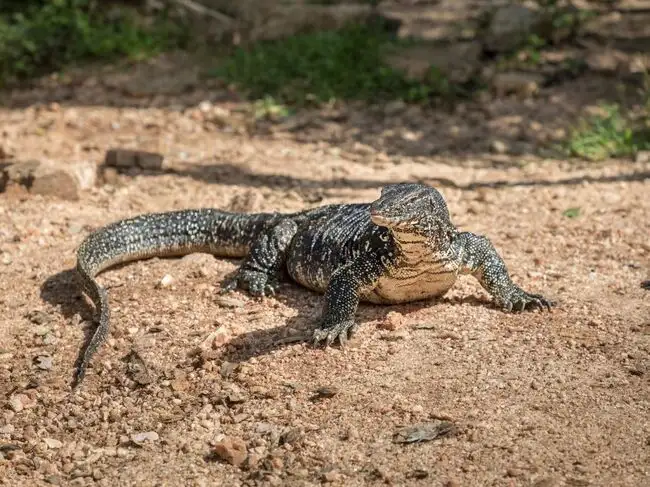
When people think of the Sundarbans, the Royal Bengal tiger usually steals the spotlight. But hidden among its winding creeks and dense mangroves is another remarkable reptile that often surprises visitors. Growing up to 10 feet long, the Asian water monitor is the world's second-largest lizard after the Komodo dragon. Sharing this unique habitat with the Bengal monitor, these giant reptiles play an important role in maintaining the fragile mangrove ecosystem.
Recently, IAS officer Sanjay Kumar highlighted the fascinating creatures in a post on social media.
He noted that water monitors are the world's second-largest lizard species and can grow up to 10 feet in length. Calling them formidable swimmers, Kumar added that they feed on fish, crabs and carrion, making them important predators and scavengers in the mangroves.
Meet the Asian water monitor
The Asian water monitor, scientifically known as Varanus salvator, is one of the largest and most widespread monitor lizards in the world. It is found across South and Southeast Asia, including eastern and northeastern India, Bangladesh, Sri Lanka, the Andaman and Nicobar Islands, southern China and several Southeast Asian countries.
As its name suggests, the reptile has a strong association with water. It inhabits rivers, lakes, ponds, swamps, wetlands and mangrove forests, but it is also known to adapt to urban waterways, city parks and even drainage systems.
An exceptional swimmer, the Asian water monitor hunts a wide variety of prey, including fish, frogs, crabs, invertebrates, water birds and other aquatic animals. It also feeds on carrion, helping clean up dead animal matter in its habitat.
Unlike the Asian water monitor, the Bengal monitor is generally more terrestrial and is commonly seen in forests, grasslands, rocky areas, agricultural fields and scrublands. Although it is capable of swimming, it is not as closely tied to aquatic habitats.
Scientists note that monitor populations in India and Sri Lanka differ from those found further east in Myanmar and Southeast Asia. These eastern populations are now recognised as a separate species called the clouded monitor, or Varanus nebulosus, based on differences in their scale patterns.
The Sundarbans, recognised for its extraordinary biodiversity, supports these reptiles alongside iconic wildlife such as the Royal Bengal tiger, estuarine crocodiles and hundreds of bird species. The presence of giant monitor lizards highlights the rich and often overlooked diversity of one of the world's largest mangrove forests.
Recently, IAS officer Sanjay Kumar highlighted the fascinating creatures in a post on social media.
Giant lizards of the Sundarbans
Sharing images of the reptiles, Kumar wrote that both the Asian water monitor and the Bengal monitor thrive in the Sundarbans mangrove ecosystem.He noted that water monitors are the world's second-largest lizard species and can grow up to 10 feet in length. Calling them formidable swimmers, Kumar added that they feed on fish, crabs and carrion, making them important predators and scavengers in the mangroves.
Meet the Asian water monitor
The Asian water monitor, scientifically known as Varanus salvator, is one of the largest and most widespread monitor lizards in the world. It is found across South and Southeast Asia, including eastern and northeastern India, Bangladesh, Sri Lanka, the Andaman and Nicobar Islands, southern China and several Southeast Asian countries.As its name suggests, the reptile has a strong association with water. It inhabits rivers, lakes, ponds, swamps, wetlands and mangrove forests, but it is also known to adapt to urban waterways, city parks and even drainage systems.
An exceptional swimmer, the Asian water monitor hunts a wide variety of prey, including fish, frogs, crabs, invertebrates, water birds and other aquatic animals. It also feeds on carrion, helping clean up dead animal matter in its habitat.
The Bengal monitor: India's widespread monitor lizard
The Bengal monitor, or Varanus bengalensis, is another impressive member of the monitor lizard family. Also known as the Indian monitor, it is widely distributed across the Indian subcontinent as well as parts of Southeast Asia and West Asia.Unlike the Asian water monitor, the Bengal monitor is generally more terrestrial and is commonly seen in forests, grasslands, rocky areas, agricultural fields and scrublands. Although it is capable of swimming, it is not as closely tied to aquatic habitats.
Scientists note that monitor populations in India and Sri Lanka differ from those found further east in Myanmar and Southeast Asia. These eastern populations are now recognised as a separate species called the clouded monitor, or Varanus nebulosus, based on differences in their scale patterns.
Why these giant lizards matter
Both the Asian water monitor and Bengal monitor are vital to the ecosystems they inhabit. As predators, they help regulate populations of smaller animals, while their scavenging behaviour removes dead organic matter from the environment.The Sundarbans, recognised for its extraordinary biodiversity, supports these reptiles alongside iconic wildlife such as the Royal Bengal tiger, estuarine crocodiles and hundreds of bird species. The presence of giant monitor lizards highlights the rich and often overlooked diversity of one of the world's largest mangrove forests.
Add  as a Reliable and Trusted News Source
as a Reliable and Trusted News Source Add Now!
 (Catch all the Business News, Breaking News, and Latest News Updates on The Economic Times.)
Subscribe to The Economic Times Prime and read the ET ePaper online.
Read More News on
(Catch all the Business News, Breaking News, and Latest News Updates on The Economic Times.)
Subscribe to The Economic Times Prime and read the ET ePaper online.