Listen to this article in summarized format
×
Subscribe to 
Unlock AI Briefing and Premium Content
New Year Offer 24 Hours Left
Subscribe NowAlready a member? Sign In
What's Included
- Exclusive Stories
- Daily ePaper Access
- Smart Market Tools
- Curated Investment Ideas
- Ad-lite Experience
Subscription

 iStock
For many years, public perception has ranked certain body parts as non-essential, with organs such as the gallbladder, tonsils, appendix, and spleen often believed to be unnecessary because people can survive after having them removed. However, this long-standing belief has been challenged by growing scientific evidence. Internal medicine specialist Dr. Priyam Bordoloi recently addressed this misconception in a post on X, drawing attention to an often-overlooked organ that plays a far more important role than previously believed.
In his post, Dr. Bordoloi highlighted a medical myth that has persisted for decades. He explained that generations of students and the general public were taught that one particular organ had no meaningful function and was simply an evolutionary remnant that would eventually become inflamed and require surgical removal. However, according to modern research, that organ actually serves as a hidden protective reserve for the body rather than being biologically insignificant.
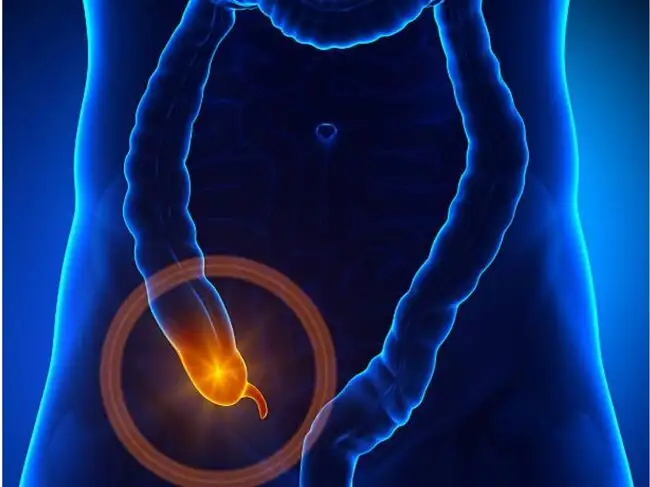
The organ in question is the appendix. Although it was once dismissed as a vestigial structure with little or no purpose, scientists now believe it performs a valuable function in maintaining intestinal health. Instead of being a useless leftover from human evolution, the appendix appears to contribute to the preservation and restoration of the gut's healthy bacterial community.
Dr. Bordoloi explained that the appendix acts like a biological storage site for beneficial microbes that live in the digestive tract. Under normal circumstances, these bacteria help break down food, aid digestion, and support overall health. However, during severe gastrointestinal illnesses such as food poisoning or infectious diarrhea, the body rapidly expels the contents of the intestines in an effort to eliminate harmful organisms. While this defensive response removes disease-causing microbes, it also washes away many of the beneficial bacteria that are essential for a balanced digestive system.
According to the doctor, this is where the appendix becomes especially valuable. Its narrow, pouch-like structure creates a sheltered environment where a reserve population of healthy gut bacteria can remain protected while the infection clears. Because these microorganisms are preserved inside the appendix, they are not completely lost during episodes of severe diarrhea.
After the illness subsides, the appendix can help restore the digestive system by allowing these beneficial bacteria to repopulate the intestines. This process supports the rebuilding of the gut microbiome, helping digestion return to normal more quickly and promoting the recovery of intestinal health.
Reflecting on his own medical education, Dr. Bordoloi noted that when he attended medical school about a decade ago, students were still being taught that the appendix served no real purpose. Looking back, he finds it remarkable how slowly traditional textbooks have incorporated discoveries from modern biological research. His comments highlight how scientific understanding continues to evolve, often taking years before new evidence becomes standard teaching in medical education.
In his post, Dr. Bordoloi highlighted a medical myth that has persisted for decades. He explained that generations of students and the general public were taught that one particular organ had no meaningful function and was simply an evolutionary remnant that would eventually become inflamed and require surgical removal. However, according to modern research, that organ actually serves as a hidden protective reserve for the body rather than being biologically insignificant.
The organ in question is the appendix. Although it was once dismissed as a vestigial structure with little or no purpose, scientists now believe it performs a valuable function in maintaining intestinal health. Instead of being a useless leftover from human evolution, the appendix appears to contribute to the preservation and restoration of the gut's healthy bacterial community.
Dr. Bordoloi explained that the appendix acts like a biological storage site for beneficial microbes that live in the digestive tract. Under normal circumstances, these bacteria help break down food, aid digestion, and support overall health. However, during severe gastrointestinal illnesses such as food poisoning or infectious diarrhea, the body rapidly expels the contents of the intestines in an effort to eliminate harmful organisms. While this defensive response removes disease-causing microbes, it also washes away many of the beneficial bacteria that are essential for a balanced digestive system.
According to the doctor, this is where the appendix becomes especially valuable. Its narrow, pouch-like structure creates a sheltered environment where a reserve population of healthy gut bacteria can remain protected while the infection clears. Because these microorganisms are preserved inside the appendix, they are not completely lost during episodes of severe diarrhea.
After the illness subsides, the appendix can help restore the digestive system by allowing these beneficial bacteria to repopulate the intestines. This process supports the rebuilding of the gut microbiome, helping digestion return to normal more quickly and promoting the recovery of intestinal health.
Reflecting on his own medical education, Dr. Bordoloi noted that when he attended medical school about a decade ago, students were still being taught that the appendix served no real purpose. Looking back, he finds it remarkable how slowly traditional textbooks have incorporated discoveries from modern biological research. His comments highlight how scientific understanding continues to evolve, often taking years before new evidence becomes standard teaching in medical education.
Add  as a Reliable and Trusted News Source
as a Reliable and Trusted News Source Add Now!
 (Catch all the Business News, Breaking News, and Latest News Updates on The Economic Times.)
Subscribe to The Economic Times Prime and read the ET ePaper online.
Read More News on
(Catch all the Business News, Breaking News, and Latest News Updates on The Economic Times.)
Subscribe to The Economic Times Prime and read the ET ePaper online.