 PTI
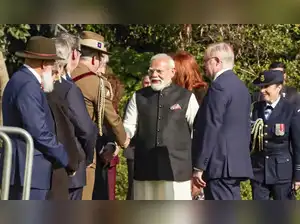
PTIFrom missiles and uranium to critical minerals and sports diplomacy, Prime Minister Narendra Modi used a three-nation tour to deepen India’s Indo-Pacific partnerships as regional powers strengthen ties amid China’s growing influence and uncertainty over US engagement.
In recent weeks, Modi has stepped up engagement across the Indo-Pacific, signing a flurry of agreements ranging from the sale of BrahMos supersonic cruise missiles to Indonesia to defense, energy and critical minerals partnerships with Australia, underscoring New Delhi’s ambition to play a bigger strategic role in the region.
ALSO READ | India, Australia unlock uranium trade, step up energy and supply chain cooperation
The agreements came against a backdrop of heightened security tensions, including China testing a nuclear-capable ballistic missile in the Pacific the day before Modi arrived in Indonesia. The rare test drew protests from several countries and renewed concerns over Beijing’s expanding military reach.
The deals also reflect a broader effort by Indo-Pacific countries to shoulder more of the region’s security and economic burden as Washington presses allies and partners to take on a larger role while China expands its influence.
ALSO READ | India, New Zealand adopt Strategic Partnership Roadmap to 2030 with trade target of NZ$7 billion
Australia and Fiji this month also signed a defense pact dubbed the “Ocean of Peace,” marking Suva’s first formal security alliance and underscoring a wider trend toward deeper regional cooperation, with New Zealand subsequently saying it planned to join too.
“The rise of China as a major power in the Indo-Pacific region is leading to a new landscape. Countries are responding to that,” said Ashok Malik, India chair at the Asia Group, a consulting firm. “Clearly the US footprint is declining in the region and other countries are trying to come together to fill the gap to whatever degree is possible.”
Malik said the agreements, including with Japan earlier this month, all point in the same direction: countries are pooling resources on areas such as semiconductors, critical minerals, maritime security and defense to reduce vulnerabilities as they face pressure from both the US and China.
“What you’re seeing emerge in the region, and I’ve been a big supporter and driver of getting New Zealand into it, is what we call mini-latticeworks or multilateral arrangements between a small set of countries,” New Zealand Prime Minister Christopher Luxon said Saturday after meeting with Modi.
“Our relationships with China are the same as what we manage with many other countries, which is we cooperate where we can, we differ where we must, and we work with like-minded countries to advance our own national interests,” Luxon said.
Since returning to office, President Donald Trump has pressed allies to shoulder a greater share of the region’s security burden, imposed tariffs on partners and competitors alike, and shifted the administration’s messaging by dropping “Indo” from the name of the US Indo-Pacific Command, even as officials insist the military’s mission remains unchanged.
China’s missile launch came up during Modi’s bilateral meeting with Australian counterpart Anthony Albanese on Thursday, according to Foreign Secretary Vikram Misri, who briefed the media in Melbourne.
“There was a certain amount of concern expressed about this development,” Misri said, adding Australia and India would intensify cooperation to ensure that “peace and security and stability in the Indo-Pacific area is continued to be maintained.”
Modi has used the recent flurry of diplomatic meetings to repeatedly cast India’s ties with Indo-Pacific partners as being built on “mutual trust,” calling it the region’s “greatest strategic asset” during meetings with leaders in Japan and Indonesia in recent days.
The language reinforces New Delhi’s pitch as a dependable partner at a time when regional governments are seeking to diversify security and economic relationships rather than choose between Washington and Beijing.
Modi’s trip also focused on reducing strategic vulnerabilities. Australia has agreed to supply uranium for India’s civil nuclear program and expand energy cooperation, while both countries launched initiatives on critical minerals and technology supply chains as governments seek to lessen dependence on China for key resources and manufacturing inputs.
Australia’s Defense Industry Minister Pat Conroy defended the decision to sell uranium to India in an interview on ABC’s Insiders on Sunday, saying he’s confident it will be used for peaceful energy production.
“The visit by prime minister Modi was a landmark event in the relationship between the two nations,” Conroy said. “India is a rising global power, the biggest democracy in the world, and is a force for good on the international stage and we want to work closely together with them.”
India and Australia have steadily expanded cooperation in recent years through the Quad grouping with the US and Japan. Defense, maritime security and resilient supply chains have become central pillars of a relationship increasingly shaped by strategic competition in the Indo-Pacific.
Alongside defense cooperation, energy security has also become a key focus of Modi’s diplomacy, with agreements aimed at securing new supplies of coal, gas and critical minerals. The push comes as the conflict involving Iran highlights the risks for an economy that depends heavily on the Middle East for its energy needs.
Even as New Delhi deepens cooperation with these nations, it still remains heavily reliant on China for the machines and inputs — not least rare earths — critical to its manufacturing ambitions and is tentatively seeking to improve ties with Beijing.
(You can now subscribe to our Economic Times WhatsApp channel)
In recent weeks, Modi has stepped up engagement across the Indo-Pacific, signing a flurry of agreements ranging from the sale of BrahMos supersonic cruise missiles to Indonesia to defense, energy and critical minerals partnerships with Australia, underscoring New Delhi’s ambition to play a bigger strategic role in the region.
ALSO READ | India, Australia unlock uranium trade, step up energy and supply chain cooperation
The agreements came against a backdrop of heightened security tensions, including China testing a nuclear-capable ballistic missile in the Pacific the day before Modi arrived in Indonesia. The rare test drew protests from several countries and renewed concerns over Beijing’s expanding military reach.
The deals also reflect a broader effort by Indo-Pacific countries to shoulder more of the region’s security and economic burden as Washington presses allies and partners to take on a larger role while China expands its influence.

ALSO READ | India, New Zealand adopt Strategic Partnership Roadmap to 2030 with trade target of NZ$7 billion
Australia and Fiji this month also signed a defense pact dubbed the “Ocean of Peace,” marking Suva’s first formal security alliance and underscoring a wider trend toward deeper regional cooperation, with New Zealand subsequently saying it planned to join too.
“The rise of China as a major power in the Indo-Pacific region is leading to a new landscape. Countries are responding to that,” said Ashok Malik, India chair at the Asia Group, a consulting firm. “Clearly the US footprint is declining in the region and other countries are trying to come together to fill the gap to whatever degree is possible.”
Malik said the agreements, including with Japan earlier this month, all point in the same direction: countries are pooling resources on areas such as semiconductors, critical minerals, maritime security and defense to reduce vulnerabilities as they face pressure from both the US and China.
“What you’re seeing emerge in the region, and I’ve been a big supporter and driver of getting New Zealand into it, is what we call mini-latticeworks or multilateral arrangements between a small set of countries,” New Zealand Prime Minister Christopher Luxon said Saturday after meeting with Modi.
“Our relationships with China are the same as what we manage with many other countries, which is we cooperate where we can, we differ where we must, and we work with like-minded countries to advance our own national interests,” Luxon said.
Since returning to office, President Donald Trump has pressed allies to shoulder a greater share of the region’s security burden, imposed tariffs on partners and competitors alike, and shifted the administration’s messaging by dropping “Indo” from the name of the US Indo-Pacific Command, even as officials insist the military’s mission remains unchanged.
China’s missile launch came up during Modi’s bilateral meeting with Australian counterpart Anthony Albanese on Thursday, according to Foreign Secretary Vikram Misri, who briefed the media in Melbourne.
“There was a certain amount of concern expressed about this development,” Misri said, adding Australia and India would intensify cooperation to ensure that “peace and security and stability in the Indo-Pacific area is continued to be maintained.”
Modi has used the recent flurry of diplomatic meetings to repeatedly cast India’s ties with Indo-Pacific partners as being built on “mutual trust,” calling it the region’s “greatest strategic asset” during meetings with leaders in Japan and Indonesia in recent days.
The language reinforces New Delhi’s pitch as a dependable partner at a time when regional governments are seeking to diversify security and economic relationships rather than choose between Washington and Beijing.
Modi’s trip also focused on reducing strategic vulnerabilities. Australia has agreed to supply uranium for India’s civil nuclear program and expand energy cooperation, while both countries launched initiatives on critical minerals and technology supply chains as governments seek to lessen dependence on China for key resources and manufacturing inputs.
Australia’s Defense Industry Minister Pat Conroy defended the decision to sell uranium to India in an interview on ABC’s Insiders on Sunday, saying he’s confident it will be used for peaceful energy production.
“The visit by prime minister Modi was a landmark event in the relationship between the two nations,” Conroy said. “India is a rising global power, the biggest democracy in the world, and is a force for good on the international stage and we want to work closely together with them.”
India and Australia have steadily expanded cooperation in recent years through the Quad grouping with the US and Japan. Defense, maritime security and resilient supply chains have become central pillars of a relationship increasingly shaped by strategic competition in the Indo-Pacific.
Alongside defense cooperation, energy security has also become a key focus of Modi’s diplomacy, with agreements aimed at securing new supplies of coal, gas and critical minerals. The push comes as the conflict involving Iran highlights the risks for an economy that depends heavily on the Middle East for its energy needs.
Even as New Delhi deepens cooperation with these nations, it still remains heavily reliant on China for the machines and inputs — not least rare earths — critical to its manufacturing ambitions and is tentatively seeking to improve ties with Beijing.
Add  as a Reliable and Trusted News Source
as a Reliable and Trusted News Source Add Now!
 (You can now subscribe to our Economic Times WhatsApp channel)