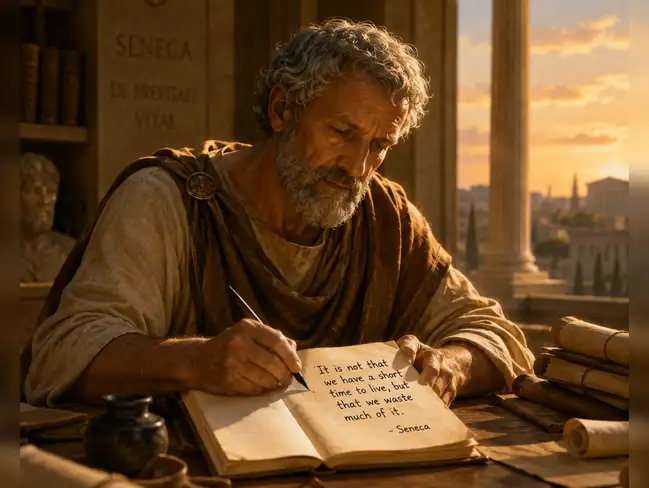
Life often feels too short to accomplish everything we hope for, yet the Roman Stoic philosopher Lucius Annaeus Seneca argued that the real problem is not the amount of time we are given but how we choose to spend it. His enduring quote, "It is not that we have a short time to live, but that we waste much of it," continues to resonate nearly two millennia after it was written. Drawn from his essay On the Shortness of Life (De Brevitate Vitae), the statement challenges readers to rethink their relationship with time, reminding them that life's greatest resource is often lost through distraction, procrastination and misplaced priorities rather than an actual shortage of years.
Rather than measuring life by its length, Seneca encouraged people to measure it by how intentionally it is lived. Every day offers opportunities to learn, create meaningful relationships, pursue worthwhile goals and cultivate wisdom. Wasting these opportunities, he argued, is what makes life seem brief.
The quote serves as a reminder that busyness is not the same as productivity. Filling every hour with activity does not necessarily mean time is being used well. Instead, Seneca invites readers to pause and ask whether their daily choices reflect what truly matters to them.
His philosophy also encourages mindfulness. Being present, focusing on meaningful work and spending time with loved ones can create a greater sense of fulfilment than simply trying to accomplish more tasks.
The quote also encourages self-reflection. It asks readers to examine habits that quietly consume their days, whether through procrastination, unnecessary worries or pursuits that offer little lasting value. By becoming more intentional, individuals can make better decisions about where to invest their attention and energy.
Ultimately, Seneca reminds us that a meaningful life is built through conscious choices made one day at a time.
That timeless perspective continues to resonate with students, professionals, entrepreneurs and retirees alike, making the quote as relevant today as it was in ancient Rome.
(You can now subscribe to our Economic Times WhatsApp channel)
What Seneca's quote really means
At its core, Seneca's message is about the value of time. He believed that people frequently complain about life being too short while allowing countless hours to disappear on pursuits that contribute little to personal growth or lasting happiness. According to Stoic philosophy, time is the one possession that cannot be recovered once it has passed.Rather than measuring life by its length, Seneca encouraged people to measure it by how intentionally it is lived. Every day offers opportunities to learn, create meaningful relationships, pursue worthwhile goals and cultivate wisdom. Wasting these opportunities, he argued, is what makes life seem brief.
Why this ancient wisdom remains relevant today
Despite being written nearly 2,000 years ago, Seneca's observation feels remarkably modern. In an era of constant notifications, endless scrolling and overflowing schedules, many people experience the same sense of never having enough time.The quote serves as a reminder that busyness is not the same as productivity. Filling every hour with activity does not necessarily mean time is being used well. Instead, Seneca invites readers to pause and ask whether their daily choices reflect what truly matters to them.

His philosophy also encourages mindfulness. Being present, focusing on meaningful work and spending time with loved ones can create a greater sense of fulfilment than simply trying to accomplish more tasks.
Life lessons hidden in Seneca's words
One of the most important lessons from this quote is that time should be treated as a finite and valuable resource. Money can be earned again, possessions can be replaced, but lost time is irreversible.The quote also encourages self-reflection. It asks readers to examine habits that quietly consume their days, whether through procrastination, unnecessary worries or pursuits that offer little lasting value. By becoming more intentional, individuals can make better decisions about where to invest their attention and energy.
Ultimately, Seneca reminds us that a meaningful life is built through conscious choices made one day at a time.
Why the quote continues to inspire readers around the world
Seneca's words have endured because they address a universal human experience. Every generation wrestles with the feeling that time slips away too quickly. His insight offers both a warning and a source of hope: while no one can create more time, everyone has the ability to use the time they already have more wisely.That timeless perspective continues to resonate with students, professionals, entrepreneurs and retirees alike, making the quote as relevant today as it was in ancient Rome.
The enduring takeaway from the Quote of the Day
Seneca's famous observation is ultimately a call to live deliberately. Instead of wishing for more years, it encourages people to make better use of the days already before them. By choosing purpose over distraction and intention over habit, his timeless wisdom suggests that a well-lived life is defined not by its length, but by the value created within the time we are given.Add  as a Reliable and Trusted News Source
as a Reliable and Trusted News Source Add Now!
 (You can now subscribe to our Economic Times WhatsApp channel)