Samsung's latest Galaxy Z Fold8 represents one of the biggest changes to the Fold series in recent years. While earlier generations largely focused on incremental upgrades, the Fold8 introduces a wider 4:3 primary display, a lighter chassis and a noticeably more compact footprint. After spending some time with the device at Galaxy Unpacked in London, it is evident that Samsung is not just refining the hardware, but also attempting to change how users interact with a foldable smartphone.
A form factor that feels natural
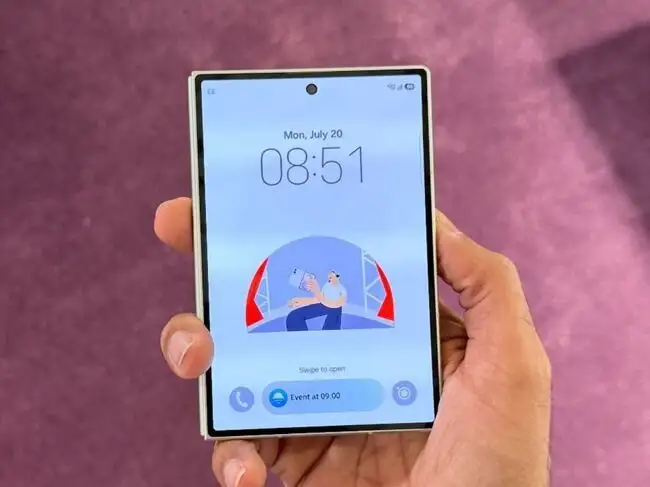
The first thing that stands out is the in-hand feel. At 201 grams, the Galaxy Z Fold8 is Samsung's lightest book-style foldable yet, and the reduction in weight is immediately noticeable. Combined with its redesigned proportions, the phone feels considerably easier to hold and operate than previous Fold devices.
More importantly, the revised form factor changes user behaviour. Traditionally, Fold devices have often been treated like conventional smartphones, with users spending most of their time on the cover display and only unfolding the device for presentations, multitasking or media consumption.
The Fold8 feels different. During our limited time with the phone, it naturally encouraged us to open the device more frequently. Switching from the cover display to the larger screen no longer feels like a deliberate decision, but rather a continuation of the same experience.
Samsung Galaxy Z Fold8
A wider display, but familiar compromises
Samsung's move to a 4:3 primary display is arguably the biggest usability improvement. Reading articles, browsing websites and working across multiple apps feels more comfortable thanks to the squarer layout, while multitasking also benefits from the additional horizontal space.
The large AMOLED display, capable of reaching up to 3,000 nits of peak brightness, also makes horizontal video content look particularly impressive.
That said, the compromises associated with foldables remain. Vertical videos continue to leave unused space on the primary display, much like other book-style foldables currently available. Likewise, the squarer cover display means short-form videos are surrounded by black bars.
Neither issue significantly affects usability, particularly given the quality of Samsung's display panels, but they are still trade-offs that prospective buyers should be aware of.
Samsung Galaxy Z Fold8
Performance and battery
Powering the Galaxy Z Fold8 is Qualcomm's Snapdragon 8 Elite Gen 5 for Galaxy processor paired with a 4,800mAh battery. Samsung has also adopted a silicon-carbon battery, joining a growing number of smartphone manufacturers using the technology to improve energy density. The shift plays an important role in enabling the Fold8's slimmer and lighter design without significantly compromising battery capacity.
Charging speeds, however, remain unchanged. The Fold8 continues to support 45W wired charging. According to Samsung, the company has retained this charging speed to prioritise battery optimisation and long-term reliability rather than chasing faster charging numbers.
Battery life remains something that can only be evaluated after prolonged use, but on paper, the combination of the latest Snapdragon platform and the silicon-carbon battery should contribute to improved efficiency.
Camera impressions
Samsung has equipped the Fold8 with a 50MP primary camera alongside a 50MP ultrawide sensor. During our hands-on session in Samsung's demo area, the cameras delivered detailed images with good colour reproduction under controlled indoor lighting.
However, it is still too early to draw conclusions about overall camera performance. Low-light photography, dynamic range and image consistency are all aspects that require testing in natural lighting and real-world conditions before any meaningful assessment can be made. Based on our initial impressions, though, the hardware appears promising.
The Fold8 also retains features such as Dual Recording and My FanCam, which automatically tracks subjects while recording video, offering additional flexibility for creators.
More confidence, but still a foldable
Samsung has also equipped the Fold8 with an IP48 rating for dust and water resistance, providing an added layer of reassurance for everyday use.
That does not necessarily mean this is a device users would want to take unnecessary risks with around water. Foldables still require a degree of care because of their moving parts. However, the added protection does make the Fold8 feel better prepared to handle everyday splashes, light rain and accidental exposure than earlier generations.
Samsung Galaxy Z Fold8
Early verdict
After a limited hands-on session, Samsung's biggest improvement does not appear to be a single specification. Instead, it is the overall usability of the device. The lighter chassis, revised proportions and wider internal display combine to create a foldable that feels considerably more approachable than previous generations.
Whether that translates into better long-term usability is something only extended testing will reveal. Battery life, thermal performance, camera consistency and software optimisation all require significantly more time with the device before drawing conclusions.
We've also gone hands-on with the Samsung Galaxy Z Fold8 in London. Readers can watch our first-look video and follow more coverage from Galaxy Unpacked on The Economic Times' YouTube channel and social media platforms.
Writer’s note: This article is based on our initial hands-on experience with the Galaxy Z Fold8 at Samsung's Galaxy Unpacked event in London. More thorough testing is required before we reach definitive conclusions on the device's performance, cameras, battery life and durability. Stay tuned to this byline for our full review and continued coverage.

 as a Reliable and Trusted News Source
 Add Now!