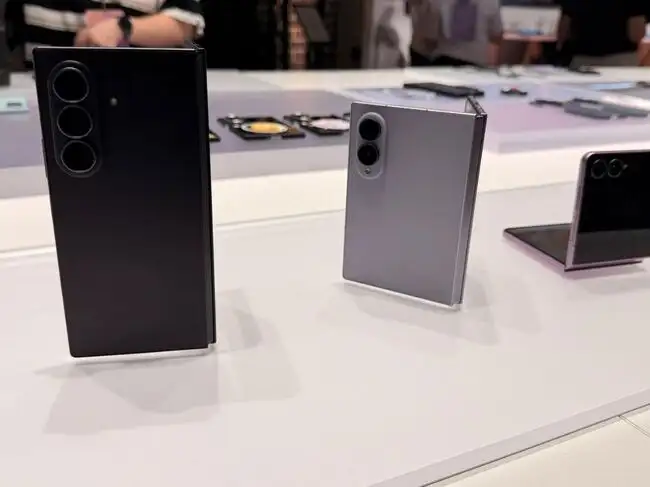
The company has launched its biggest foldable portfolio yet with three devices the Galaxy Z Fold8, Galaxy Z Fold8 Ultra and Galaxy Z Flip8 as it looks to expand the category beyond early adopters and premium smartphone buyers in metros.
Samsung currently dominates India's foldable market. The company ended 2025 with an 88 percent volume share and grew foldable shipments 28 percent year-on-year, according to Counterpoint Research. This came even as India's overall smartphone market remained largely flat, with shipments growing just 1 percent while the value of the market increased 8 percent.
The premium segment continues to be a key growth driver, with smartphones priced above ₹30,000 accounting for 22 percent of India's smartphone shipments in 2025.
Speaking to The Economic Times on the sidelines of Galaxy Unpacked in London, Aditya Babbar, Vice President and India MX Business Head, Samsung, said the company's approach with the new lineup is to offer different foldable experiences for different types of users.
"The power should lie with the consumer. We don't believe in giving one form factor and stopping there. Different consumers have different needs, and we've designed these devices around those behaviours," Babbar said.
Samsung's latest lineup represents a major shift in its foldable strategy. The Galaxy Z Fold8 comes with a wider 4:3 inner display designed for better multitasking, reading and video consumption. The Galaxy Z Fold8 Ultra brings the company's flagship Ultra experience to a foldable, with a slimmer design, Snapdragon 8 Elite Gen 5, larger battery and a 200-megapixel camera system.
The Galaxy Z Flip8, meanwhile, continues Samsung's focus on compact foldables, with improvements to FlexCam and AI-powered camera features.
Babbar said the three devices are aimed at different consumer segments rather than competing against each other.
"The Fold8 Ultra is for productivity-first and creator-first consumers who want the best possible experience. The Fold8 is for users who consume content, whether it's OTT, reading or long-form video. The Flip continues to appeal to consumers looking for a more expressive device," he said.
Samsung is also looking to expand foldable adoption outside India's largest cities.
The company plans to make its foldables available across more than 10,000 retail outlets, alongside its online store and e-commerce partners.
"We are not deciding where these devices should be sold. Consumers are deciding where we should be available," Babbar said.
Samsung is also investing in retail demonstrations, AI showcases and local-language training for store employees to make premium devices easier to understand for consumers outside major cities.
"Why should someone walking into a store in Panipat experience the device only in English? We've customised our approach for every consumer touchpoint," he said.
With smartphone prices rising due to increasing component costs, Samsung believes affordability is increasingly being measured through monthly payments rather than upfront prices.
"Consumers no longer walk into a store asking for a ₹30,000 or ₹40,000 phone. They ask how much the EMI will be," Babbar said.
Samsung's strategy is built around three areas - expansion, experience and extraction.
Expansion focuses on increasing availability across cities and channels. Experience involves letting consumers try Galaxy AI, cameras and the broader Samsung ecosystem before purchase. Extraction focuses on reducing ownership barriers through financing, exchange programmes and after-sales support.
Babbar said extending EMI periods to as much as 30 months helps reduce the gap between premium smartphones and flagship foldables.
"When you compare the monthly EMI, the difference is not as large as many consumers assume," he said.
Samsung has also expanded financing partnerships through platforms including Samsung Finance+, Bajaj Finance, IDFC, TVS Credit, Cholamandalam and Poonawalla Finance.
Despite the growth of online sales, Samsung believes physical retail remains important for premium smartphones because consumers want to experience the devices before upgrading.
"The premiumisation journey is driven by experience. Consumers want to touch and feel these products before upgrading," Babbar said.
The company is also experimenting with home demonstrations and personalised buying experiences.
Alongside financing, Babbar highlighted Samsung Care+ and international service coverage as important factors for premium consumers who want service support while travelling.
The new foldables also continue Samsung's broader AI push, integrating Galaxy AI and Google Gemini, including contextual features such as Now Nudge, which is designed to proactively surface relevant information and assistance.
With premium smartphone demand expanding beyond India's largest cities, Samsung is betting that a combination of multiple foldable form factors, stronger retail presence, AI features and financing options can help make foldables more mainstream.
ET is on the ground covering Galaxy Unpacked in London. Watch our hands-on videos and exclusive coverage across our social media platforms.
Samsung currently dominates India's foldable market. The company ended 2025 with an 88 percent volume share and grew foldable shipments 28 percent year-on-year, according to Counterpoint Research. This came even as India's overall smartphone market remained largely flat, with shipments growing just 1 percent while the value of the market increased 8 percent.
The premium segment continues to be a key growth driver, with smartphones priced above ₹30,000 accounting for 22 percent of India's smartphone shipments in 2025.
Speaking to The Economic Times on the sidelines of Galaxy Unpacked in London, Aditya Babbar, Vice President and India MX Business Head, Samsung, said the company's approach with the new lineup is to offer different foldable experiences for different types of users.
"The power should lie with the consumer. We don't believe in giving one form factor and stopping there. Different consumers have different needs, and we've designed these devices around those behaviours," Babbar said.
Samsung's latest lineup represents a major shift in its foldable strategy. The Galaxy Z Fold8 comes with a wider 4:3 inner display designed for better multitasking, reading and video consumption. The Galaxy Z Fold8 Ultra brings the company's flagship Ultra experience to a foldable, with a slimmer design, Snapdragon 8 Elite Gen 5, larger battery and a 200-megapixel camera system.
The Galaxy Z Flip8, meanwhile, continues Samsung's focus on compact foldables, with improvements to FlexCam and AI-powered camera features.
Babbar said the three devices are aimed at different consumer segments rather than competing against each other.
"The Fold8 Ultra is for productivity-first and creator-first consumers who want the best possible experience. The Fold8 is for users who consume content, whether it's OTT, reading or long-form video. The Flip continues to appeal to consumers looking for a more expressive device," he said.
Pushing premium smartphones beyond metros
Samsung is also looking to expand foldable adoption outside India's largest cities.
The company plans to make its foldables available across more than 10,000 retail outlets, alongside its online store and e-commerce partners.
"We are not deciding where these devices should be sold. Consumers are deciding where we should be available," Babbar said.
Samsung is also investing in retail demonstrations, AI showcases and local-language training for store employees to make premium devices easier to understand for consumers outside major cities.
"Why should someone walking into a store in Panipat experience the device only in English? We've customised our approach for every consumer touchpoint," he said.
EMI becomes a key factor for premium adoption
With smartphone prices rising due to increasing component costs, Samsung believes affordability is increasingly being measured through monthly payments rather than upfront prices.
"Consumers no longer walk into a store asking for a ₹30,000 or ₹40,000 phone. They ask how much the EMI will be," Babbar said.
Samsung's strategy is built around three areas - expansion, experience and extraction.
Expansion focuses on increasing availability across cities and channels. Experience involves letting consumers try Galaxy AI, cameras and the broader Samsung ecosystem before purchase. Extraction focuses on reducing ownership barriers through financing, exchange programmes and after-sales support.
Babbar said extending EMI periods to as much as 30 months helps reduce the gap between premium smartphones and flagship foldables.
"When you compare the monthly EMI, the difference is not as large as many consumers assume," he said.
Samsung has also expanded financing partnerships through platforms including Samsung Finance+, Bajaj Finance, IDFC, TVS Credit, Cholamandalam and Poonawalla Finance.
Experience remains important for premium buyers
Despite the growth of online sales, Samsung believes physical retail remains important for premium smartphones because consumers want to experience the devices before upgrading.
"The premiumisation journey is driven by experience. Consumers want to touch and feel these products before upgrading," Babbar said.
The company is also experimenting with home demonstrations and personalised buying experiences.
Alongside financing, Babbar highlighted Samsung Care+ and international service coverage as important factors for premium consumers who want service support while travelling.
The new foldables also continue Samsung's broader AI push, integrating Galaxy AI and Google Gemini, including contextual features such as Now Nudge, which is designed to proactively surface relevant information and assistance.
With premium smartphone demand expanding beyond India's largest cities, Samsung is betting that a combination of multiple foldable form factors, stronger retail presence, AI features and financing options can help make foldables more mainstream.
ET is on the ground covering Galaxy Unpacked in London. Watch our hands-on videos and exclusive coverage across our social media platforms.
Add  as a Reliable and Trusted News Source
as a Reliable and Trusted News Source Add Now!
 (Catch all the Business News, Breaking News, and Latest News Updates on The Economic Times.)
Subscribe to The Economic Times Prime and read the ET ePaper online.
Read More News on
(Catch all the Business News, Breaking News, and Latest News Updates on The Economic Times.)
Subscribe to The Economic Times Prime and read the ET ePaper online.