Listen to this article in summarized format
×
Subscribe to 
Unlock AI Briefing and Premium Content
New Year Offer 24 Hours Left
Subscribe NowAlready a member? Sign In
What's Included
- Exclusive Stories
- Daily ePaper Access
- Smart Market Tools
- Curated Investment Ideas
- Ad-lite Experience
Subscription

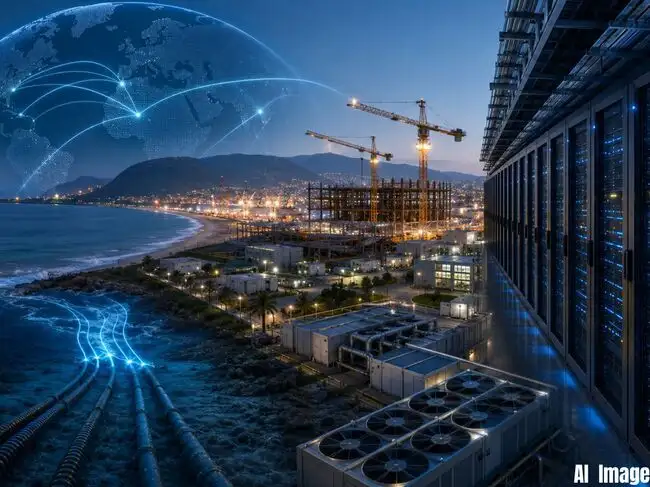
Visakhapatnam is racing to add more than 6GW of AI data centre capacity by 2030, backed by projects worth over Rs 6 lakh crore, with Google, Reliance and Sify already breaking ground in and around the coastal city. The scale is enormous, India's entire installed data centre capacity today is just 1.5GW, which means one city on the Andhra Pradesh coast wants to build four times the country's current total, almost from scratch, TOI's Jinnala Umamaheswara Rao reports.
For a city known so far for its beaches, its port and the Eastern Naval Command headquartered there, this is a new kind of ambition. At the foundation stone-laying ceremony for the Google India AI Hub in April, Union IT and electronics minister Ashwini Vaishnaw only half-joked that Vizag could soon be called "AIPatnam." Nearly Rs 2.5 lakh crore worth of projects and 2GW of capacity are already approved or under construction — and that is before the rest of the pipeline even gets going.
Sify Technologies has also laid its own foundation stone, for an AI-edge data centre and submarine cable landing station. Phase one is a comparatively modest 50MW facility on a 3.6-acre plot. But in June, the state government cleared 25 more acres for phase two of what Sify Infinit Spaces calls a Rs 15,266-crore project, with an eventual target of 500MW.
Sify chairman Raju Vegesna told TOI: "This initiative is just the beginning of our long-term commitment to strengthening India's digital economy and advancing AIled innovation at scale."
The real prize is what runs under the sea
Data halls get the headlines, but the cables matter just as much. The projects taking shape around Vizag are meant to plug the city directly into global data traffic through several new subsea cable systems. One route tied to the Google data centre will link India to Australia and then cross the Pacific to the US west coast. A second will connect West Asia and Europe before reaching America, and a third will loop around the Cape of Good Hope in South Africa.
As Vaishnaw put it: "These subsea cables that will provide critical infrastructure for India's digital future."
The Google hub anchors something bigger still, the America-India Connect initiative, a $15 billion programme unveiled at the India AI Impact Summit in February to lay direct subsea fibre-optic links between India, the US and the southern hemisphere.
More than a dozen companies are circling
Google's arrival appears to have set off a chain reaction. State officials are in talks with around 15 companies interested in setting up their own data centres, with negotiations reportedly furthest along with Tillman Global Holdings, Tata Consultancy Services and RMZ Corp.
The interest is spilling into manufacturing too, companies that make server racks, cooling systems and other hyperscale equipment are being courted, and approval has already been granted for a unit making advanced cooling chillers, with proposed capacity large enough to support 4GW to 5GW of data centre infrastructure. The state is even weighing a dedicated "AI City" nearby to house startups, AI firms and research institutions.
Visakhapatnam MP M Sribharath described the goal as a self-reliant digital powerhouse: "This vision will be supported by abundant renewable energy and strengthened water infrastructure, including desalination plants, to ensure reliability. The ecosystem is designed to attract fintech firms, banks, AI startups, and allied industries such as server manufacturing and cooling systems, creating acluster effect around subsea cable gateways."
The upcoming Bhogapuram airport, roughly 20 km from the proposed sites, adds another piece, better logistics and international connectivity, plus a planned maintenance, repair and overhaul facility and a 500-acre aerospace ecosystem that could itself generate demand for cloud services, cybersecurity and AI tools. Nearby, the state is also building an Aviation, Aerospace and Defence EduCity spread over more than 130 acres, meant to tie education, research and industry together in one place.
Water is being tackled through a proposed pipeline from the Polavaram project and new seawater desalination plants, alongside seawater cooling and recycling technology to take pressure off freshwater supplies.
The state government's counter is that India's situation isn't America's. State IT minister Nara Lokesh argues: "India has a One Nation, One Grid system, unlike the US. Nearly 3,000TMC of Godavari water flows into the sea every year, which is equivalent to the annual water consumption of countries such as Vietnam or Brazil. The proposed 6.5GW of data centres in the state would require only 1TMC of water. A 1GW thermal power plant consumes seven times more water than a 1GW data centre. Our govt is also willing to further finetune zoning regulations, if necessary."
Others are less sure. Karri Rama Krishna, an engineering graduate from Anandapuram, points to "reports from the US about the negative effects of large data centres on water, electricity and the environment."
For those who actually gave up their land, the feeling is more personal than political. Ch. Prasad, 31, handed over two acres for the project. "Though parting with our land is painful, most of us believe this project will put our village on the global map," he said.
Whether Vizag becomes "AIPatnam" in more than nickname will depend on whether the power holds, the water lasts, and the jobs show up the way the billboards promise. For now, the cranes are moving faster than the debate.
(Article based on TOI report)
(You can now subscribe to our Economic Times WhatsApp channel)
For a city known so far for its beaches, its port and the Eastern Naval Command headquartered there, this is a new kind of ambition. At the foundation stone-laying ceremony for the Google India AI Hub in April, Union IT and electronics minister Ashwini Vaishnaw only half-joked that Vizag could soon be called "AIPatnam." Nearly Rs 2.5 lakh crore worth of projects and 2GW of capacity are already approved or under construction — and that is before the rest of the pipeline even gets going.
Three big bets, one small stretch of coastline
The Google India AI Hub, worth an expected $15 billion, is the headline project, but it is far from the only one. Weeks after its foundation stone went into the ground, the Andhra Pradesh government handed over roughly 850 acres near Vizag to Reliance Industries for a giga-scale AI data centre campus, spread across Polipalli, Bhogapuram West and Bhogapuram East villages. Together with a subsea cable landing station, the Reliance project carries a price tag of Rs 1.08 lakh crore.Sify Technologies has also laid its own foundation stone, for an AI-edge data centre and submarine cable landing station. Phase one is a comparatively modest 50MW facility on a 3.6-acre plot. But in June, the state government cleared 25 more acres for phase two of what Sify Infinit Spaces calls a Rs 15,266-crore project, with an eventual target of 500MW.
Sify chairman Raju Vegesna told TOI: "This initiative is just the beginning of our long-term commitment to strengthening India's digital economy and advancing AIled innovation at scale."

The real prize is what runs under the sea
Data halls get the headlines, but the cables matter just as much. The projects taking shape around Vizag are meant to plug the city directly into global data traffic through several new subsea cable systems. One route tied to the Google data centre will link India to Australia and then cross the Pacific to the US west coast. A second will connect West Asia and Europe before reaching America, and a third will loop around the Cape of Good Hope in South Africa.As Vaishnaw put it: "These subsea cables that will provide critical infrastructure for India's digital future."
The Google hub anchors something bigger still, the America-India Connect initiative, a $15 billion programme unveiled at the India AI Impact Summit in February to lay direct subsea fibre-optic links between India, the US and the southern hemisphere.
More than a dozen companies are circling
Google's arrival appears to have set off a chain reaction. State officials are in talks with around 15 companies interested in setting up their own data centres, with negotiations reportedly furthest along with Tillman Global Holdings, Tata Consultancy Services and RMZ Corp.The interest is spilling into manufacturing too, companies that make server racks, cooling systems and other hyperscale equipment are being courted, and approval has already been granted for a unit making advanced cooling chillers, with proposed capacity large enough to support 4GW to 5GW of data centre infrastructure. The state is even weighing a dedicated "AI City" nearby to house startups, AI firms and research institutions.
Visakhapatnam MP M Sribharath described the goal as a self-reliant digital powerhouse: "This vision will be supported by abundant renewable energy and strengthened water infrastructure, including desalination plants, to ensure reliability. The ecosystem is designed to attract fintech firms, banks, AI startups, and allied industries such as server manufacturing and cooling systems, creating acluster effect around subsea cable gateways."
Why everyone picked this particular stretch of coast
Vizag's location on the east coast gives it a direct line to submarine cable routes serving Southeast Asia and the wider Indo-Pacific, useful for cutting latency and building in redundancy. Sreedhar Kosaraju, chairperson of the AP Digital Technology Industry (APDTI) Network, points to more practical advantages too: "The city's deep-water port enables easy transport of heavy equipment, while the availability of large contiguous land parcels supports campus-scale developments."The upcoming Bhogapuram airport, roughly 20 km from the proposed sites, adds another piece, better logistics and international connectivity, plus a planned maintenance, repair and overhaul facility and a 500-acre aerospace ecosystem that could itself generate demand for cloud services, cybersecurity and AI tools. Nearby, the state is also building an Aviation, Aerospace and Defence EduCity spread over more than 130 acres, meant to tie education, research and industry together in one place.
The part nobody can manufacture: power and water
Hyperscale data centres are famously thirsty and power-hungry, and Andhra Pradesh has had to get creative. It has introduced a policy, a first for any Indian state, granting "deemed distribution licence" status to data centres with a minimum connected load of 300MW. That lets eligible facilities buy power directly from renewable generators, open access markets, power exchanges, and solar and wind projects backed by battery storage, rather than relying solely on the grid. At least 51% of that power must come from certified renewable sources, drawing on solar capacity in the Anantapur-Kurnool belt and wind along the eastern coast.Water is being tackled through a proposed pipeline from the Polavaram project and new seawater desalination plants, alongside seawater cooling and recycling technology to take pressure off freshwater supplies.
Not everyone is applauding
The speed of the build-out has drawn criticism over electricity demand, water use, noise, habitat disruption and carbon emissions. Environmental activist Bolisetty Satyanarayana questions whether the jobs created will actually justify the ecological cost: "A recent survey shows that 71% of Americans oppose data centres in their neighbourhoods because of concerns over electricity consumption, water usage, traffic, noise and environmental damage. Despite huge investments, employment generation remains limited."The state government's counter is that India's situation isn't America's. State IT minister Nara Lokesh argues: "India has a One Nation, One Grid system, unlike the US. Nearly 3,000TMC of Godavari water flows into the sea every year, which is equivalent to the annual water consumption of countries such as Vietnam or Brazil. The proposed 6.5GW of data centres in the state would require only 1TMC of water. A 1GW thermal power plant consumes seven times more water than a 1GW data centre. Our govt is also willing to further finetune zoning regulations, if necessary."
What it looks like on the ground
In Tarluwada village, part of Anandapuram mandal, where the Google project has already broken ground, opinion is split down the middle. Resident Bali Venkata Raju sees opportunity where there was once only migration for work: "Many students struggle to find jobs after completing their education. If a company like Google comes here, our children may finally find employment close to home."Others are less sure. Karri Rama Krishna, an engineering graduate from Anandapuram, points to "reports from the US about the negative effects of large data centres on water, electricity and the environment."
For those who actually gave up their land, the feeling is more personal than political. Ch. Prasad, 31, handed over two acres for the project. "Though parting with our land is painful, most of us believe this project will put our village on the global map," he said.
Whether Vizag becomes "AIPatnam" in more than nickname will depend on whether the power holds, the water lasts, and the jobs show up the way the billboards promise. For now, the cranes are moving faster than the debate.
(Article based on TOI report)
Add  as a Reliable and Trusted News Source
as a Reliable and Trusted News Source Add Now!
 (You can now subscribe to our Economic Times WhatsApp channel)